
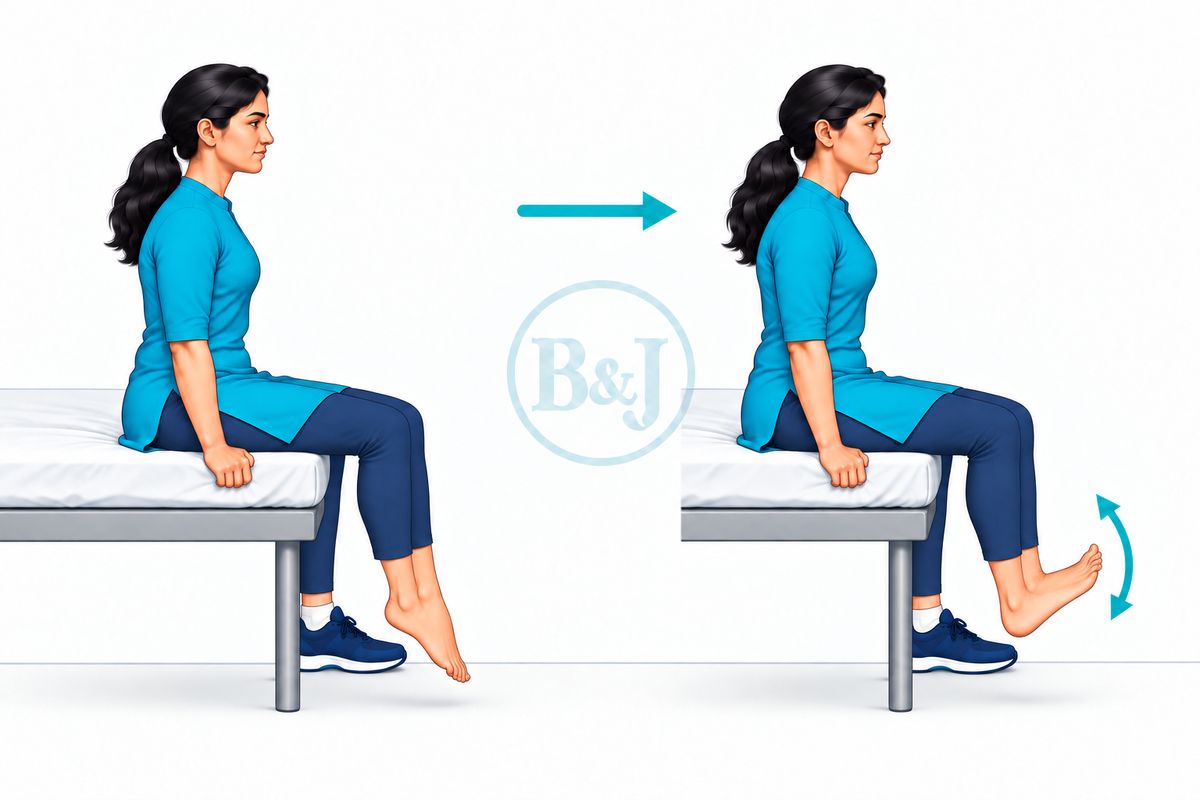
Ankle pumps
Pump the feet up and down to keep the blood moving.
- 20 times
- Every hour while awake
Should feel: The calf working Should not feel: Calf pain or swelling — tell us
Home / Patient library / Exercise sheets / Sheet 66
Hip & knee · After a total knee replacement
Count the weeks from the day of your operation. The date is on your discharge card.
If your doctor wrote a different plan on your prescription, follow that instead of this page.
A4 PDF, 0.8 MB. Free to download — no sign-up, no email address needed.
Get out of bed and walk from the day after the operation, with a walker. Short walks, often. Work on getting the knee fully straight, and on bending it to about a right angle (90 degrees) by 2 weeks. Rest with the leg straight, and never put a pillow under the knee. Keep the ankles moving to protect against clots, and take every dose of the blood-thinning tablets we prescribe.
Weight bearing Full, as comfortable, with a walker, unless we have told you otherwise.
Pump the feet up and down to keep the blood moving.
Should feel: The calf working Should not feel: Calf pain or swelling — tell us
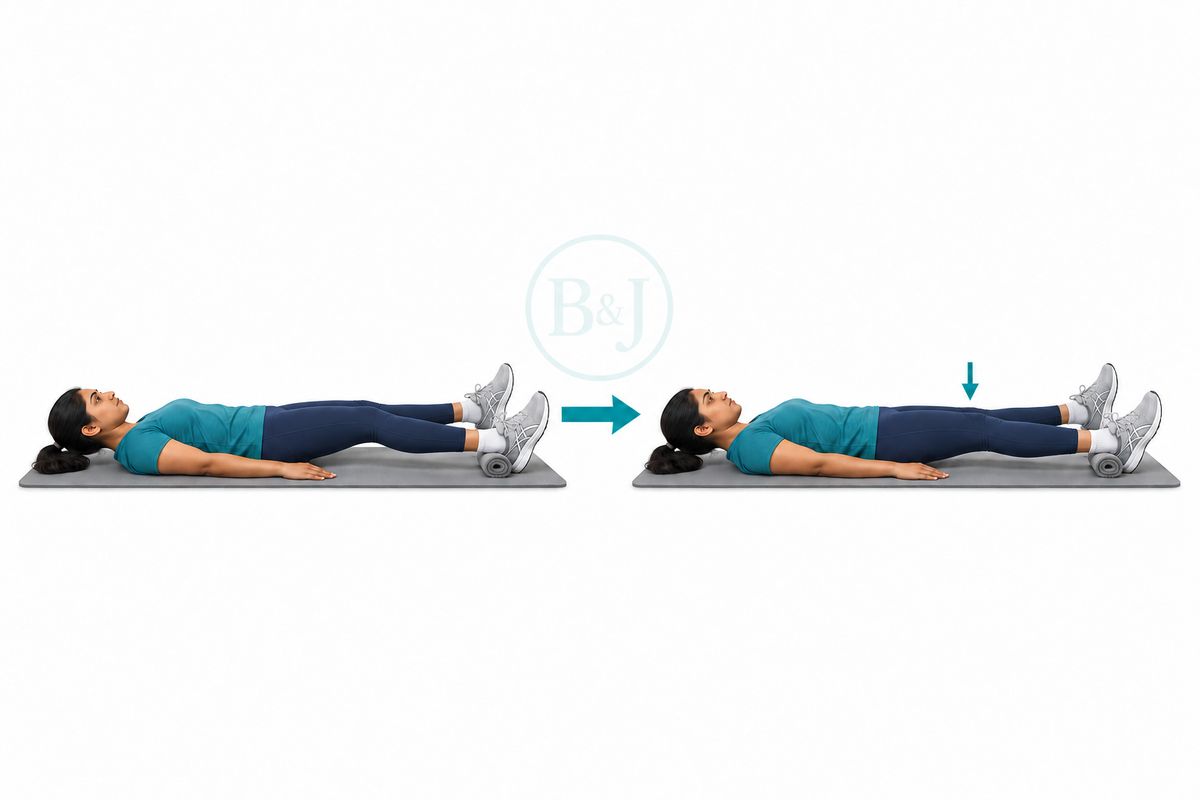
Heel on a rolled towel, knee hanging free. Press it straight.
Should feel: The back of the knee stretching Should not feel: —
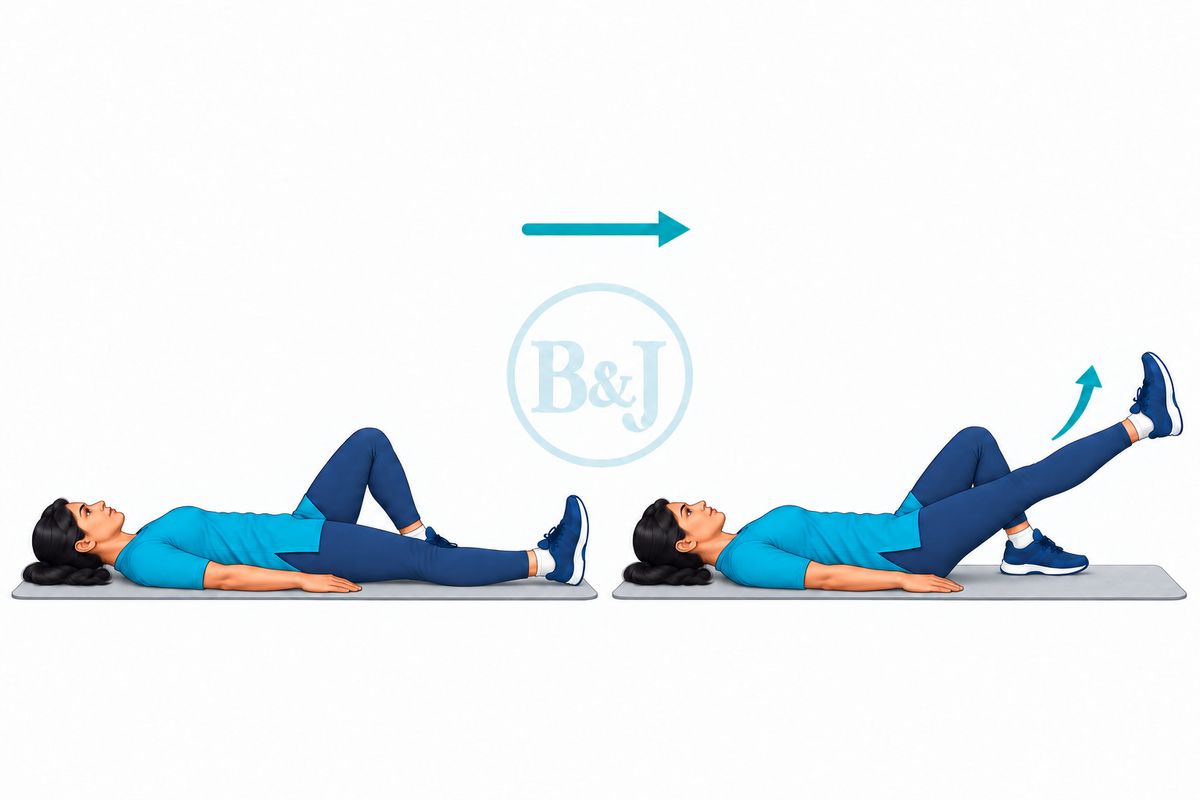
Lift the straight leg 20 cm.
Should feel: The thigh working Should not feel: The knee sagging
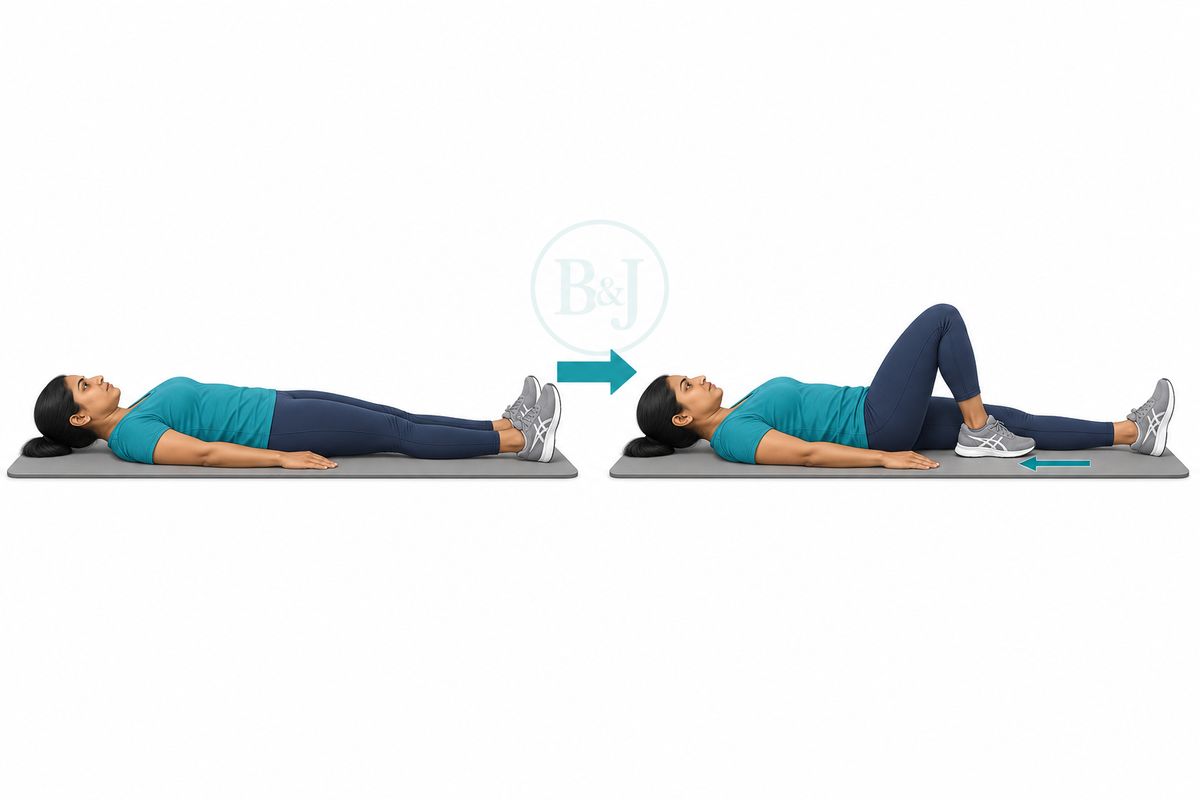
Lie down and slide the heel up towards the buttock, bending the knee as far as you can.
Should feel: A stretch as the knee bends Should not feel: Sharp pain at the wound
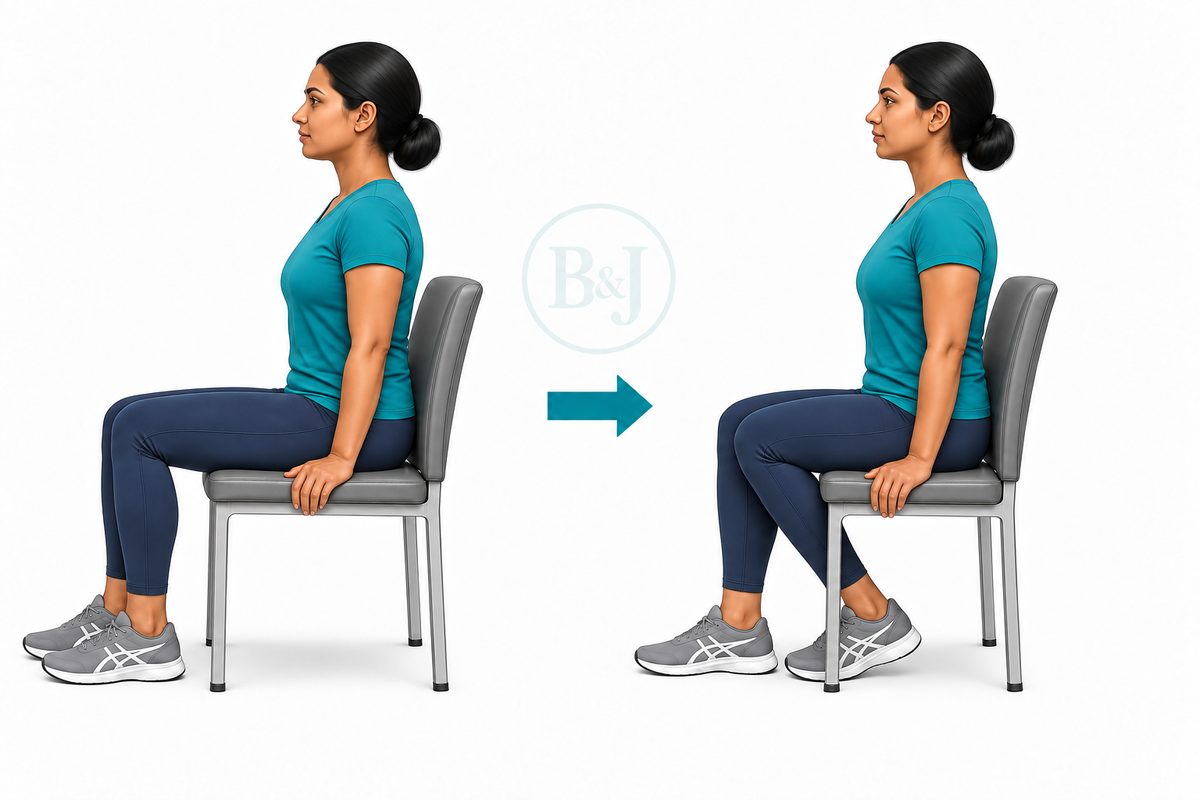
Sit on a firm chair. Slide the foot back under the chair to bend the knee, hold, then bring it forward.
Should feel: A stretch as the knee bends Should not feel: Sharp pain
Not yet A pillow under the knee. Squatting, sitting on the floor or using an Indian toilet — until we have told you it is safe.
Move to the next stage only after we have seen you, and the X-ray if one was planned.
Stitches out. Keep the knee fully straight, and bend it a little further each week. Walk a little further each day. Some swelling and warmth around the knee are common for some weeks and settle slowly. Carry on with the earlier exercises.
Weight bearing Full. Move from the walker to a stick when you feel steady.
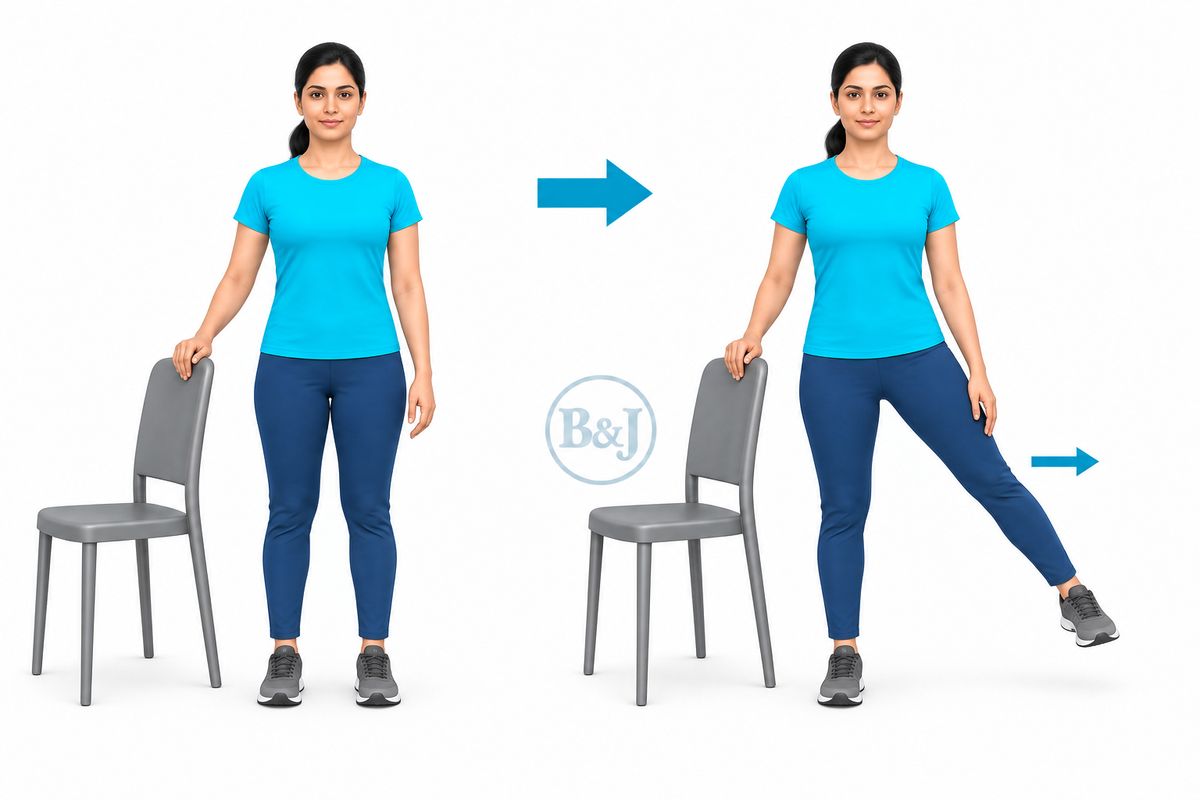
Hold a chair. Lift the leg out to the side, keeping the body upright.
Should feel: The side of the hip working Should not feel: Leaning over
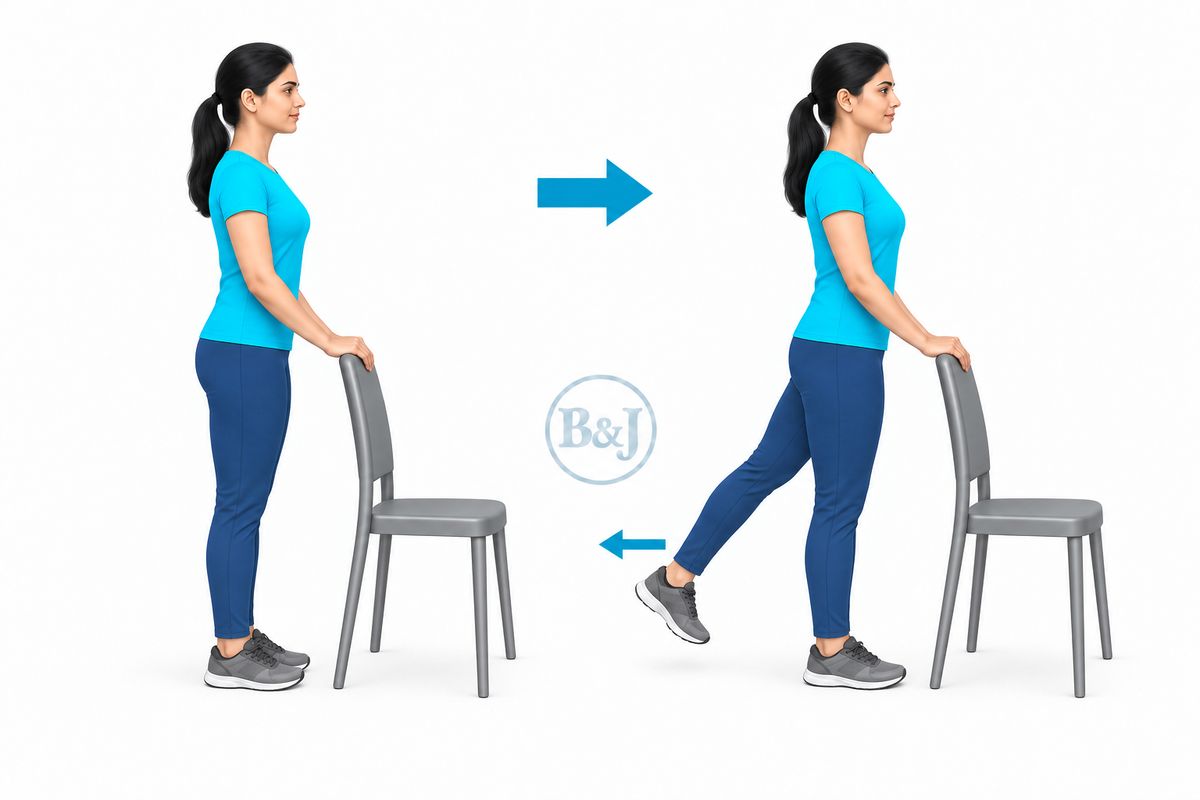
Hold a chair. Take the leg backwards, keeping it straight.
Should feel: The buttock working Should not feel: Arching the back
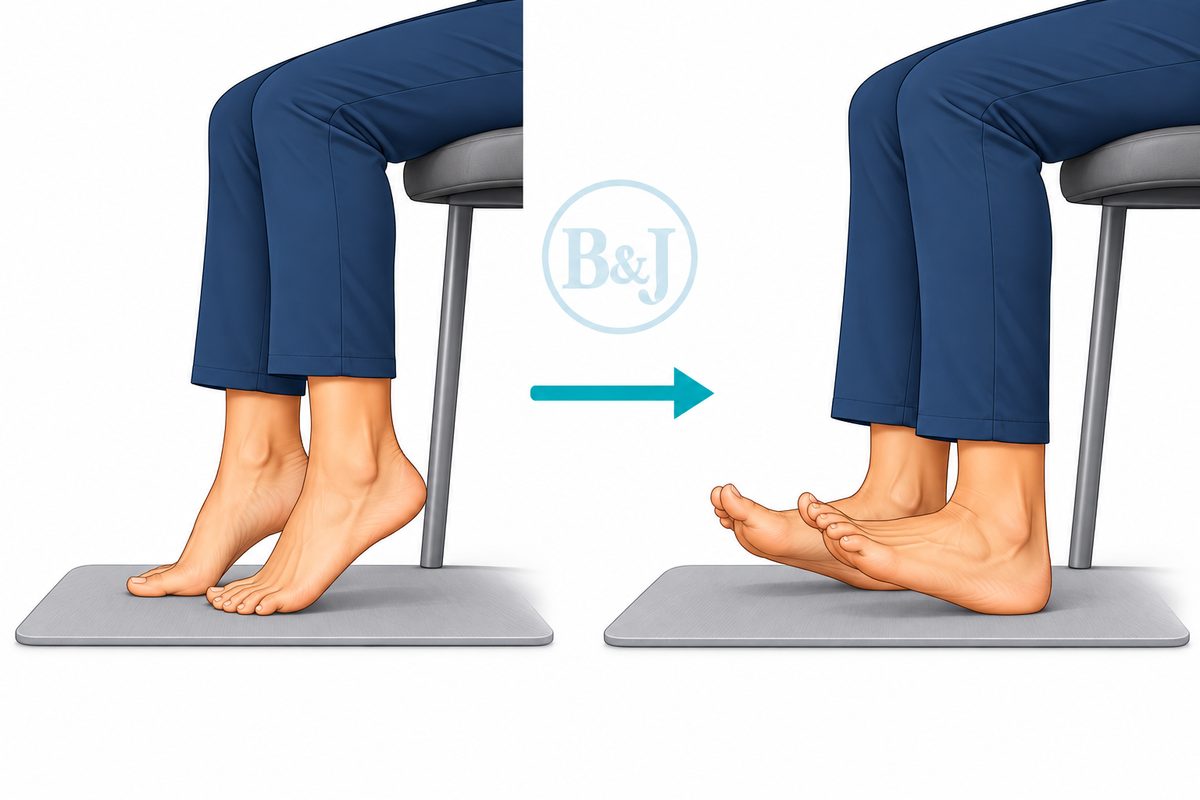
Sit with both feet flat on the floor. Lift the heels, lower them, then lift the toes.
Should feel: The calf and the front of the shin working Should not feel: Sharp pain
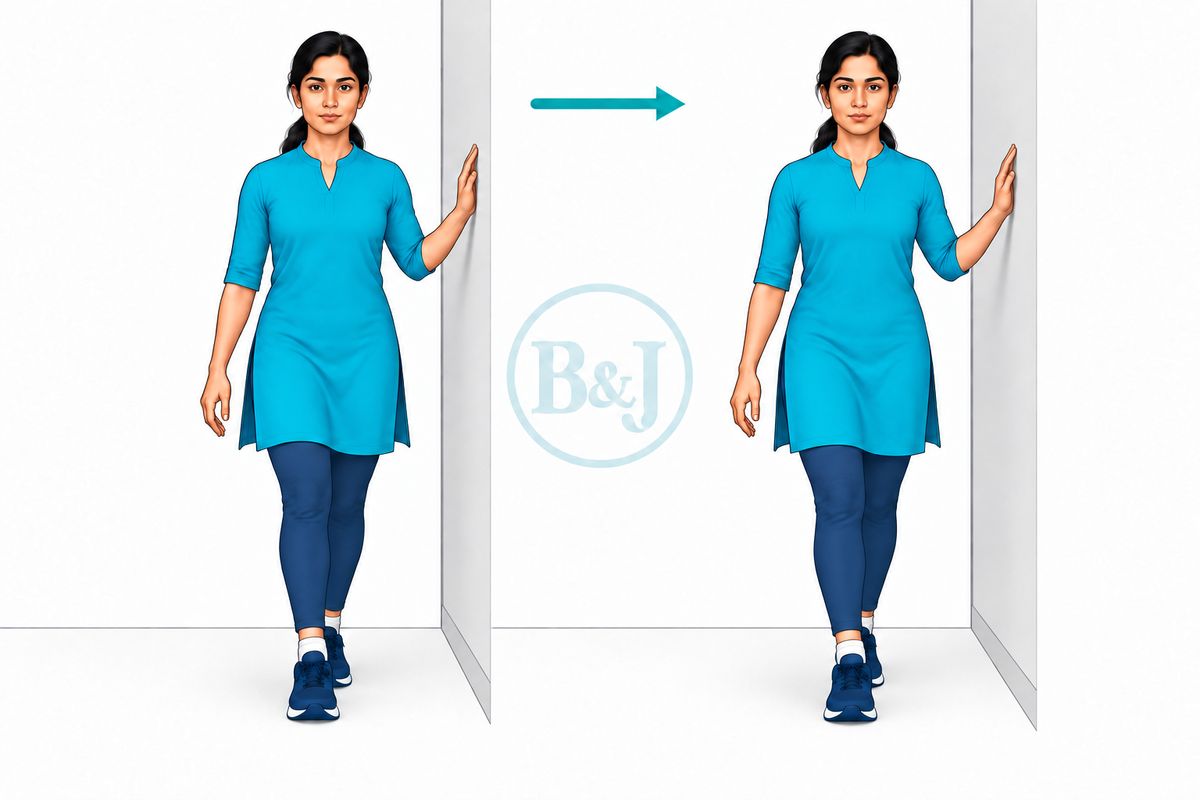
Walk with your walker, putting the heel down first and rolling through to push off from the toes. Keep the steps even.
Should feel: Steadier walking Should not feel: Wobbling — use the wall
Not yet A pillow under the knee. Squatting, sitting on the floor or using an Indian toilet — until we have told you it is safe. Driving.
Move to the next stage only after we have seen you, and the X-ray if one was planned.
Walk without a limp, and manage stairs more easily. Carry on with the earlier exercises.
Weight bearing Full. Use the stick outdoors until you are steady without it.
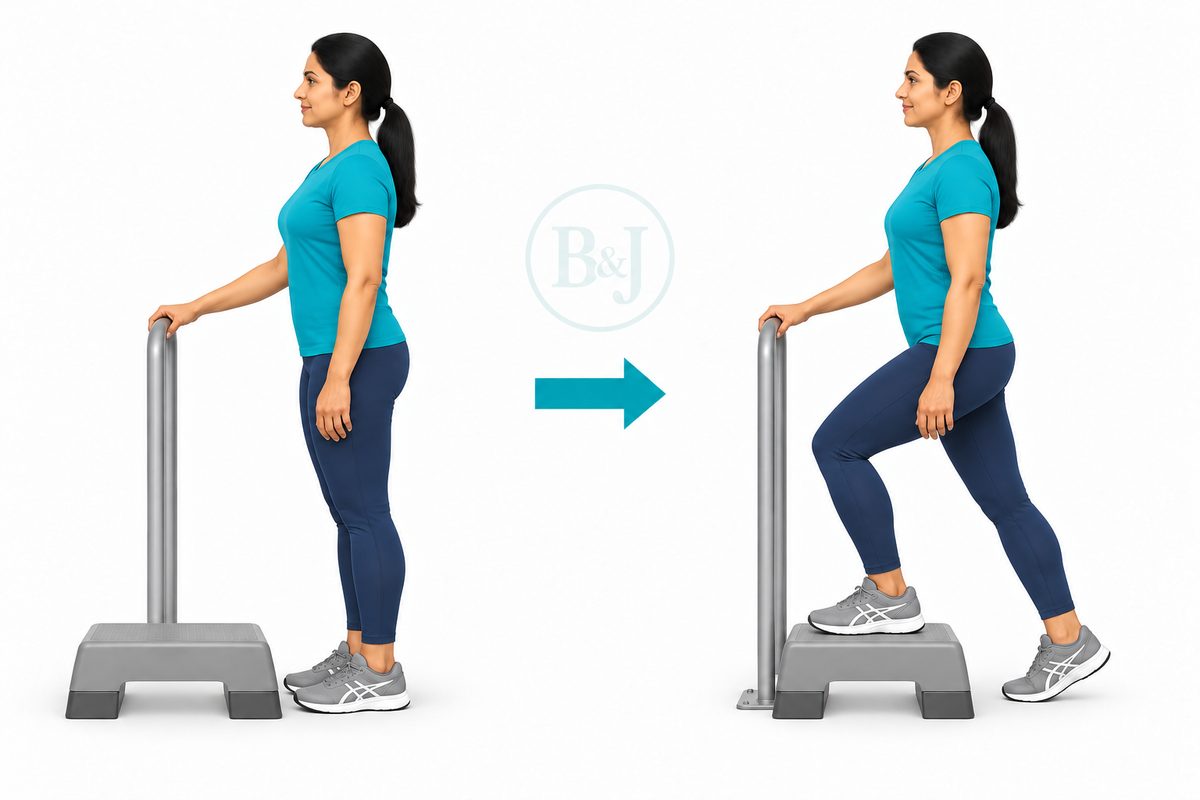
Hold a rail. Step up onto a low step with the operated leg, then step down with the other leg.
Should feel: The thigh working Should not feel: The knee falling inwards
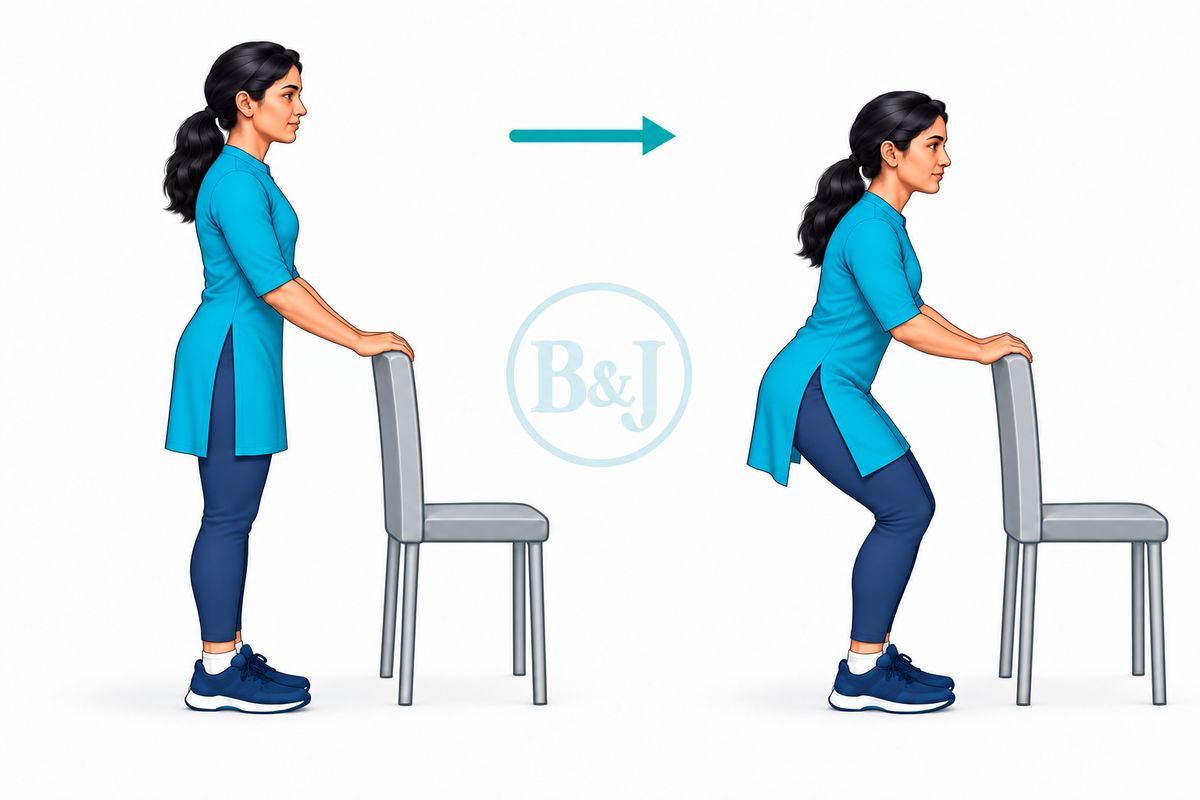
Hold a support. Bend the knees a little way, then straighten.
Should feel: The thighs working Should not feel: Deep groin pain
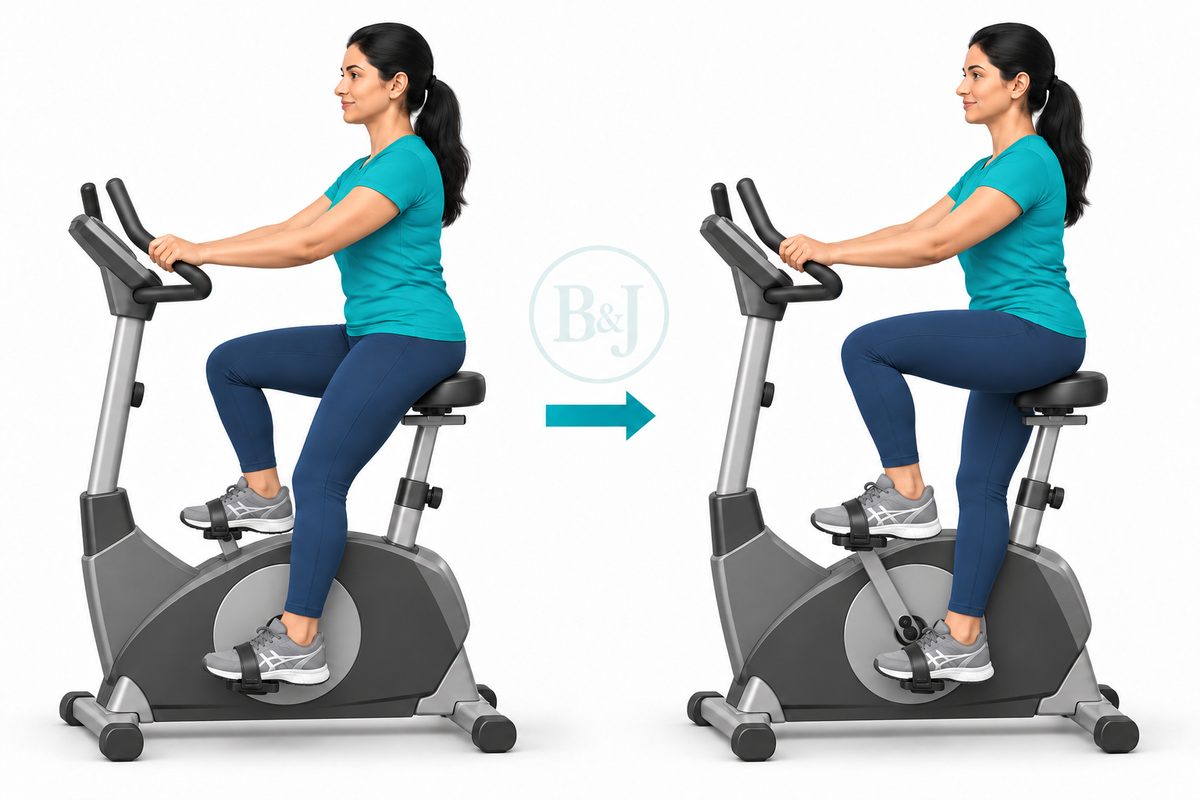
Set the seat high, so the knee is almost straight at the bottom. Pedal gently with little resistance.
Should feel: The knee moving freely Should not feel: Pain in the knee or hip
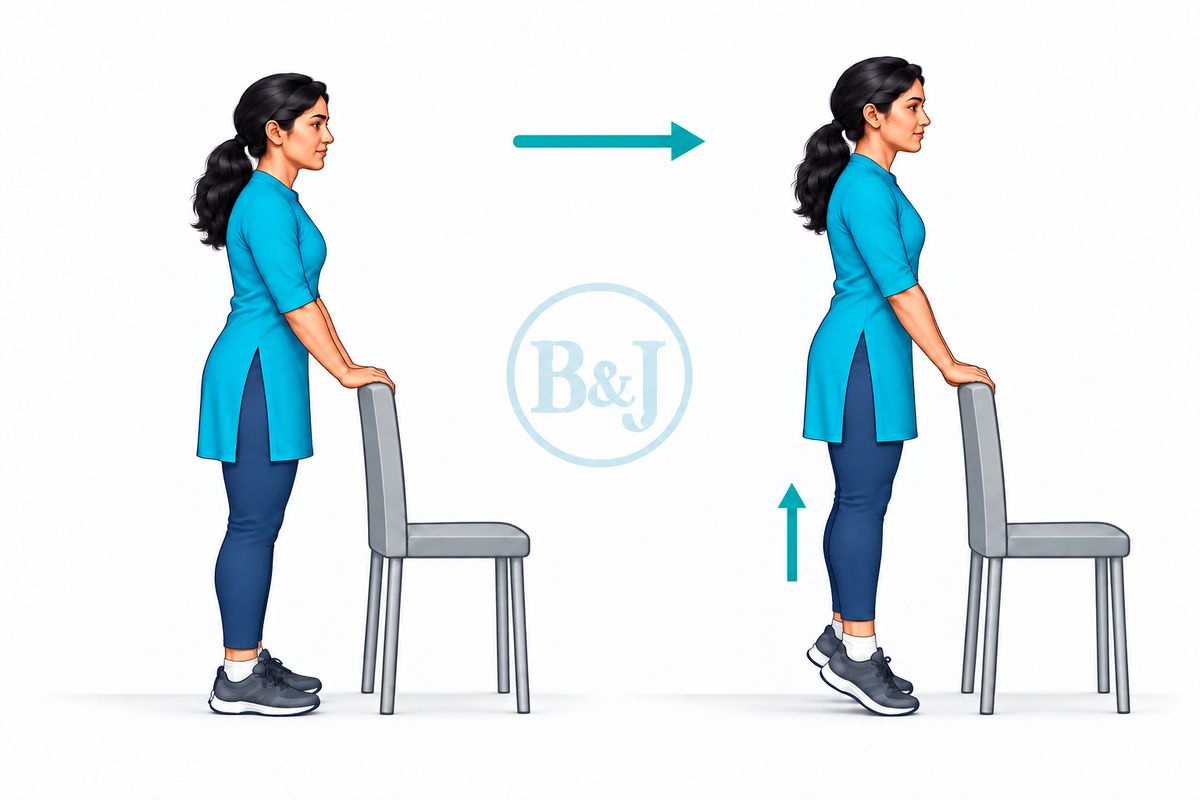
Rise onto both toes and lower under control.
Should feel: The calf working Should not feel: Sharp pain
Not yet Heavy lifting. Squatting, sitting on the floor or using an Indian toilet — until we have told you it is safe.
Move to the next stage only after we have seen you, and the X-ray if one was planned.
Back to your usual activities. Keep walking, and keep the thigh strong. Tell any dentist or doctor that you have a knee replacement.
Weight bearing Full.
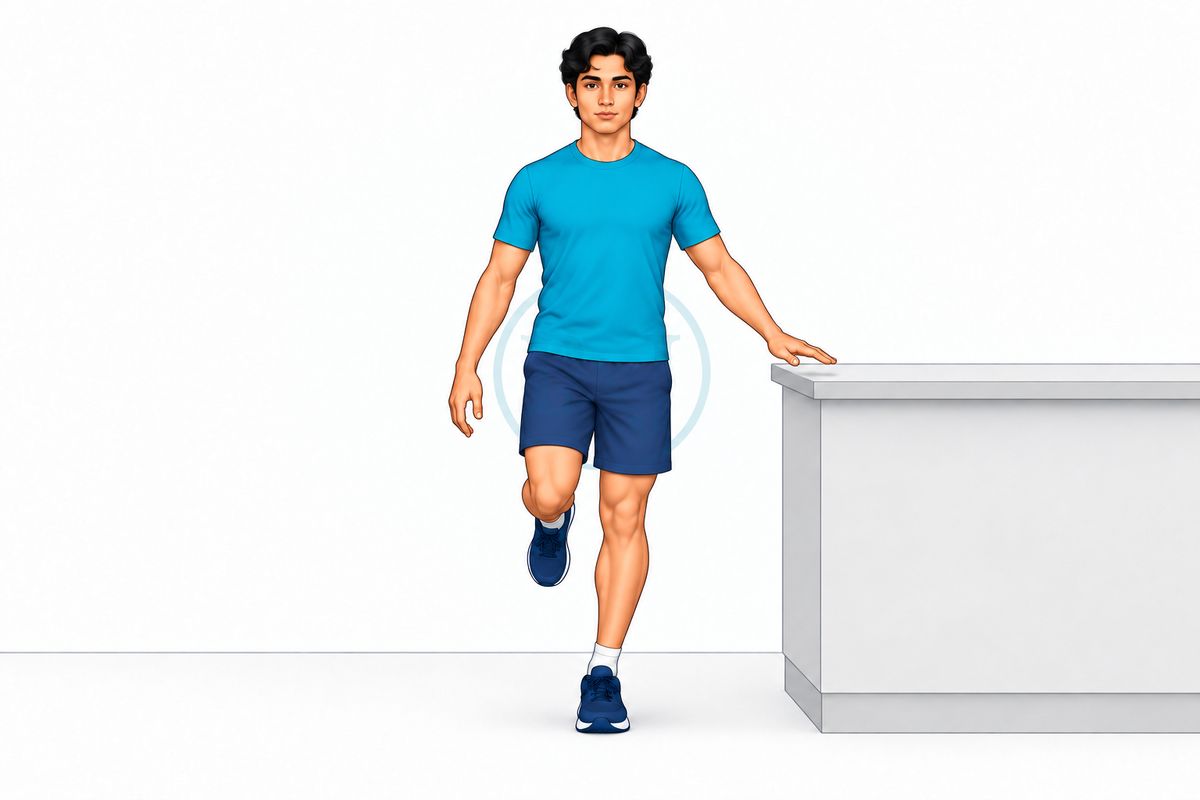
Stand on one leg beside a worktop.
Should feel: Working to stay steady Should not feel: Losing balance — hold on
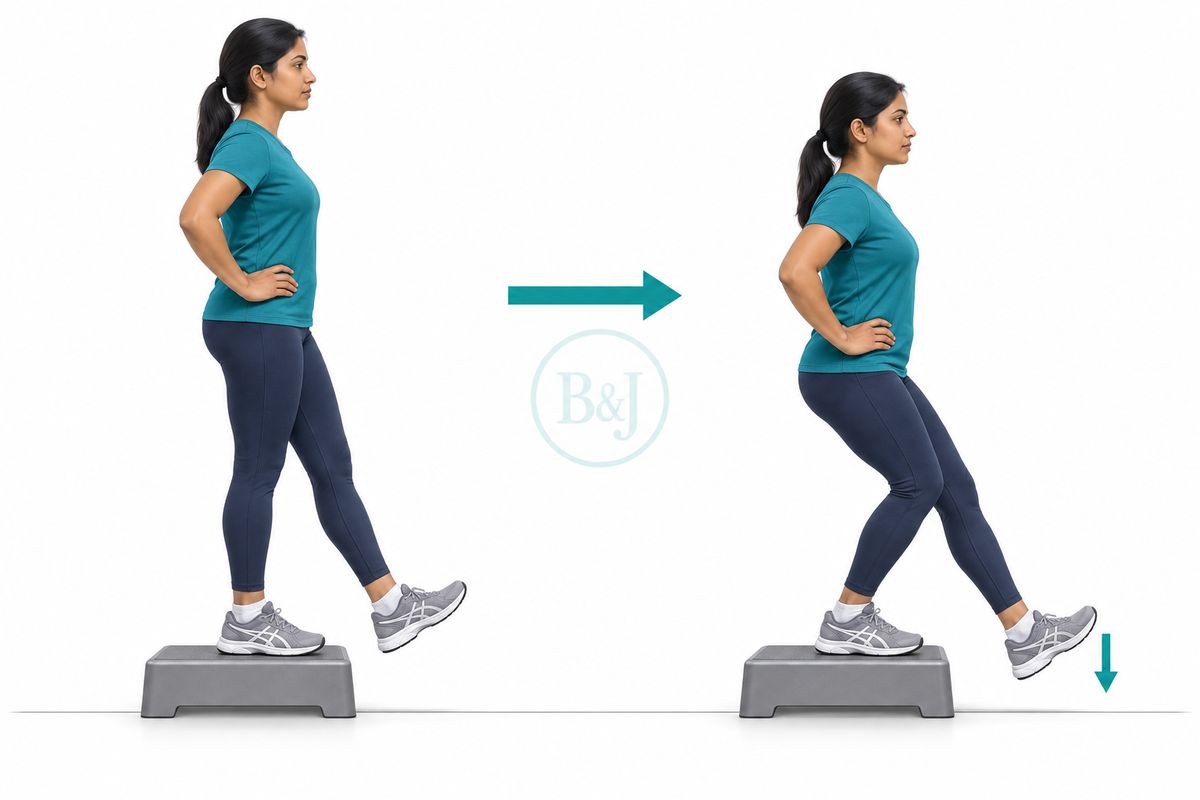
Stand on the operated leg on a low step and lower the other heel slowly towards the floor.
Should feel: Controlled lowering Should not feel: The knee falling inwards
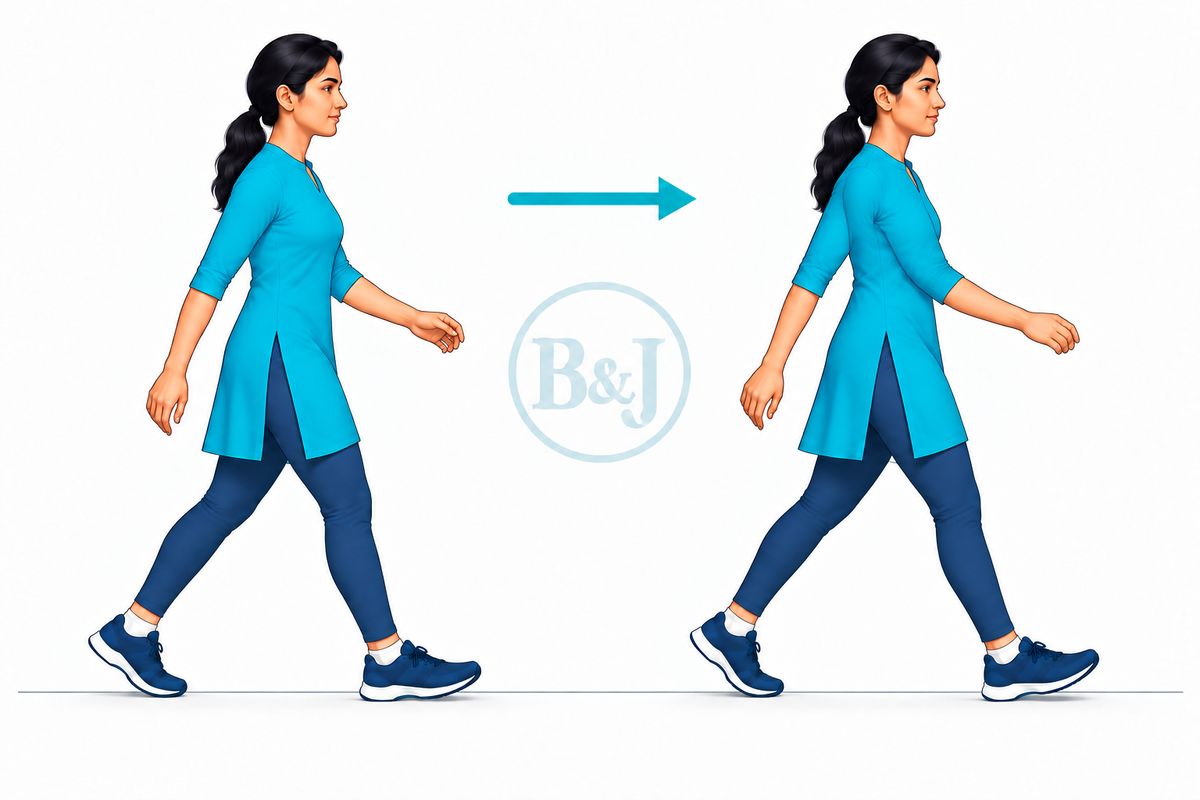
Walk daily. Build the distance slowly.
Should feel: Easier walking over weeks Should not feel: Swelling next day — do less
Not yet Running, jumping or impact sport. Squatting, sitting on the floor or using an Indian toilet — until we have told you it is safe.
In your language, free to download. Each one is a short PDF you can keep on your phone or print.
Call either clinic during consulting hours, or send a WhatsApp message any time.