
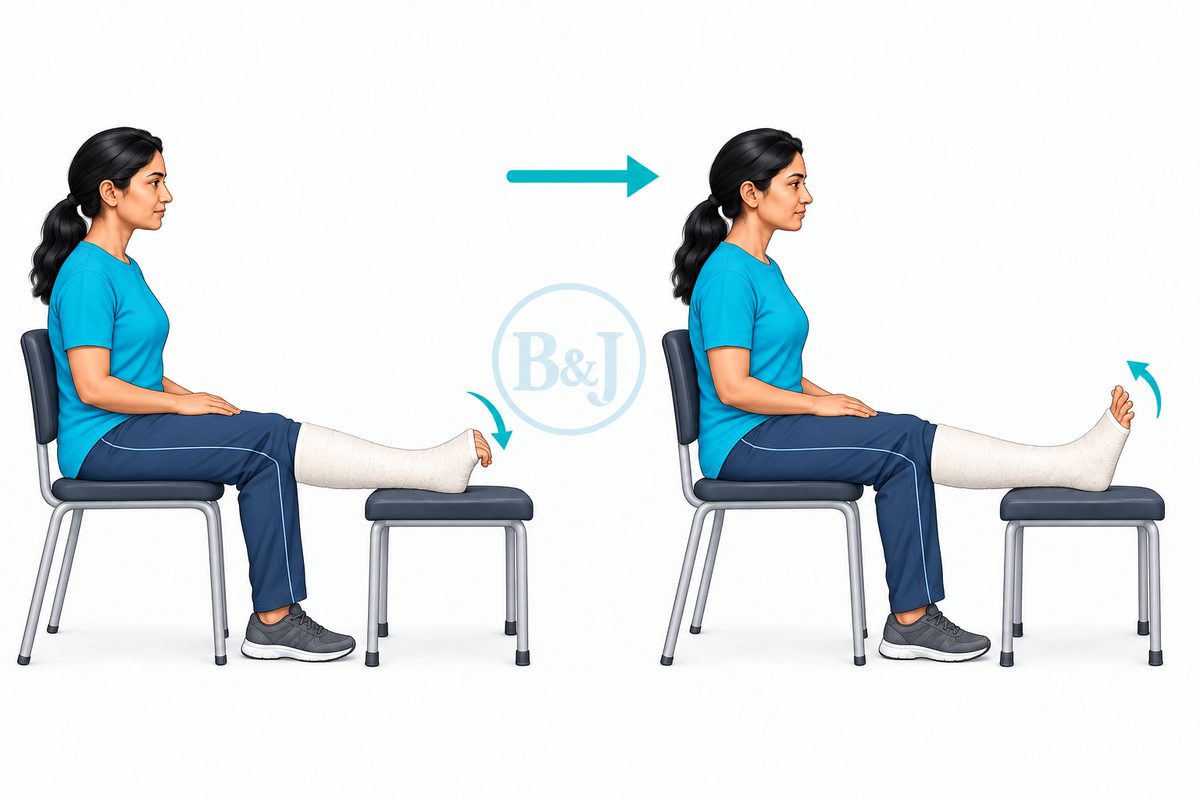
Toe wiggles
Curl the toes down, then spread them and pull them up, as far as the plaster allows.
- 10 times
- Every hour while awake
Home / Patient library / Exercise sheets / Sheet 99
Foot & ankle · Torn Achilles tendon
Count the weeks from the day of your injury. The date is on your prescription.
If your doctor wrote a different plan on your prescription, follow that instead of this page.
A4 PDF, 0.7 MB. Free to download — no sign-up, no email address needed.
Keep the foot raised above the level of the hip most of the day. The plaster or boot holds the toes pointing down, so the torn ends of the tendon lie together and heal: keep it on day and night, and dry. If we prescribed blood-thinning injections or tablets, take every dose.
Weight bearing As written on your prescription, with crutches. Never stand on the foot without the plaster or boot.
Curl the toes down, then spread them and pull them up, as far as the plaster allows.
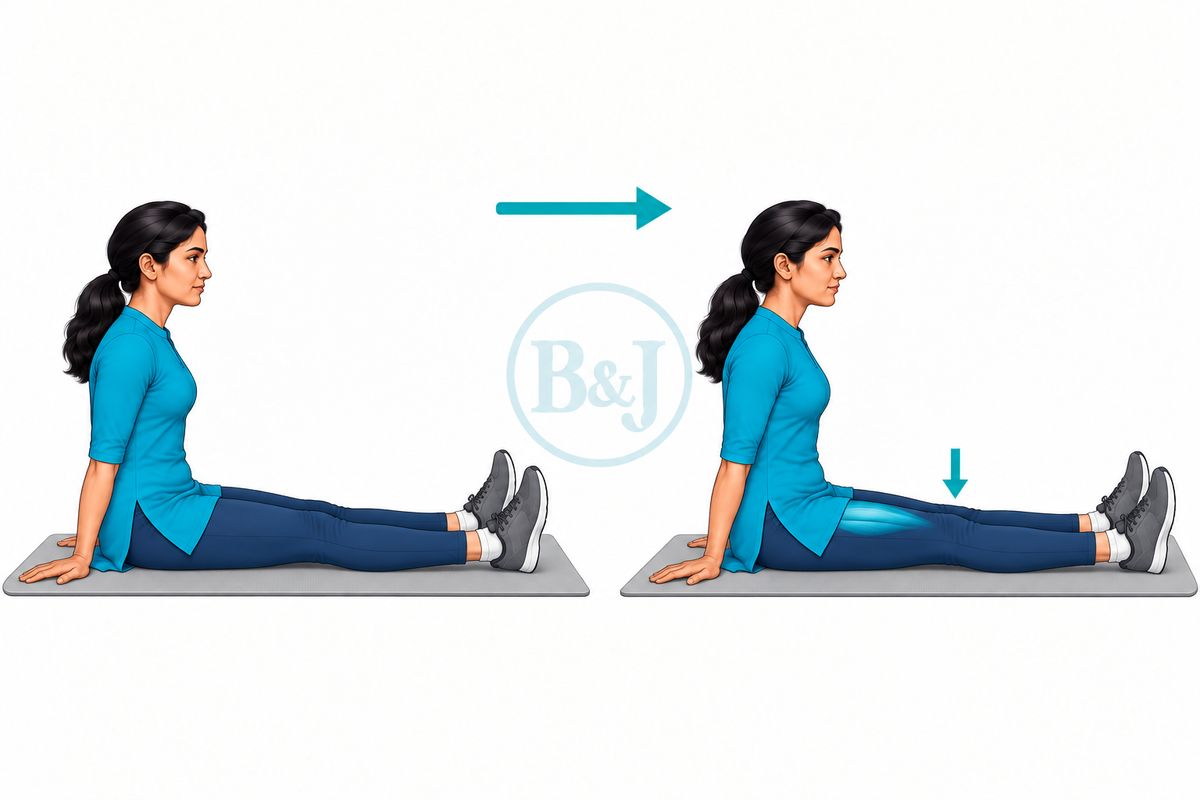
Sit with the leg straight. Press the back of the knee down and tighten the thigh.
Should feel: The thigh muscle tightening Should not feel: Knee pain
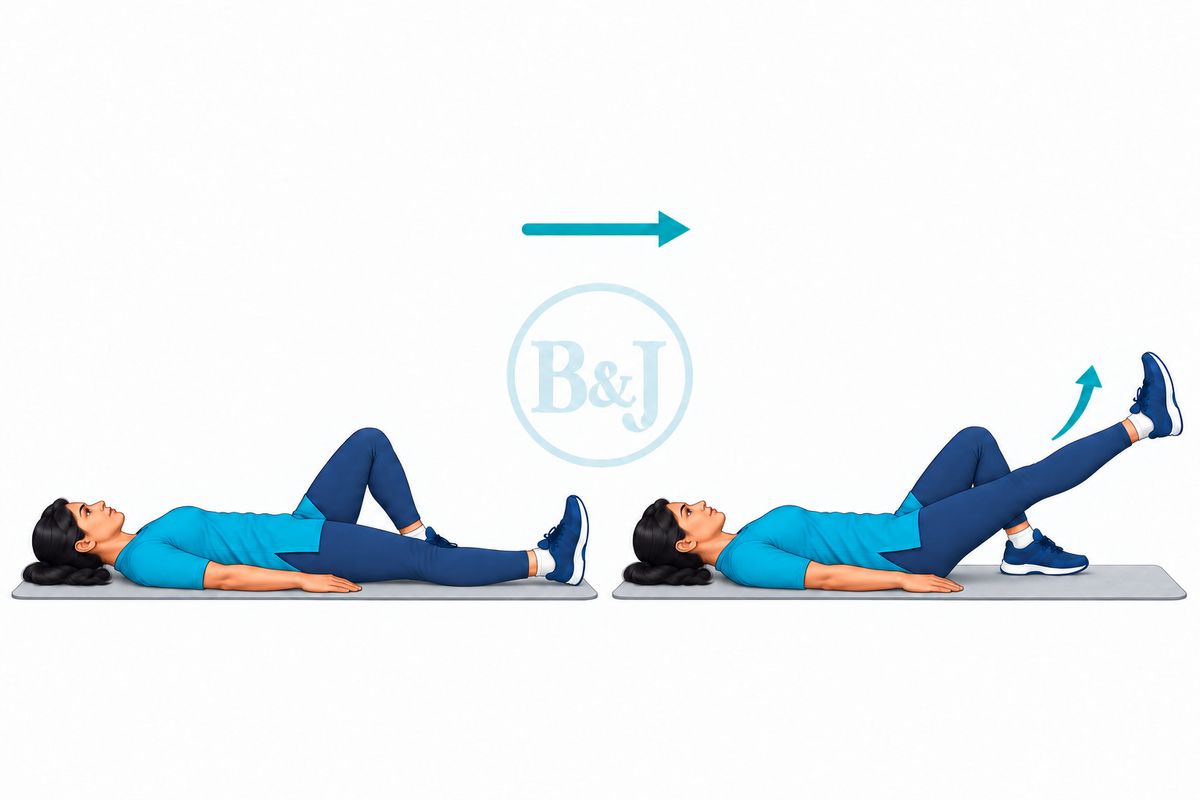
Lie down, one knee bent. Keep the other knee straight and lift the leg 20 cm.
Should feel: The thigh working Should not feel: The knee bending or back pain
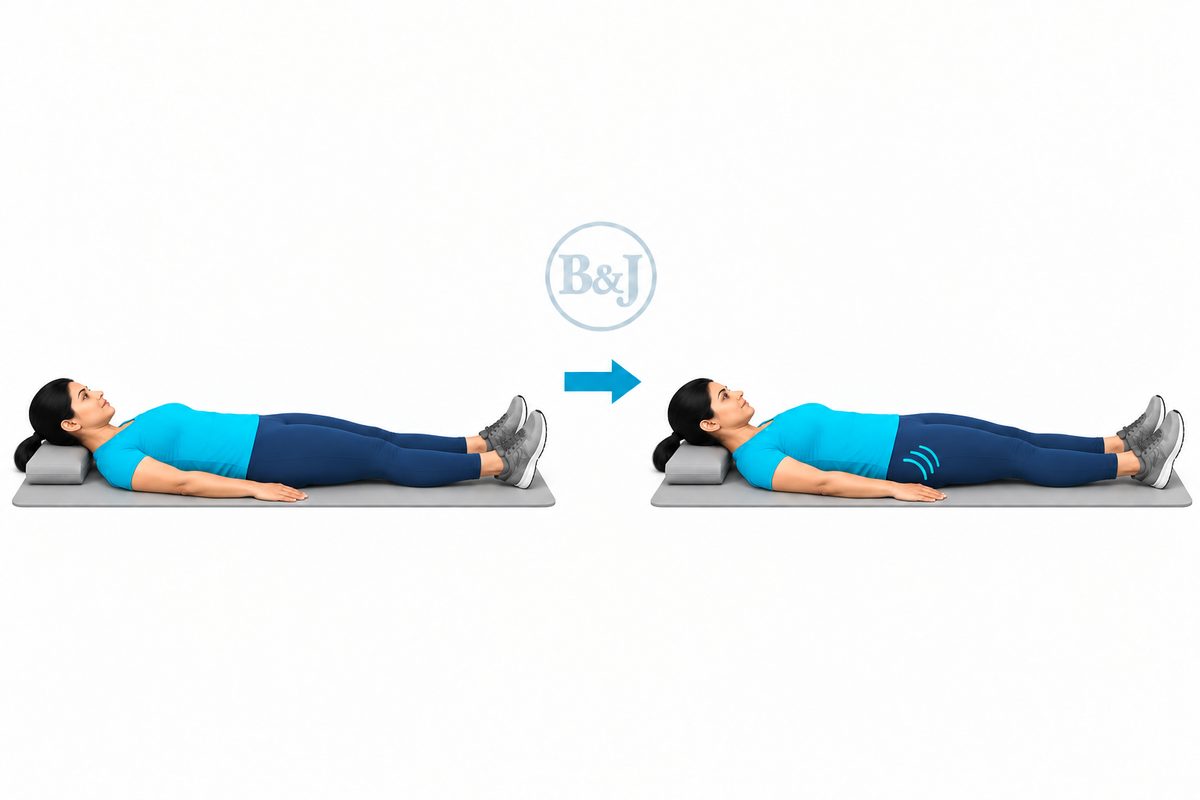
Lie on your back with the legs straight. Squeeze the buttocks together, hold, then relax.
Should feel: The buttocks tightening Should not feel: Back pain
Not yet Taking the plaster or boot off, pulling the foot up to stretch the calf, walking barefoot, getting the plaster wet, or driving.
Move to the next stage only after we have seen you, and the X-ray if one was planned.
In the boot with heel wedges. We take the wedges out one by one at your visits, so the foot comes slowly to level. Keep the boot on day and night. Take it off only to wash, sitting with the foot pointing down, and never pull the foot up.
Weight bearing As written on your prescription, usually building up to full weight in the boot.
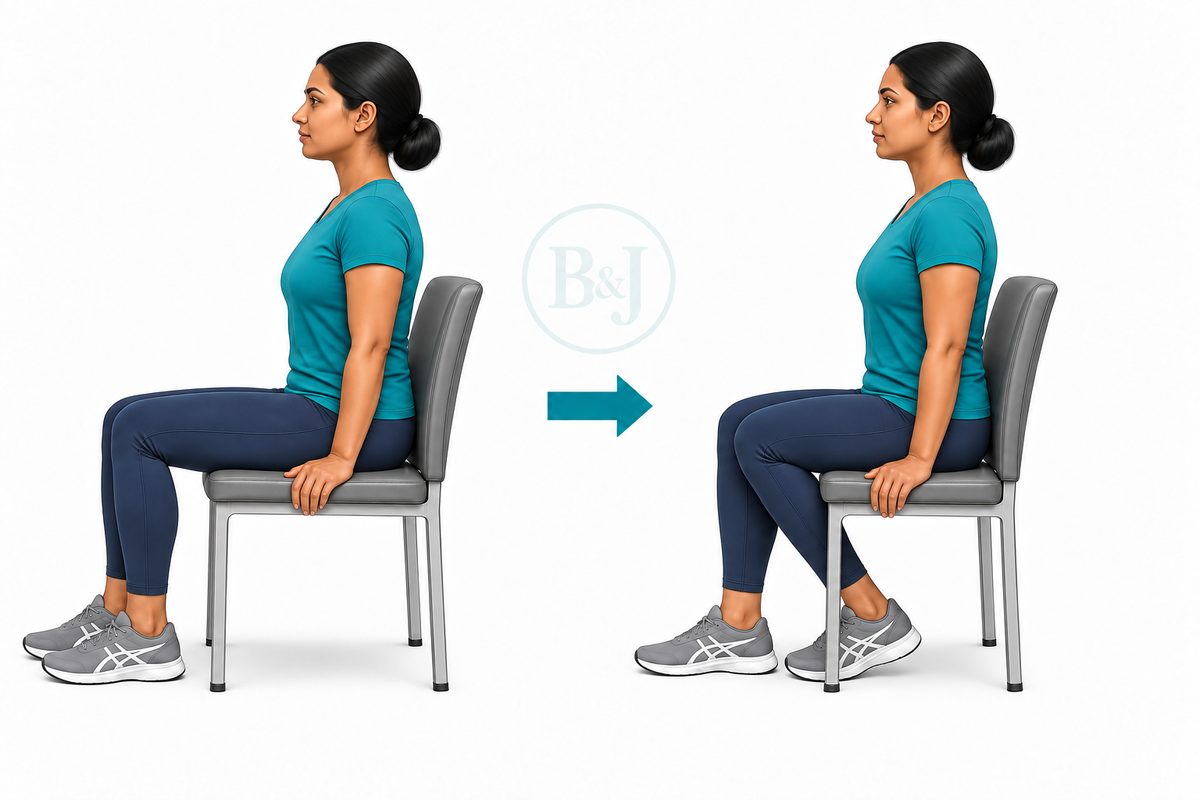
Sit on a firm chair. Slide the foot back under the chair to bend the knee, hold, then bring it forward.
Should feel: A stretch as the knee bends Should not feel: Sharp pain
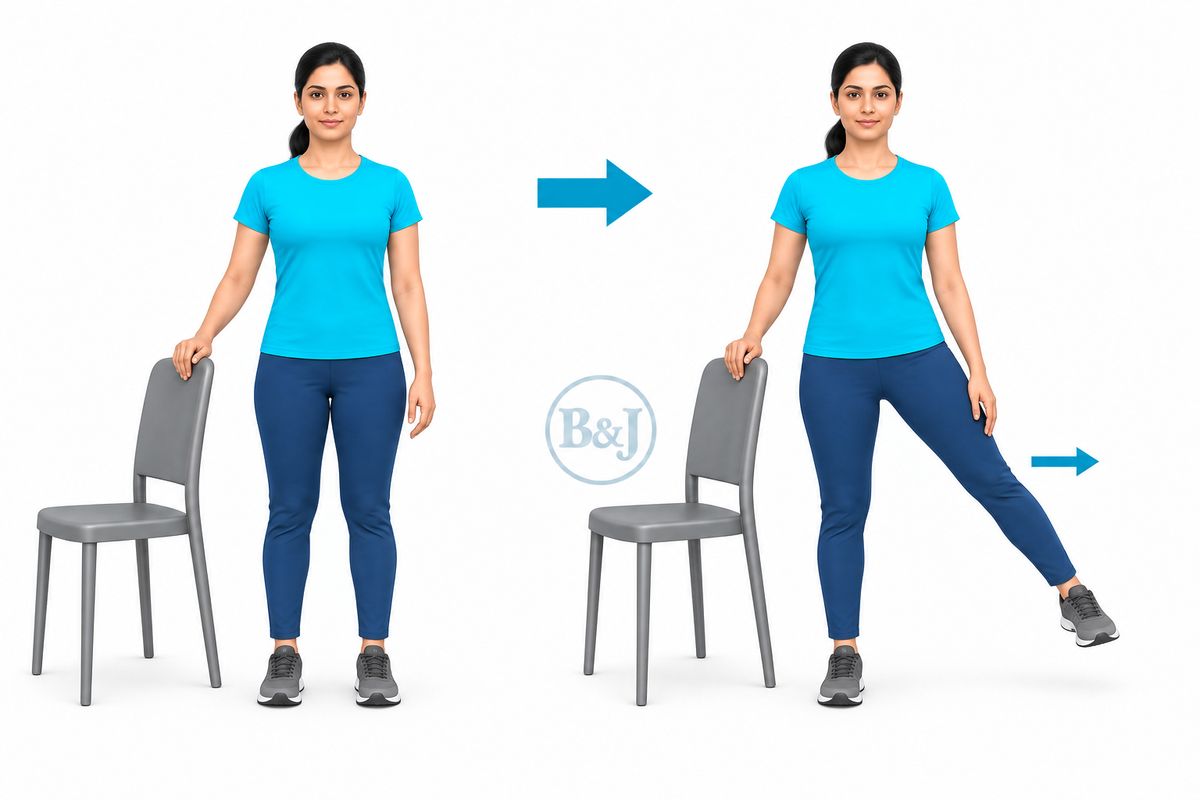
Hold a chair. Lift the leg out to the side, keeping the body upright.
Should feel: The side of the hip working Should not feel: Leaning over
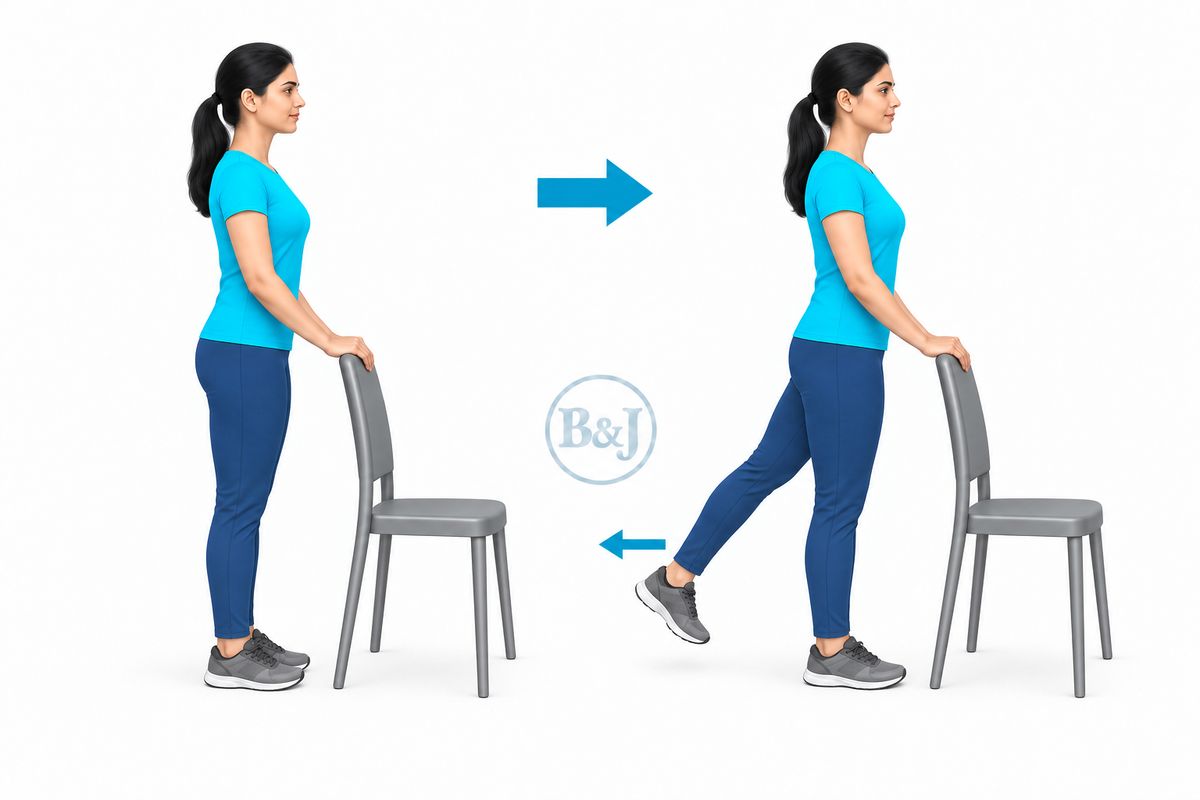
Hold a chair. Take the leg backwards, keeping it straight.
Should feel: The buttock working Should not feel: Arching the back
Not yet Walking without the boot, stretching the calf, or standing on tiptoe.
Move to the next stage only after we have seen you, and the X-ray if one was planned.
Out of the boot into a shoe, with a small heel raise inside if we advise. Walk normally and start building calf strength gently. Carry on with the earlier exercises.
Weight bearing Full, in a shoe.
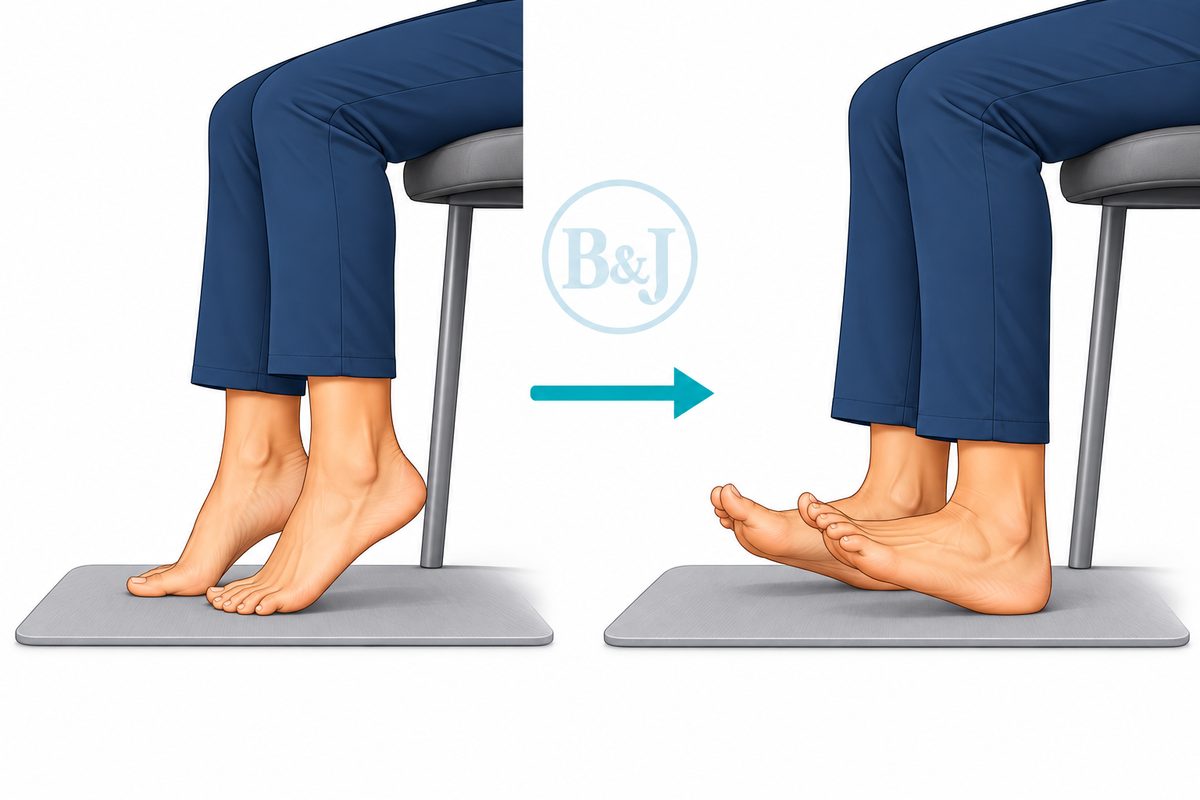
Sit with both feet flat on the floor. Lift the heels, lower them, then lift the toes.
Should feel: The calf and the front of the shin working Should not feel: Sharp pain
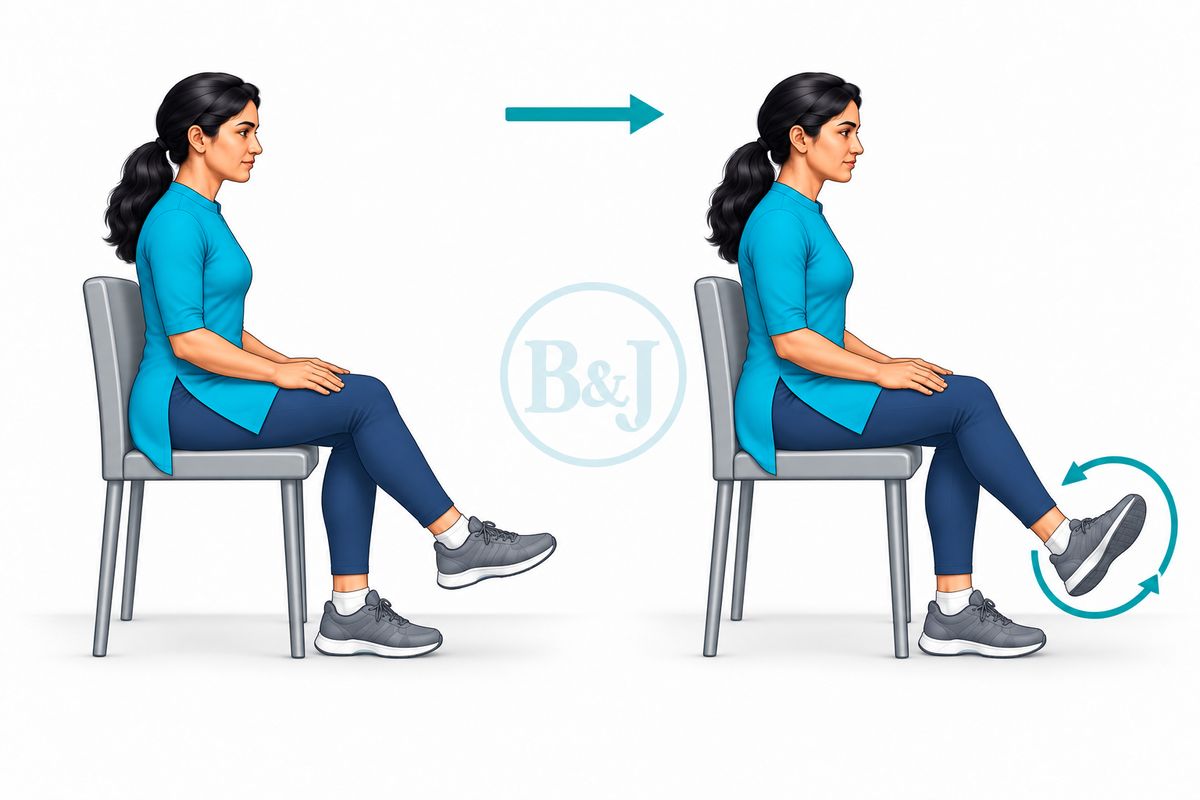
Move the ankle slowly in circles both ways.
Should feel: The ankle loosening Should not feel: Sharp pain
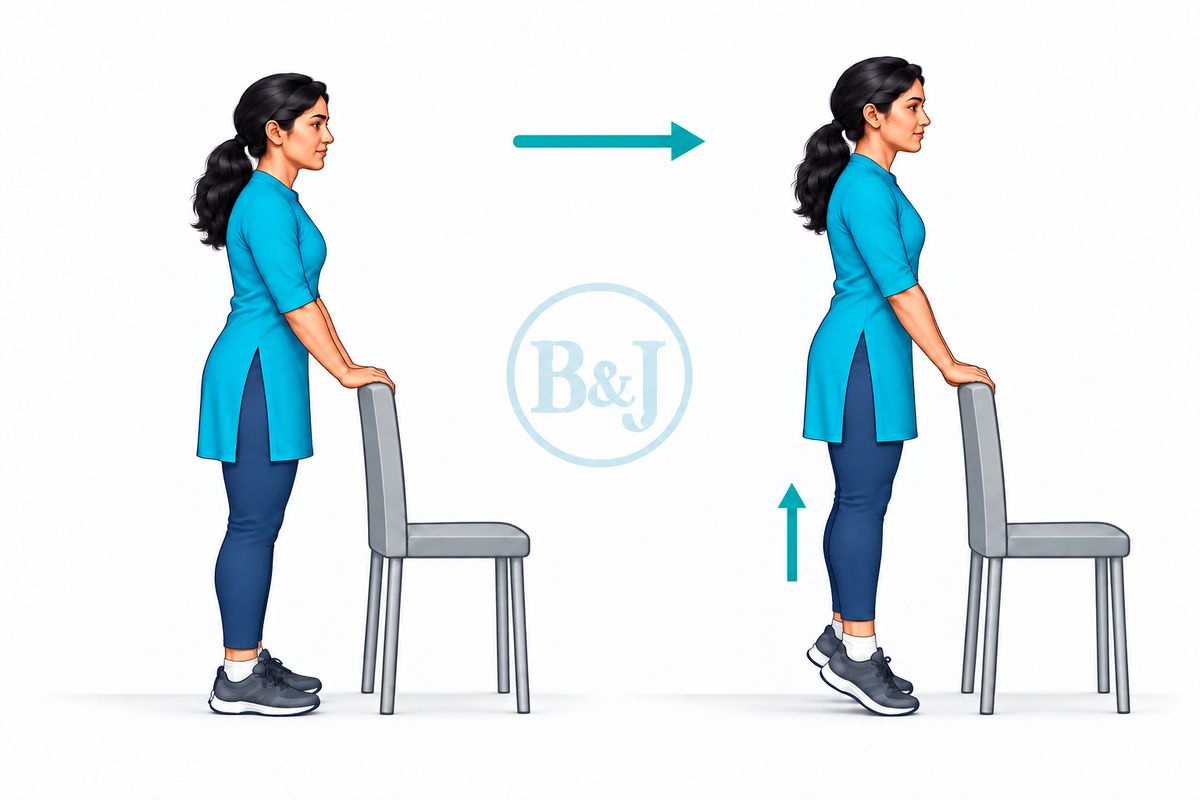
Rise onto both toes and lower under control.
Should feel: The calf working Should not feel: Sharp pain
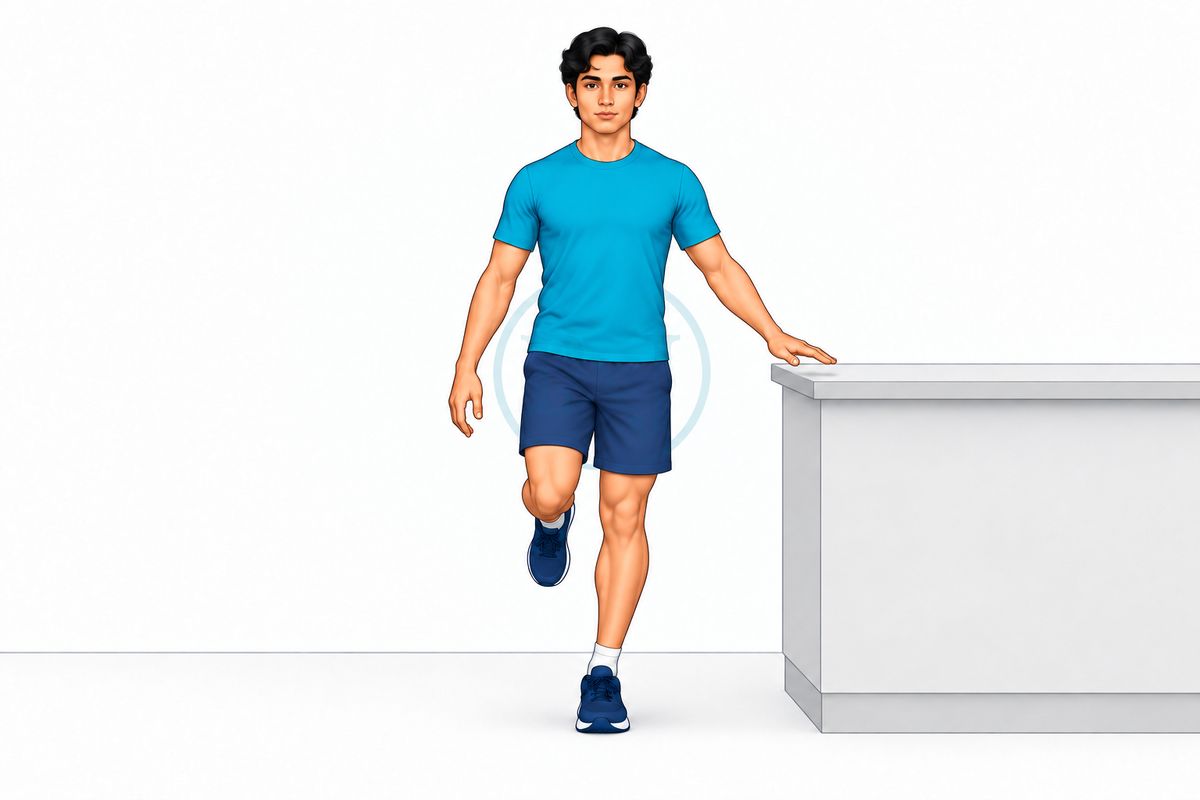
Stand on one leg beside a worktop.
Should feel: Working to stay steady Should not feel: Losing balance — hold on
Not yet Running, jumping, stretching the calf, letting the heel drop below a step, or climbing stairs two at a time.
Move to the next stage only after we have seen you, and the X-ray if one was planned.
Build calf strength step by step: heel raises on both feet, then on the injured foot alone. Jogging usually starts at about 4–6 months if we agree, and sport at about 6–9 months.
Weight bearing Full.
Rise on both toes, progress to one.
Should feel: The calf working Should not feel: Ankle pain
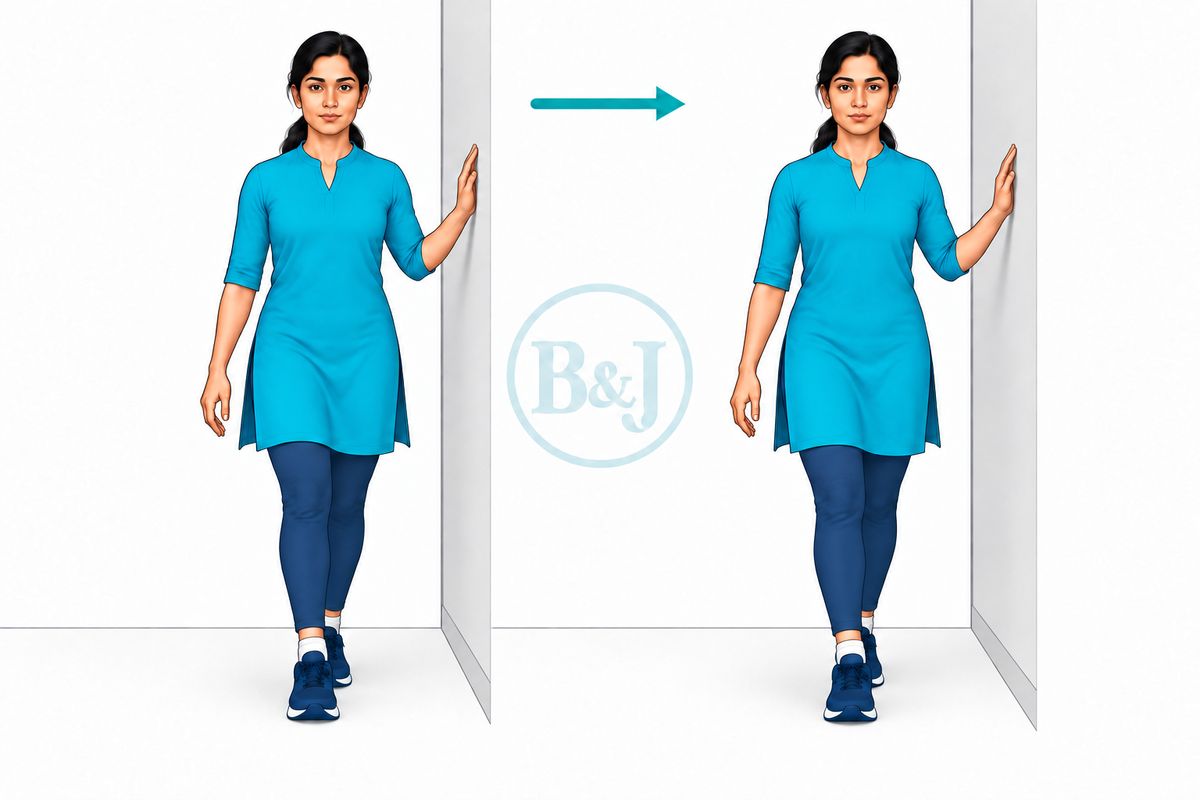
Walk heel to toe along a line, beside a support.
Should feel: Steadier walking Should not feel: Wobbling — use the wall
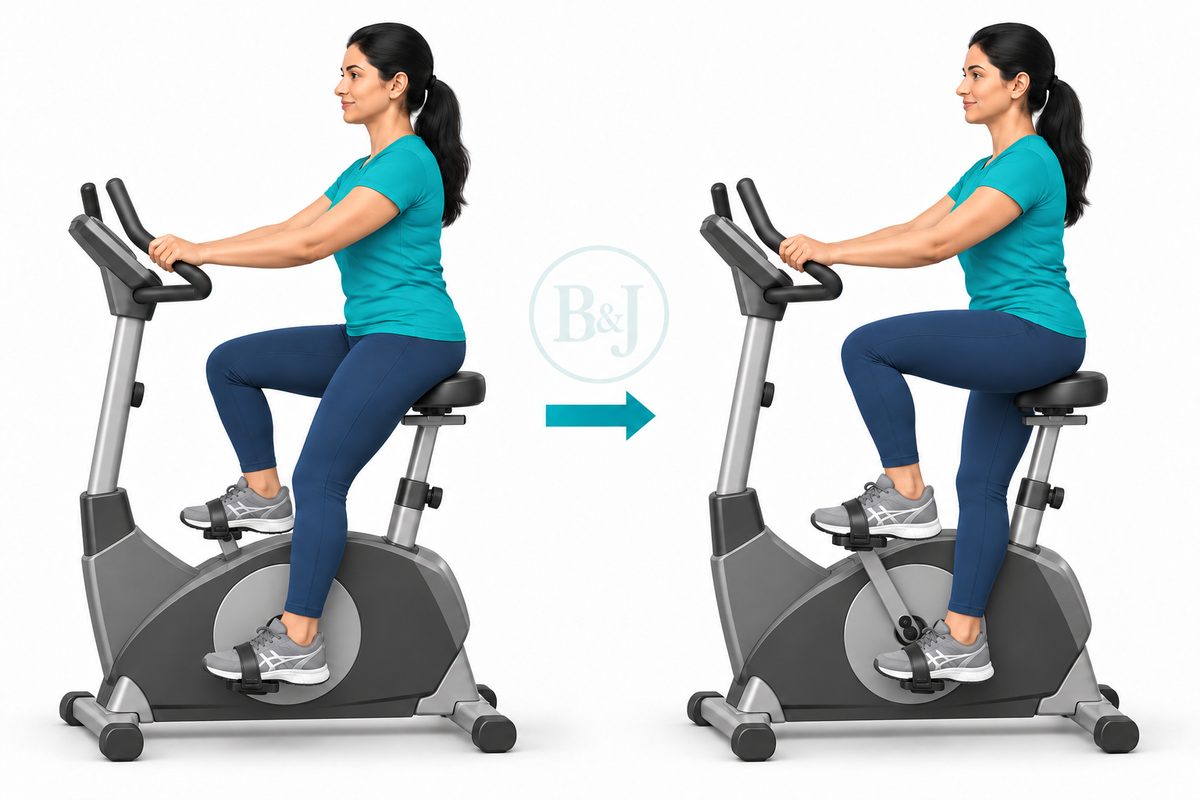
Set the seat high, so the knee is almost straight at the bottom. Pedal gently with little resistance.
Should feel: The knee moving freely Should not feel: Pain in the knee or hip
Not yet Heel drops below a step or calf stretching, until we tell you to start. Jumping or sudden-start sport, such as cricket, football or badminton, until we clear you.
Call either clinic during consulting hours, or send a WhatsApp message any time.