
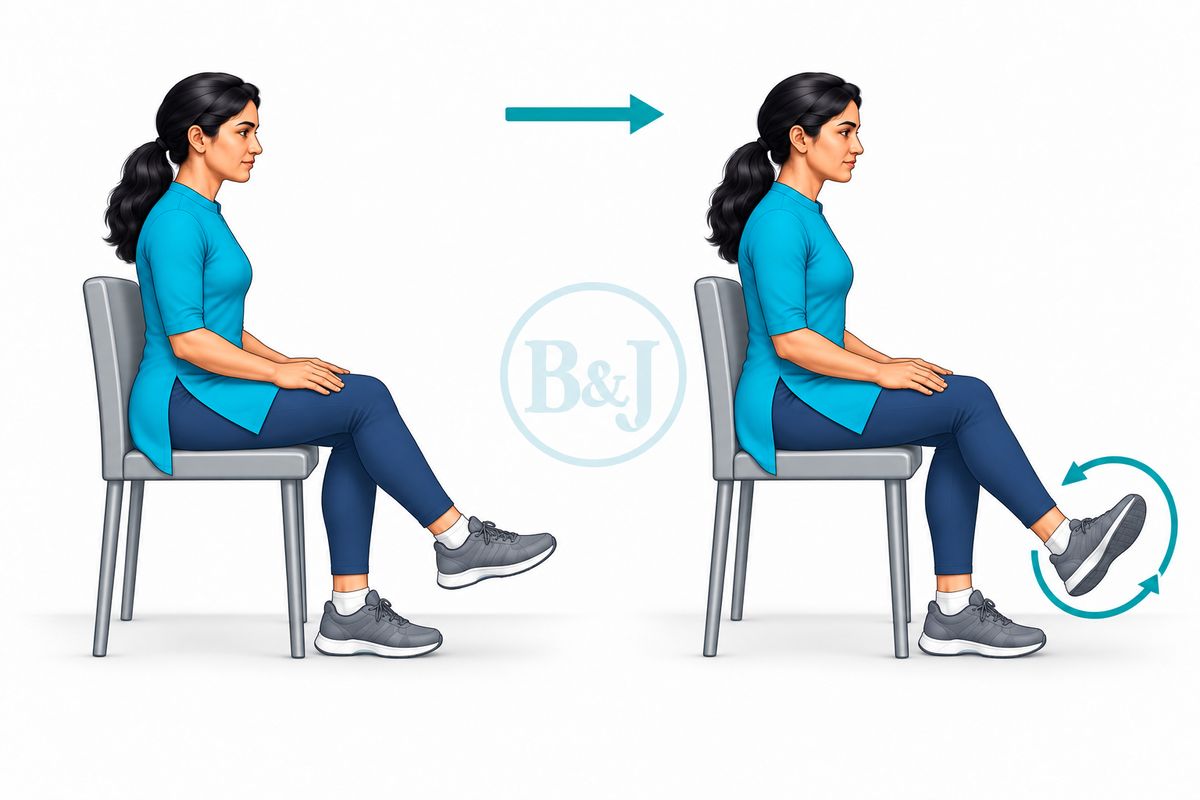
Ankle circles
Move the ankle slowly in circles both ways.
- 10 each way
- 3 times a day
Should feel: The ankle loosening Should not feel: Sharp pain
Home / Patient library / Exercise sheets / Sheet 97
Foot & ankle · Torn calf muscle
Count the weeks from the day of your injury. The date is on your prescription.
If your doctor wrote a different plan on your prescription, follow that instead of this page.
A4 PDF, 0.6 MB. Free to download — no sign-up, no email address needed.
For the first 2–3 days: rest, a cold pack wrapped in a cloth for 15 minutes 3–4 times a day, a crepe bandage, and the leg raised with the ankle above the level of the hip. Wear the heel raise in your shoe. Then walk short distances as the pain allows, and keep the ankle moving gently within comfort.
Weight bearing As comfortable, with crutches if you need them, and the heel raise in your shoe.
Move the ankle slowly in circles both ways.
Should feel: The ankle loosening Should not feel: Sharp pain
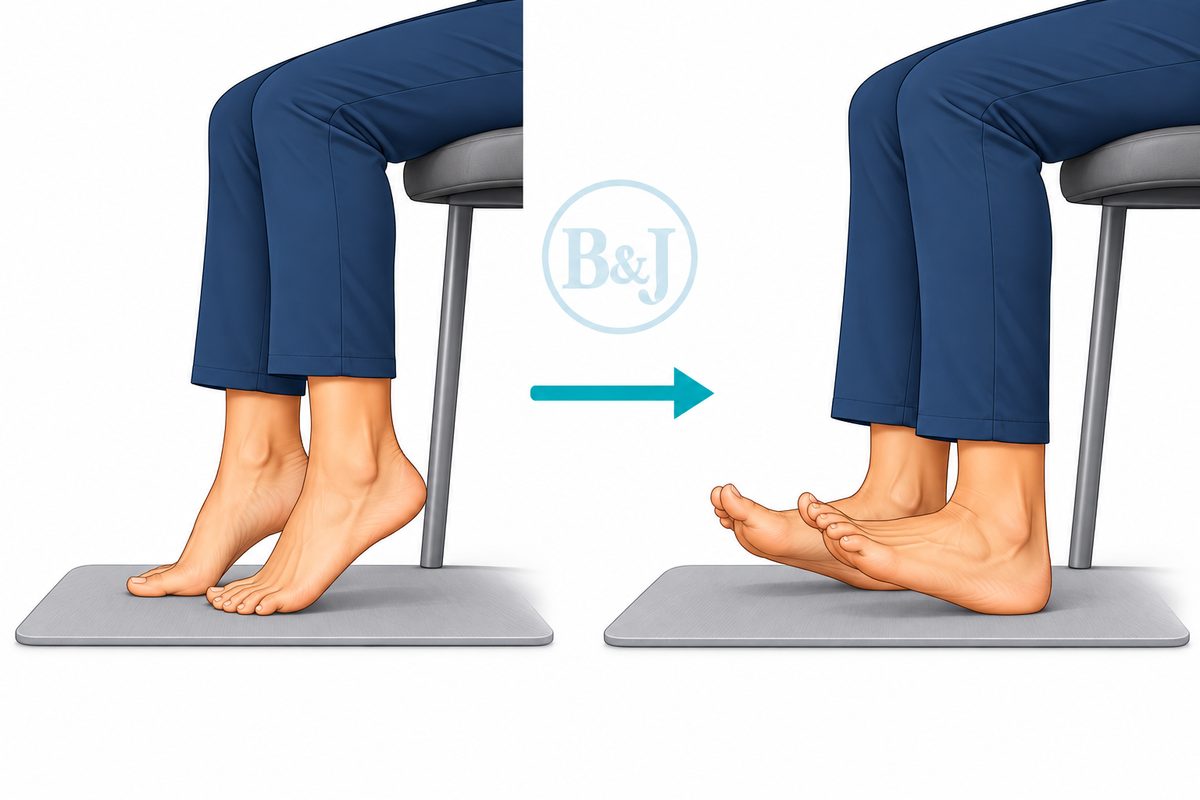
Sit with both feet flat on the floor. Lift the heels, lower them, then lift the toes.
Should feel: The calf and the front of the shin working Should not feel: Sharp pain
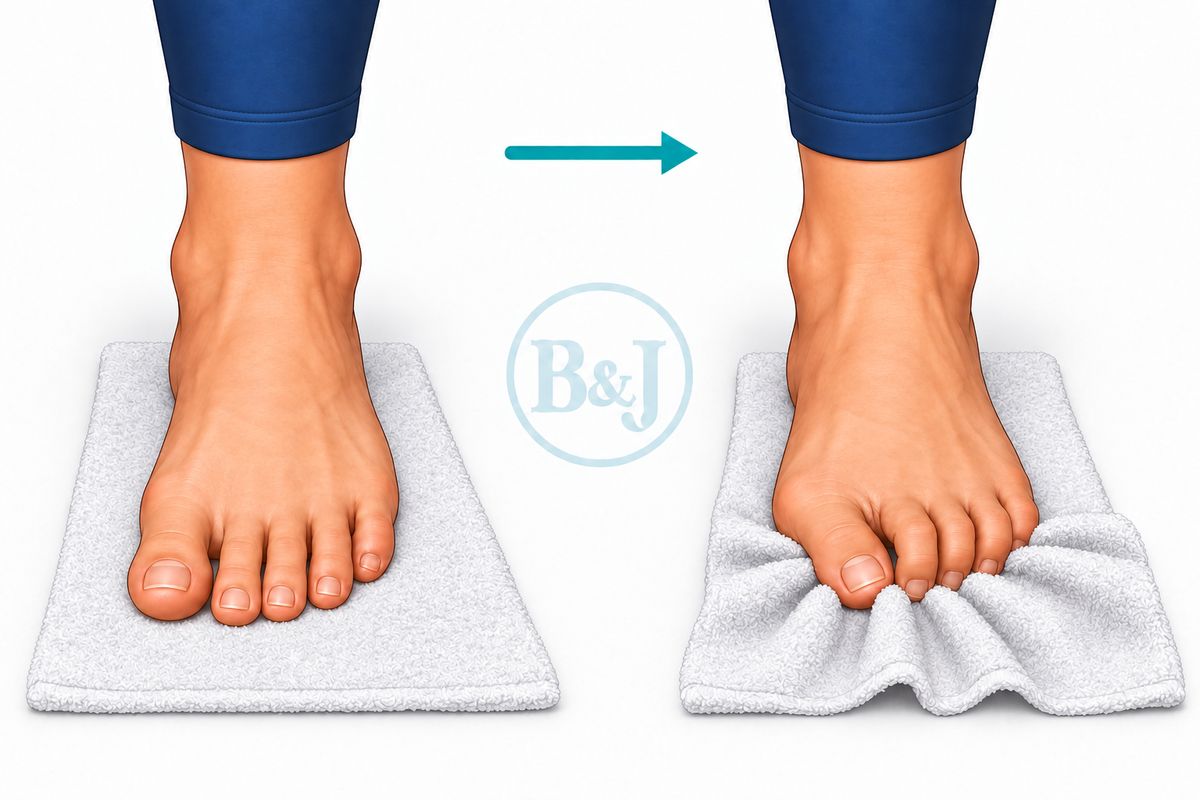
Scrunch a towel with the toes.
Should feel: The foot muscles working Should not feel: Cramp
Not yet Stretching the calf, oil massage or rubbing the calf hard, hot fomentation, running, or standing on tiptoe on this leg alone.
Move to the next stage only after we have seen you, and the X-ray if one was planned.
Start gentle calf stretching: a mild pull, never pain. Build calf strength step by step and walk normally. Leave out the heel raise once walking is comfortable without it. Carry on with the earlier exercises.
Weight bearing Full, as comfortable.
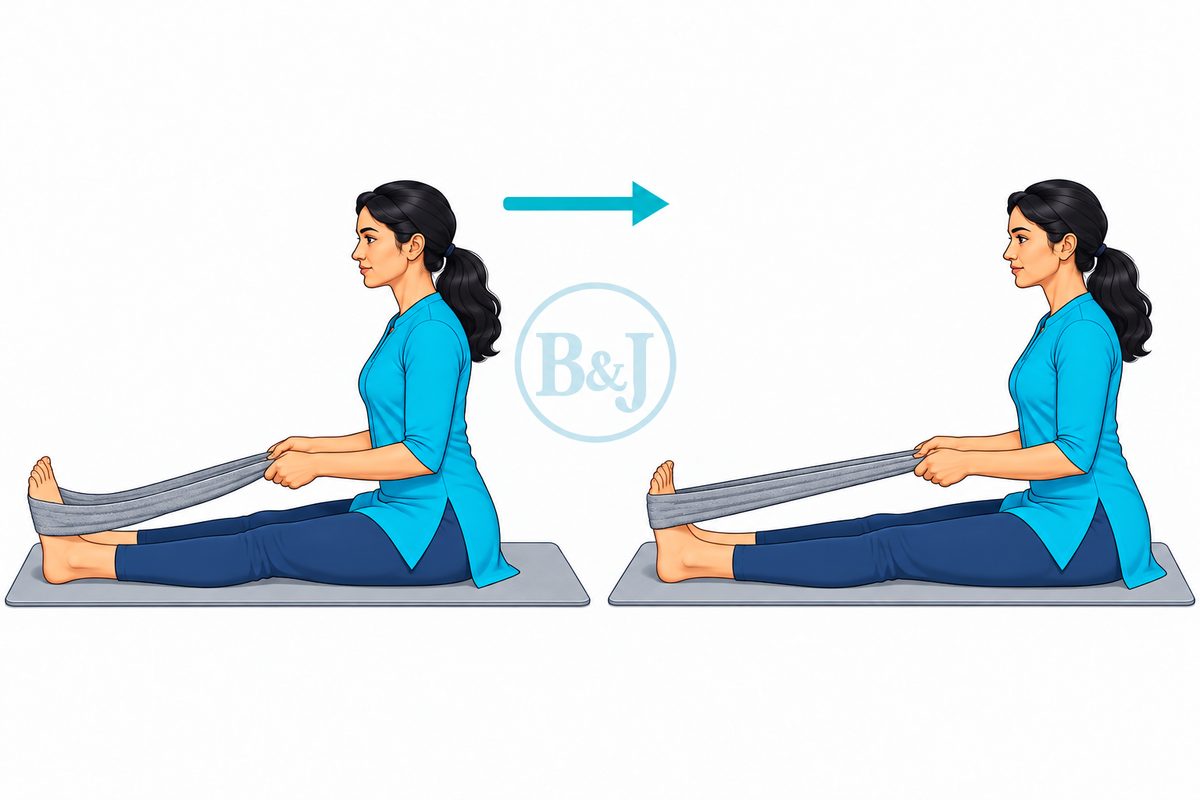
Sit with the leg straight. Loop a towel round the ball of the foot and pull the toes towards you.
Should feel: A stretch in the calf Should not feel: Sharp pain
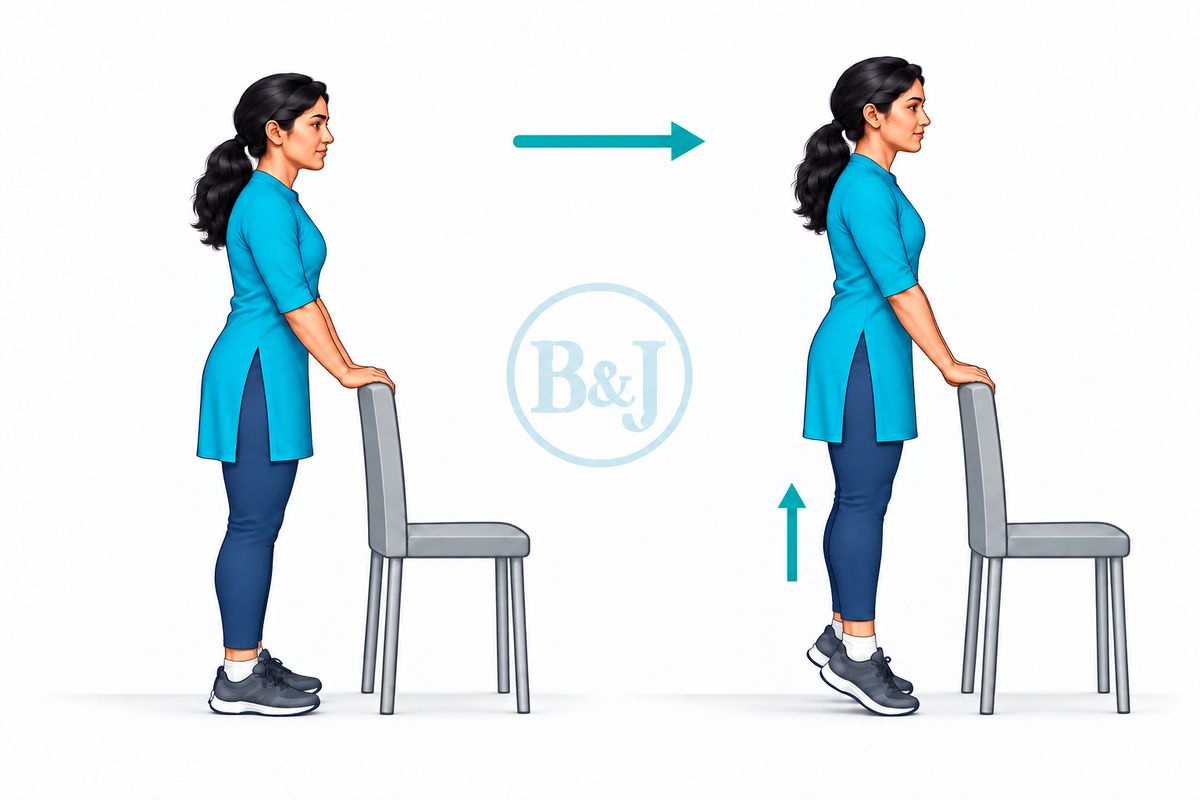
Rise onto both toes and lower under control.
Should feel: The calf working Should not feel: Sharp pain
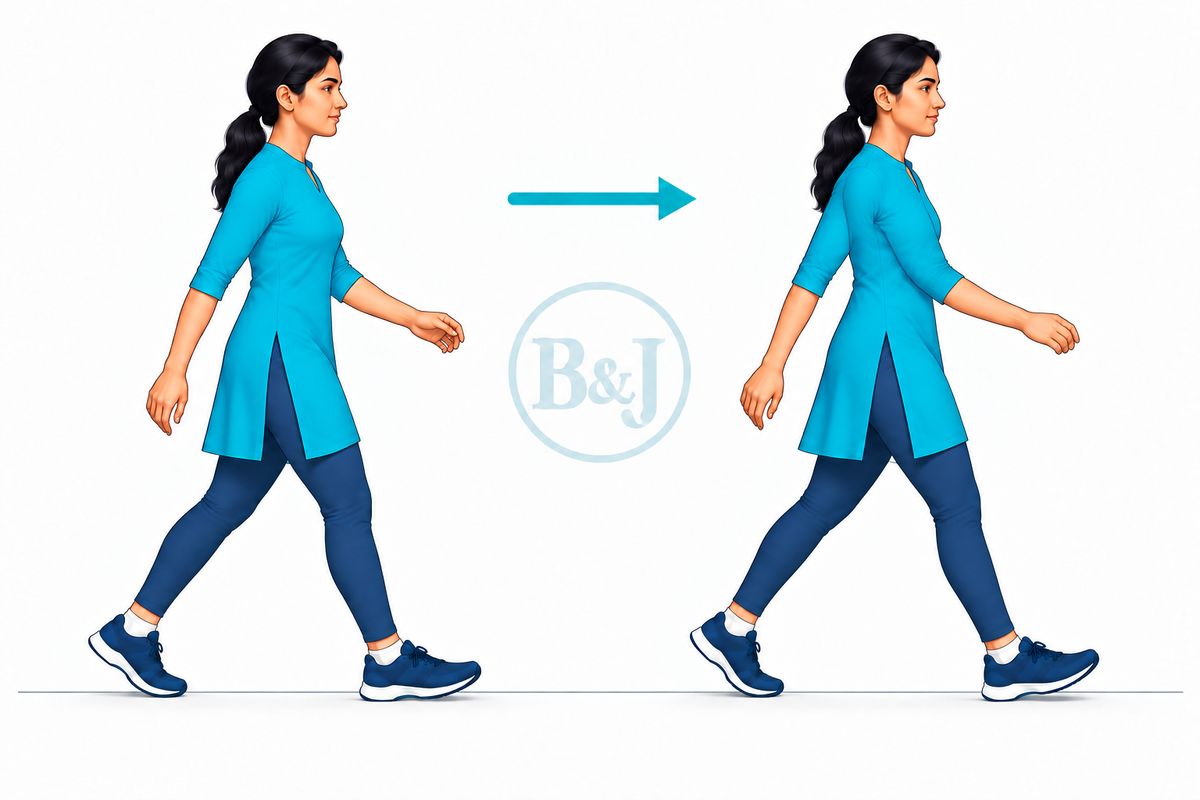
Walk daily. Build the distance slowly.
Should feel: Easier walking over weeks Should not feel: Swelling next day — do less
Not yet Running, jumping, or stretching into pain. Oil massage or rubbing the calf hard.
Move to the next stage only after we have seen you, and the X-ray if one was planned.
Build full calf strength: calf raises on both feet, then on the injured leg alone. Then brisk walking, jogging and sport, step by step, if we agree. Carry on with the stretches.
Weight bearing Full.
Rise on both toes, progress to one.
Should feel: The calf working Should not feel: Ankle pain
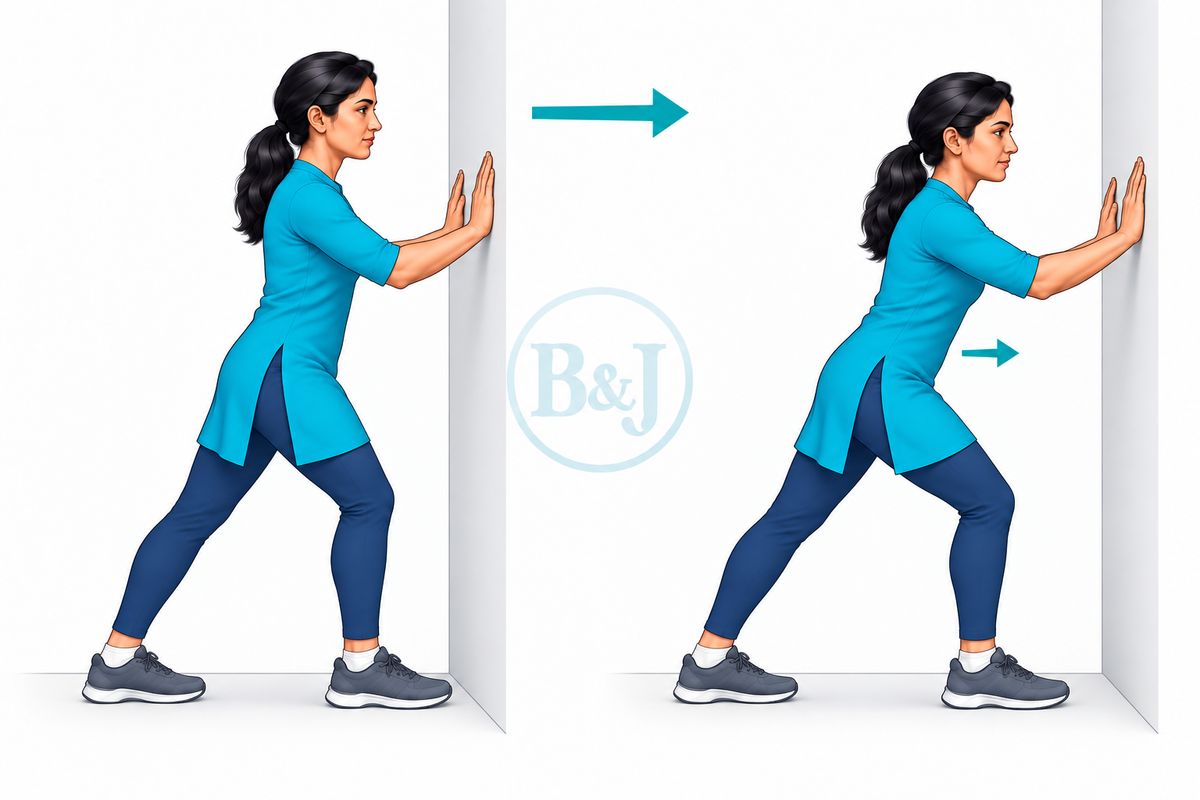
Hands on a wall, back leg straight, heel down.
Should feel: A stretch in the upper calf Should not feel: Pain in the heel
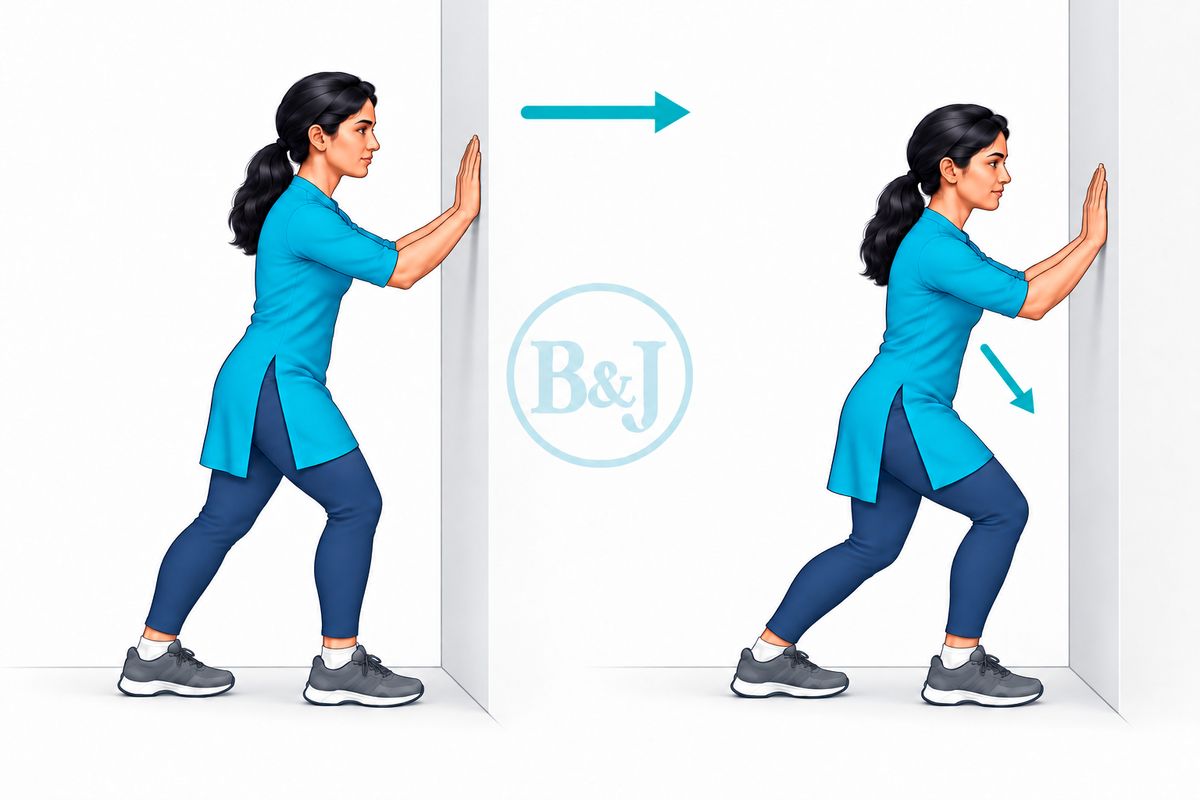
The same position but bend the back knee slightly.
Should feel: A stretch lower down Should not feel: Sharp pain
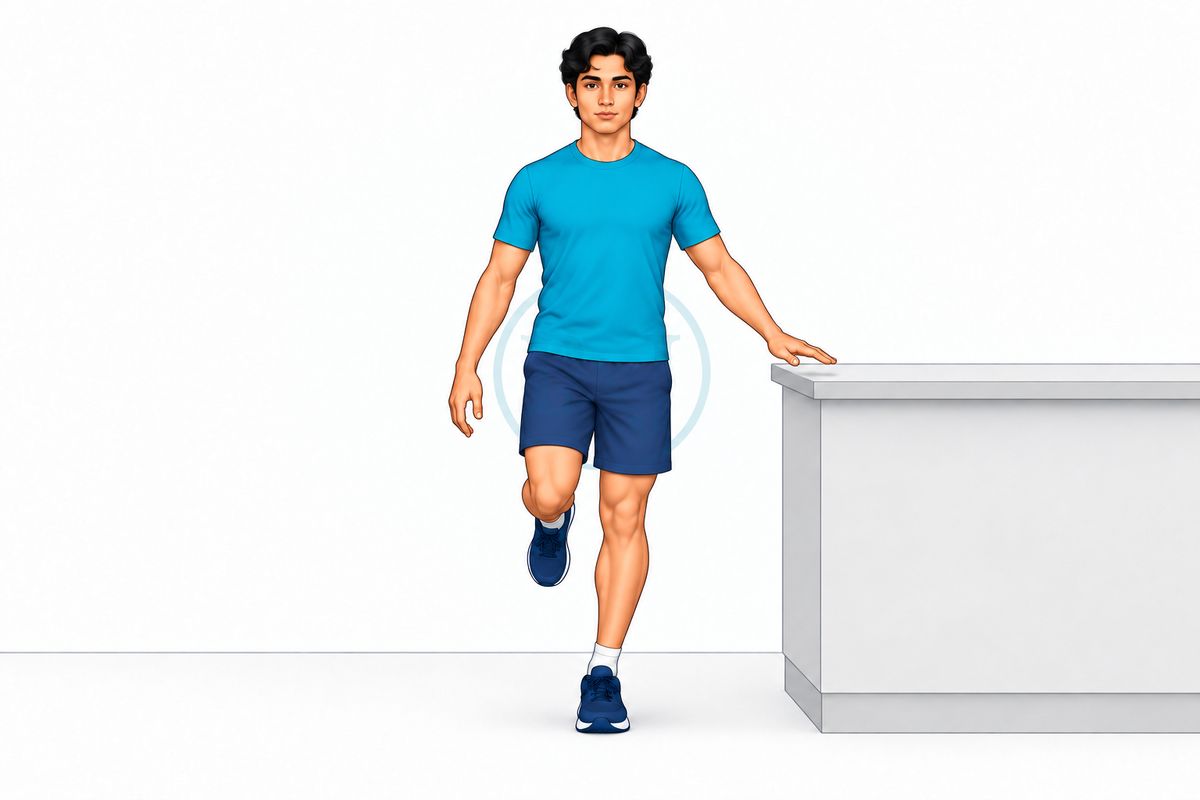
Stand on one leg beside a worktop.
Should feel: Working to stay steady Should not feel: Losing balance — hold on
Not yet Jumping or sudden-start sport, such as cricket, football or badminton, until we clear you.
Call either clinic during consulting hours, or send a WhatsApp message any time.