
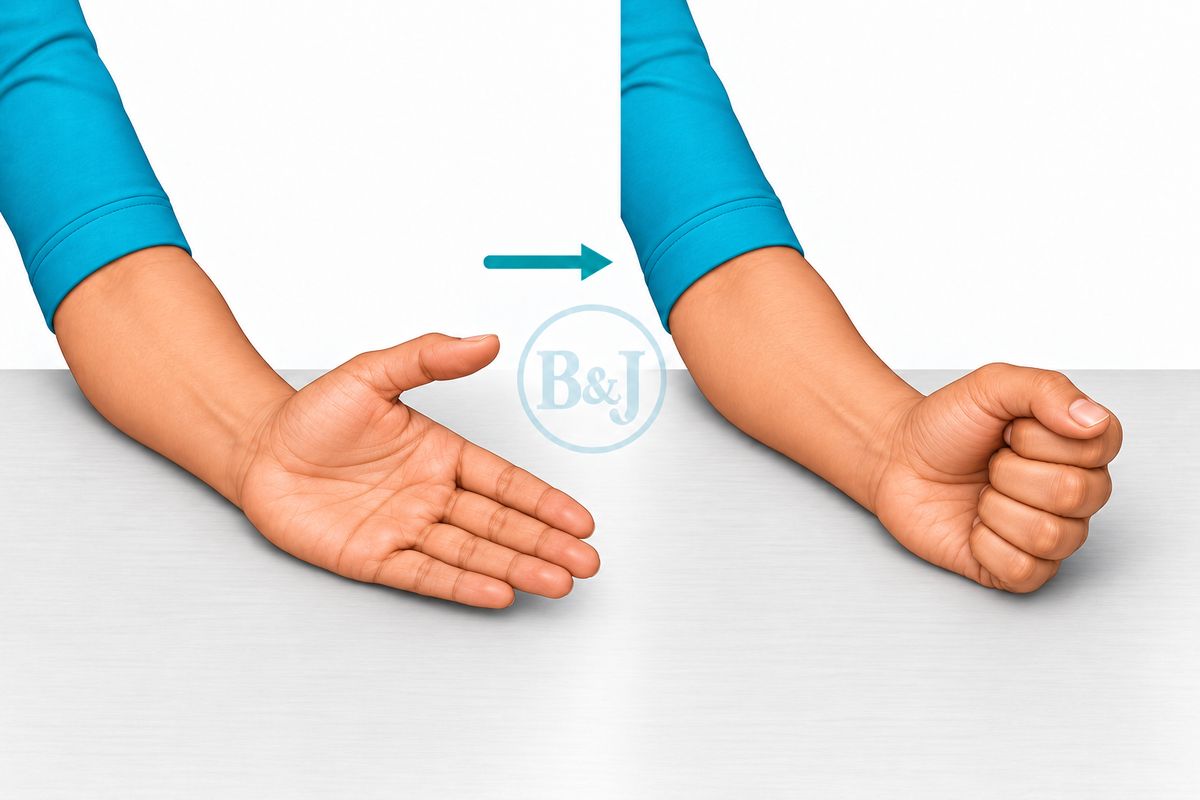
Composite fist
Make a full fist slowly, then open fully.
- 10 times
- Every hour while awake
Should feel: Full movement Should not feel: Catching that hurts
Home / Patient library / Exercise sheets / Sheet 78
Hand & wrist · A broken bone in plaster
The plaster stays on for as long as we have written on your prescription. The later stages count from the day it comes off.
If your doctor wrote a different plan on your prescription, follow that instead of this page.
A4 PDF, 0.7 MB. Free to download — no sign-up, no email address needed.
For the first 2–3 days keep the hand raised above the level of the heart, on pillows, to bring the swelling down. Keep moving every joint the plaster leaves free. Do the elbow exercise only if the plaster stops below the elbow.
Arm use Light use only: eating, writing, dressing. No lifting, carrying, pushing or leaning on this hand. Use the sling only if we gave you one, and only when walking about.
Make a full fist slowly, then open fully.
Should feel: Full movement Should not feel: Catching that hurts
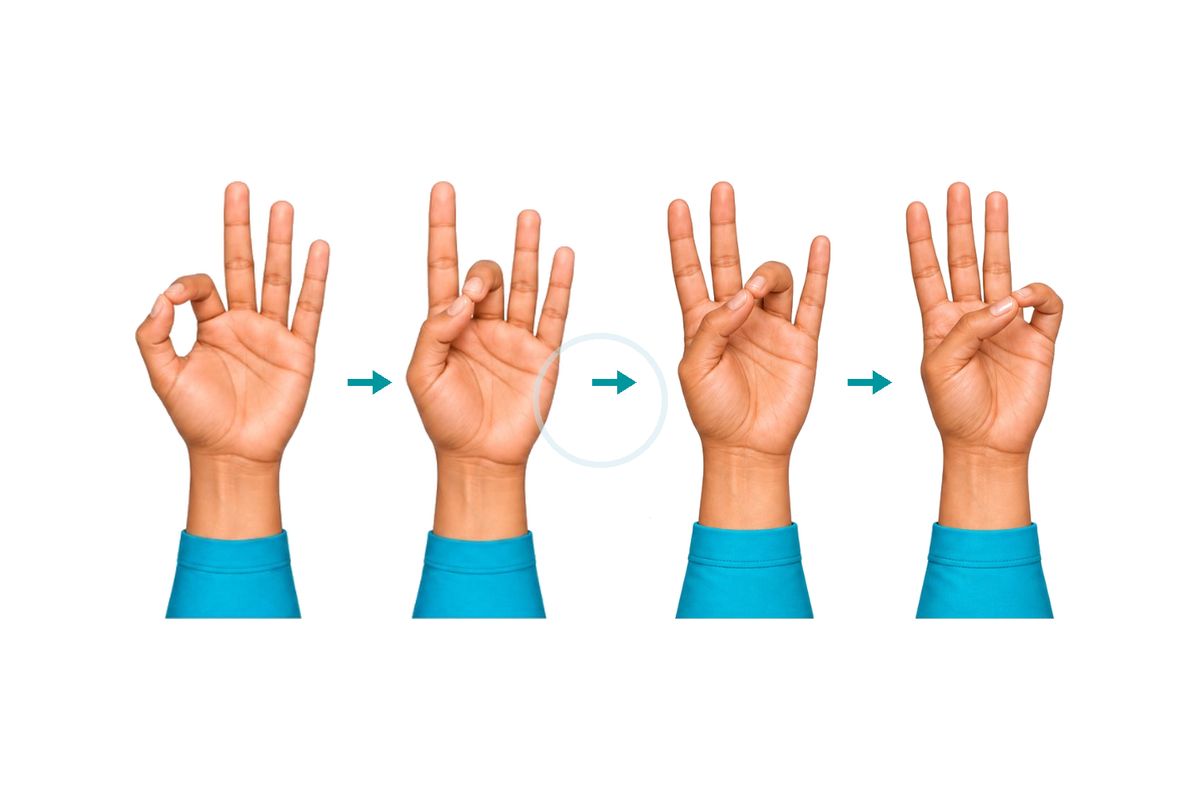
Touch each fingertip to the thumb in turn.
Should feel: Smooth control Should not feel: Locking
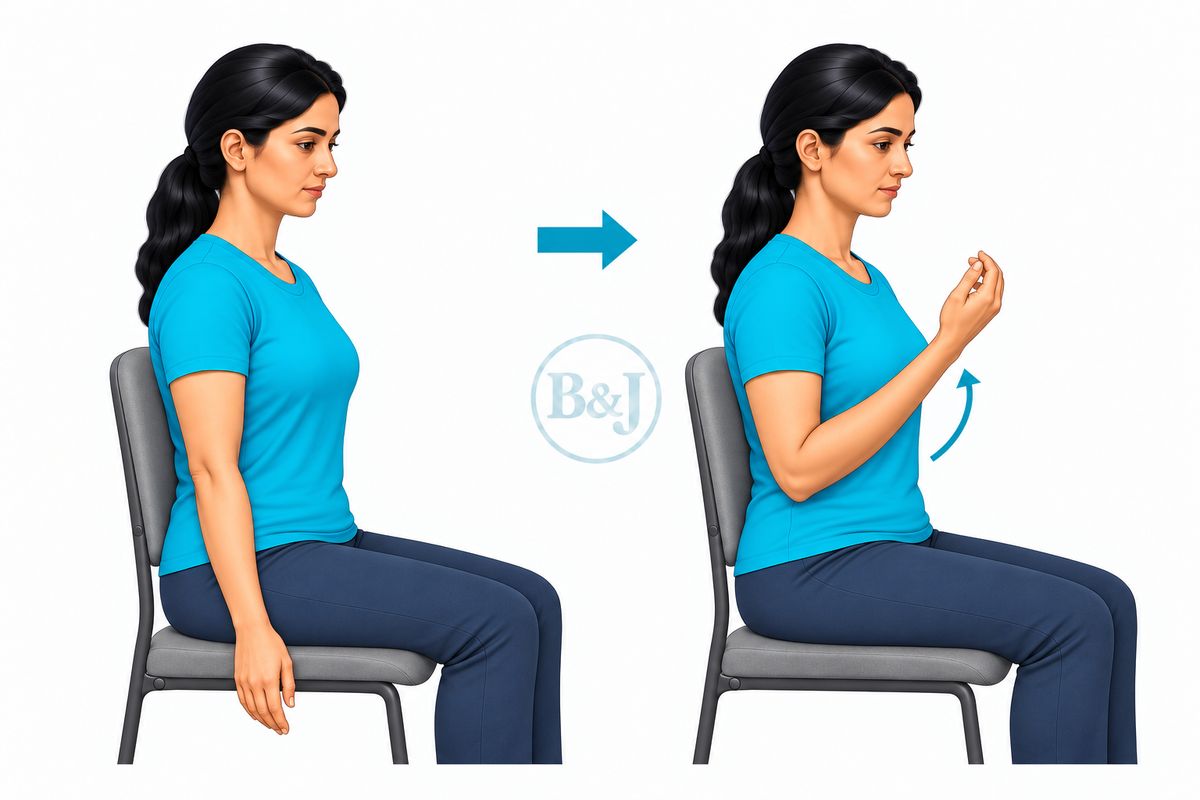
Sit with the arm by your side. Bend the elbow slowly as far as it goes, bringing the hand up, then straighten it fully.
Should feel: A gentle stretch at the front or back of the elbow Should not feel: Sharp pain
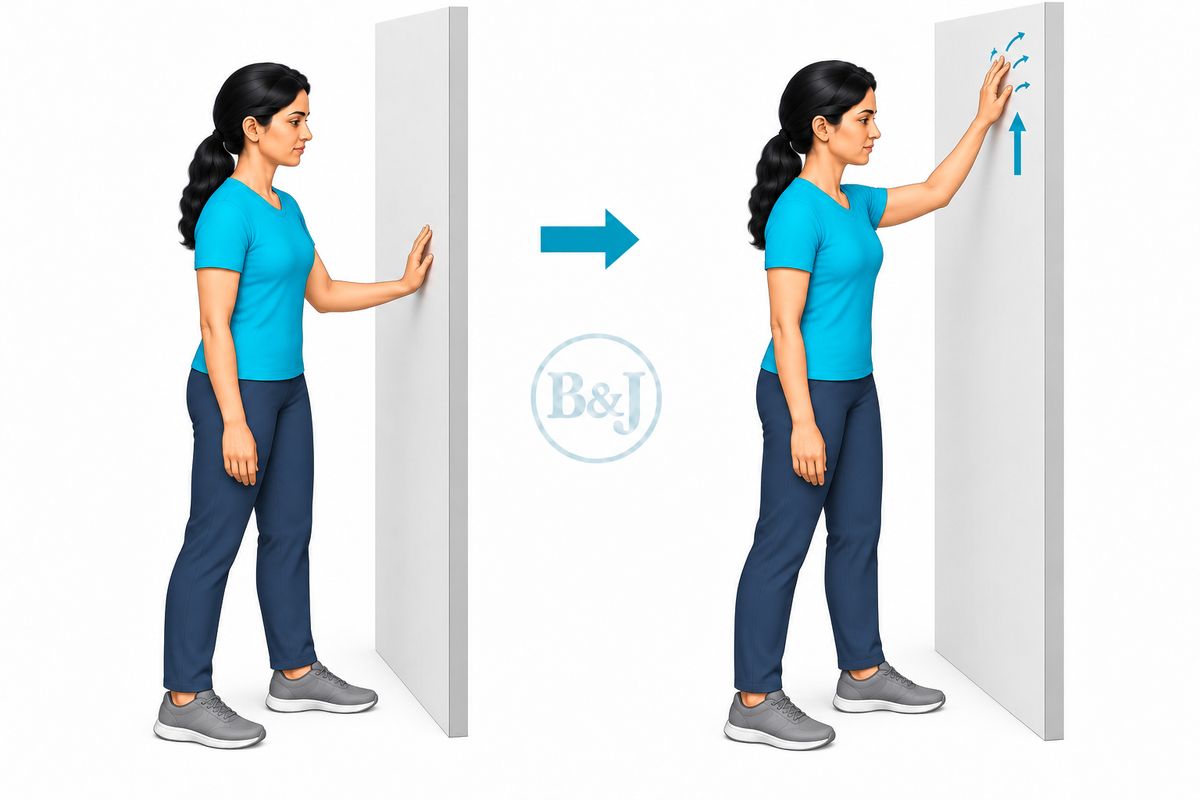
Face a wall, walk the fingers up as high as comfortable, hold, then walk down.
Should feel: A stretch overhead Should not feel: Shrugging to cheat height
Not yet Letting the arm hang down for long, getting the plaster wet, pushing anything inside it, or driving or riding a two-wheeler.
Move to the next stage only after we have seen you, and the X-ray if one was planned.
Get the wrist and forearm moving again. Stiffness, some swelling and dry skin are normal and settle over the coming weeks. Carry on with the finger exercises.
Arm use Everyday light tasks: eating, writing, dressing, washing. Nothing heavier than a full glass of water.
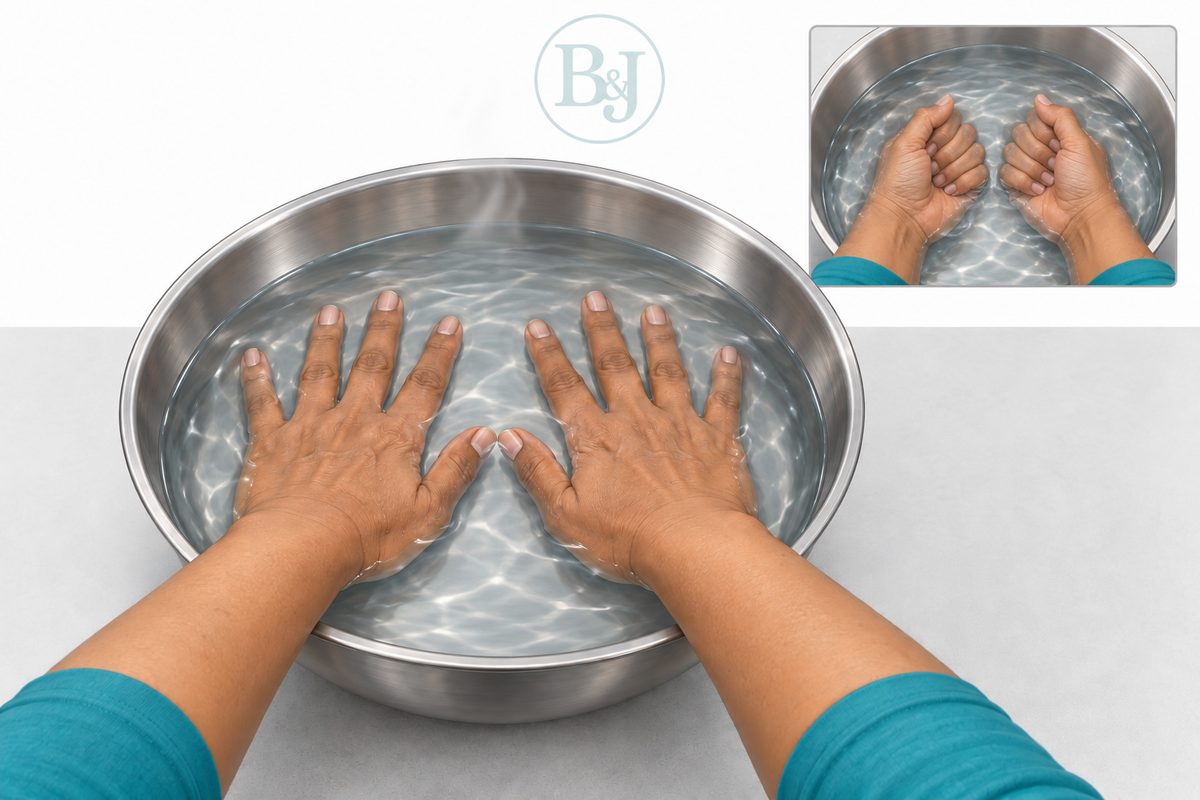
Rest both hands in a bowl of warm water. Open and close a loose fist slowly while they are in the water.
Should feel: The hands loosening as they warm Should not feel: Water hot enough to sting or redden the skin
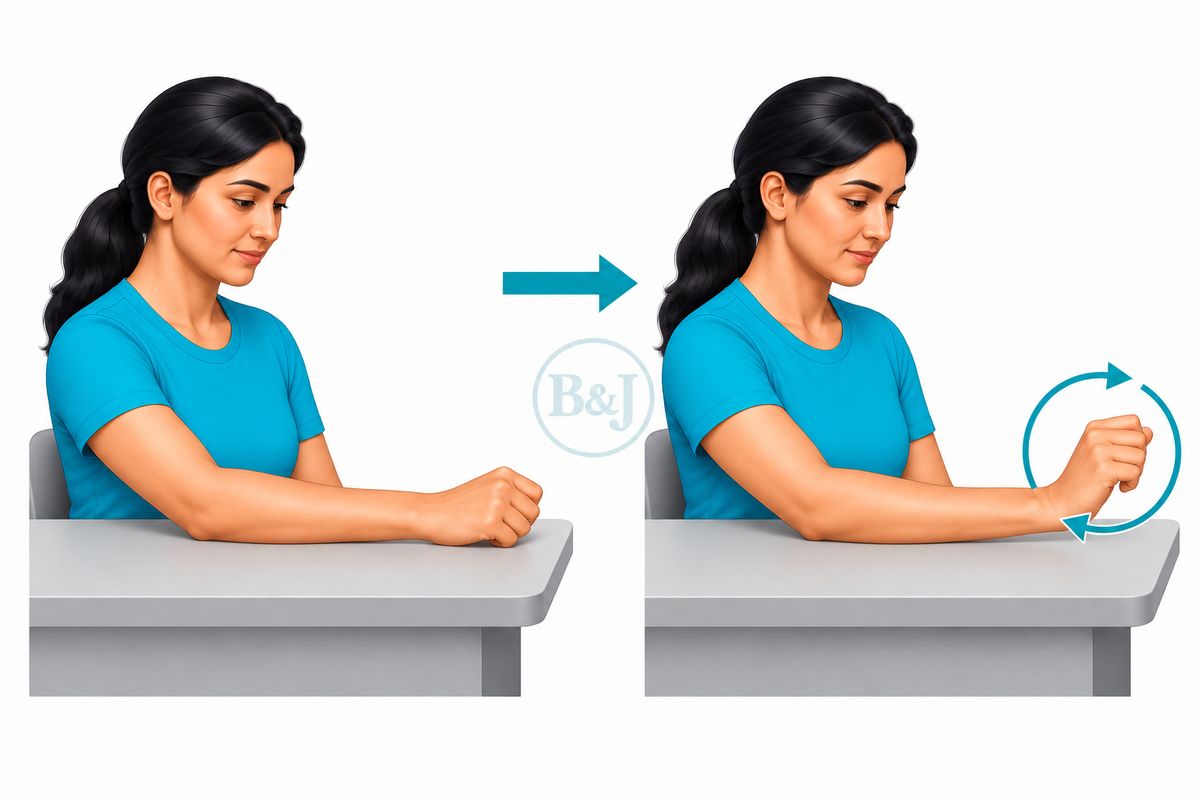
Slow circles in both directions.
Should feel: Free movement Should not feel: Pain over the lump
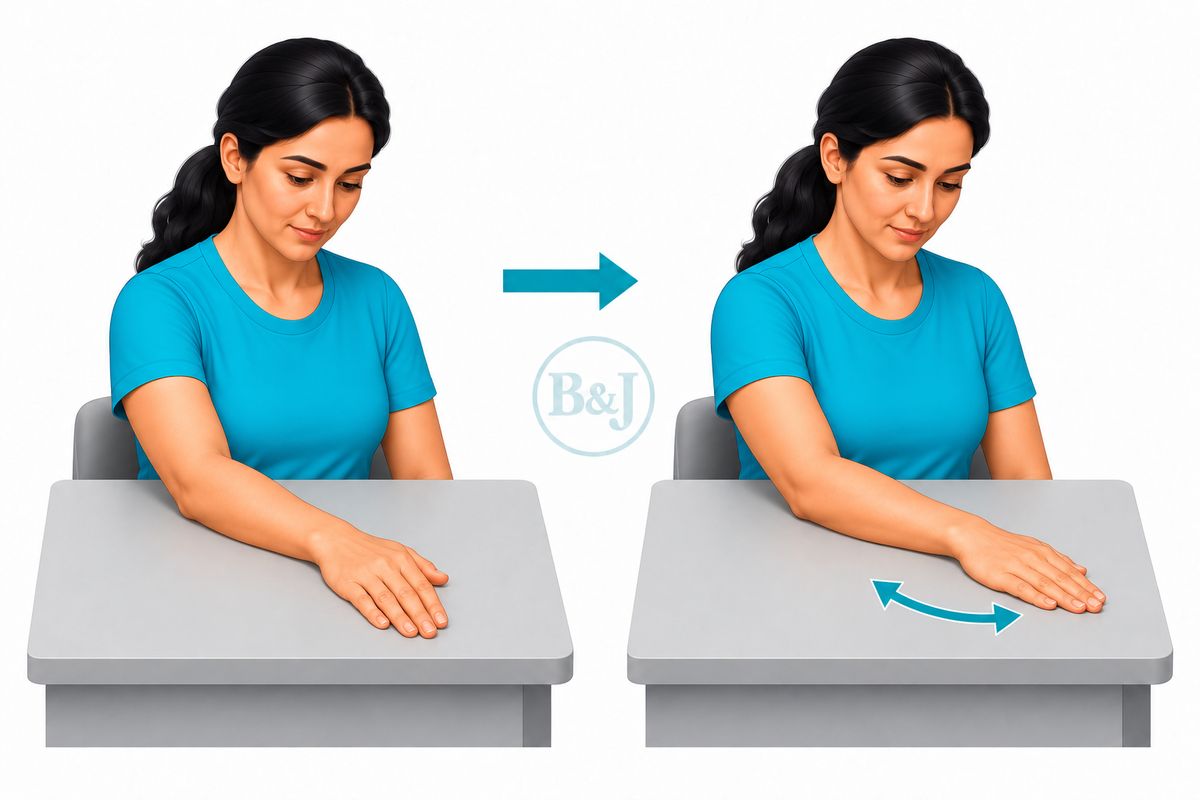
Gentle side-to-side movement.
Should feel: Free movement Should not feel: Sharp pain
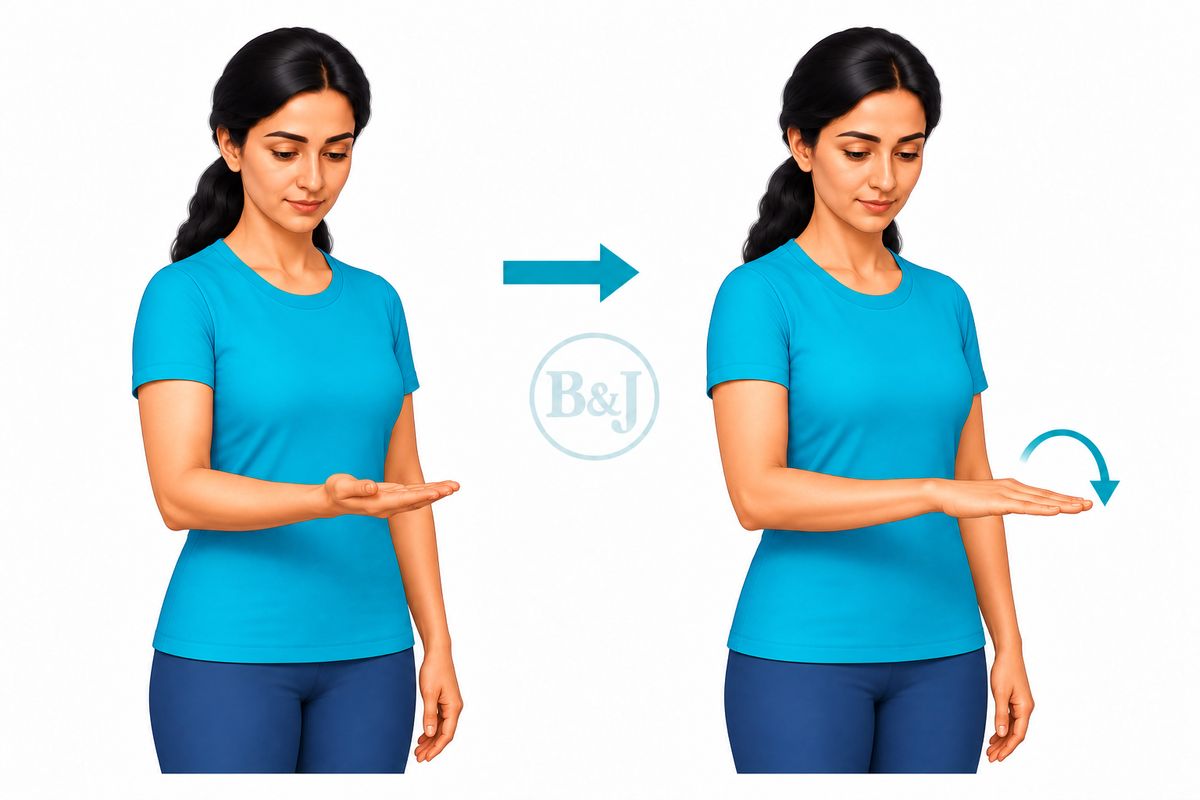
Elbow tucked in, turn the palm up and down slowly.
Should feel: Free movement Should not feel: Clicking with pain
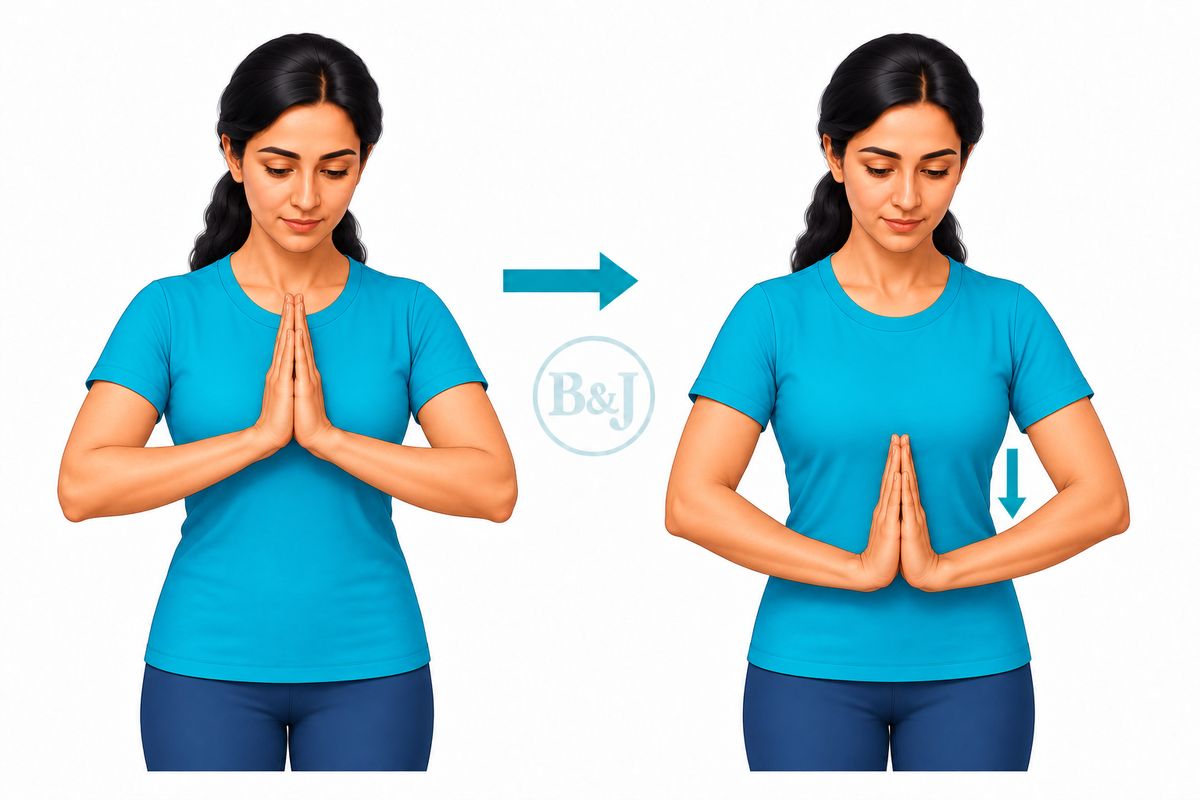
Palms together, lower the hands until you feel a stretch.
Should feel: A stretch at the front of the wrist Should not feel: Numbness increasing
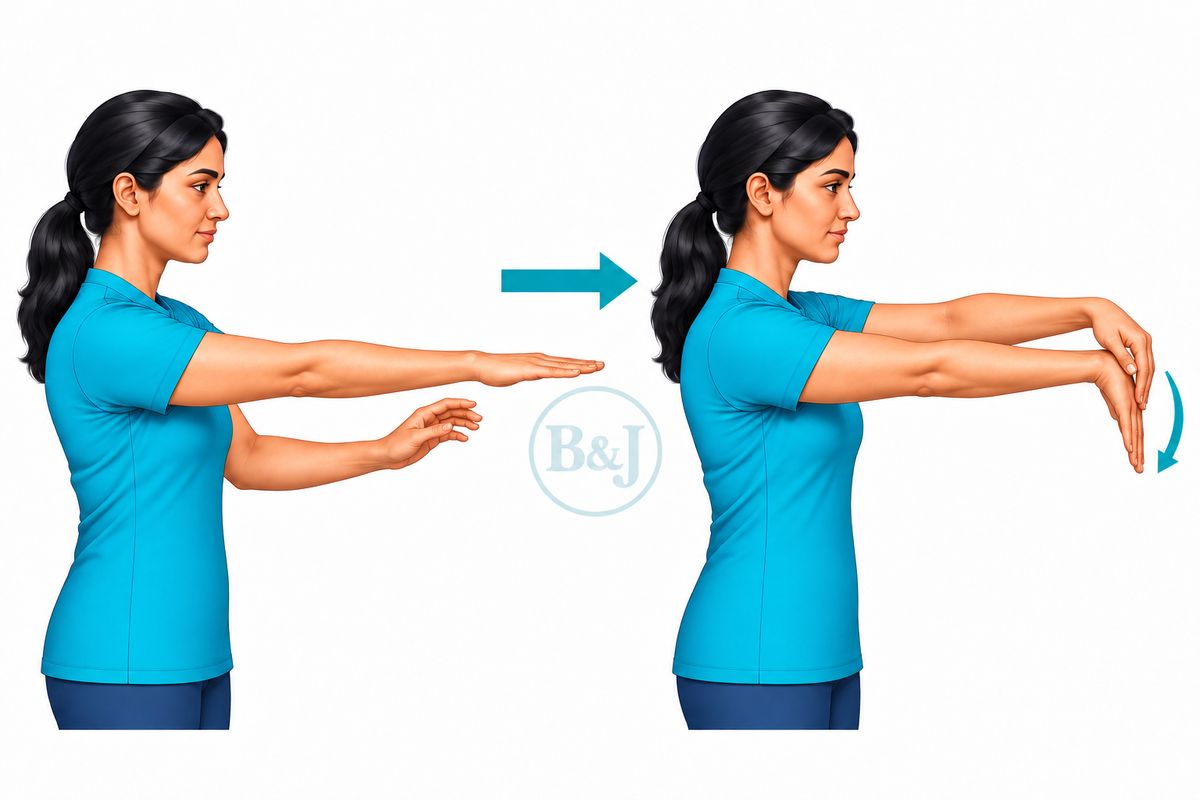
Straighten the elbow, palm down, and gently pull the hand down.
Should feel: A stretch on top of the forearm Should not feel: Numbness
Not yet Lifting anything heavy, pushing up from a chair with this hand, or forcing a stretch into sharp pain.
Move to the next stage only after we have seen you, and the X-ray if one was planned.
Build grip and wrist strength and go back to normal daily use. Carry on with the earlier exercises.
Arm use Normal daily use. Lift heavier things a little at a time as the strength comes back.
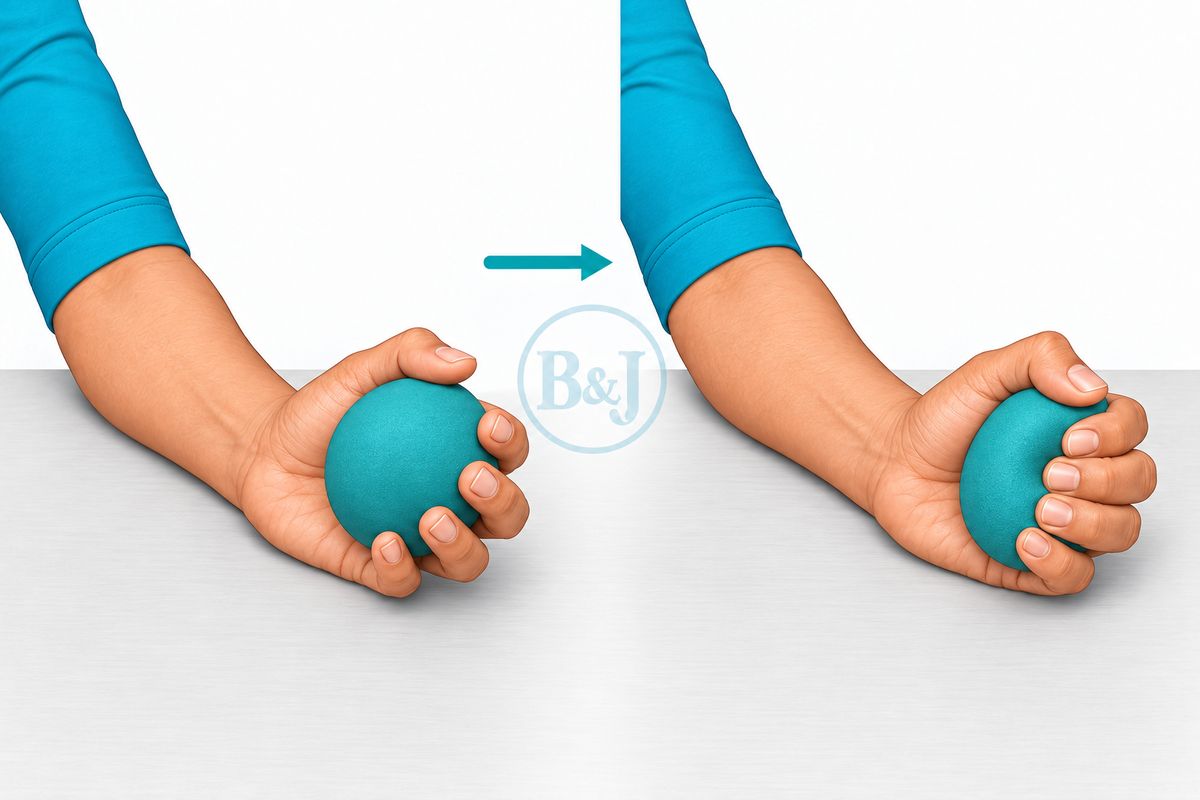
Squeeze a soft ball gently.
Should feel: The hand working Should not feel: Pain
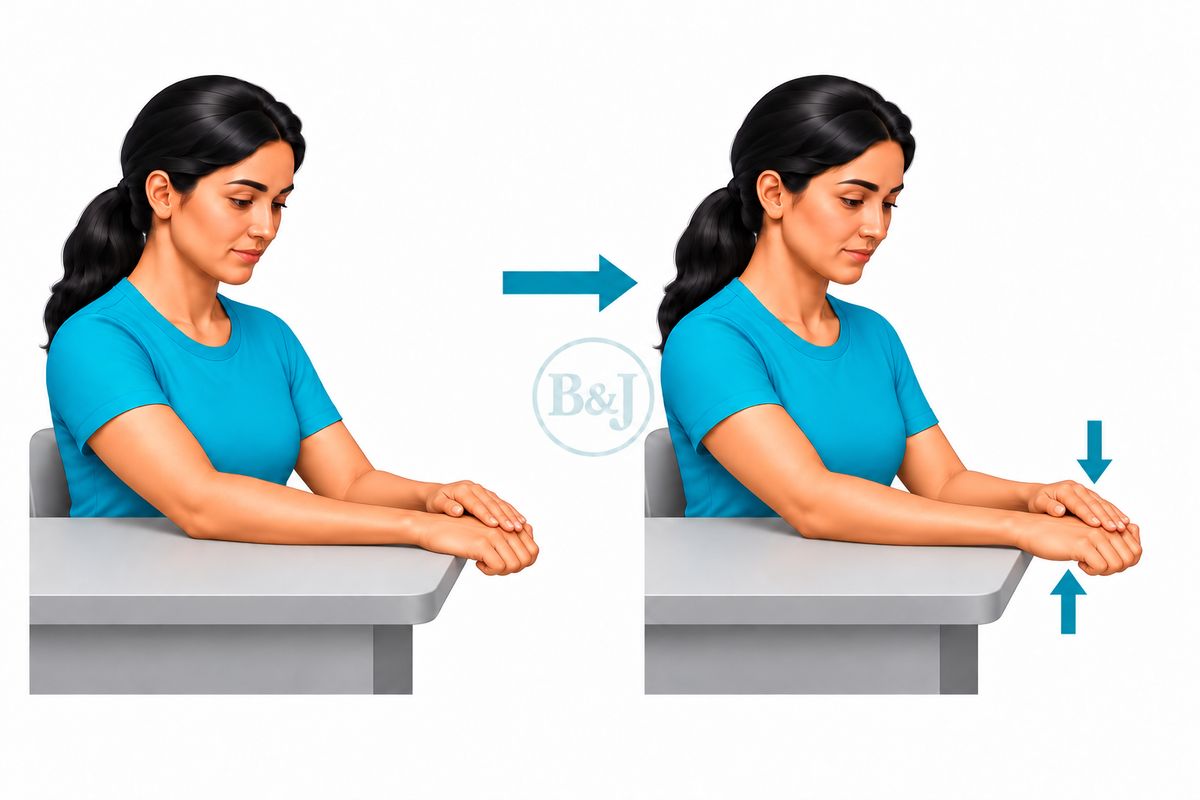
Press the back of the hand upwards against the other hand without moving.
Should feel: The forearm working Should not feel: Pain
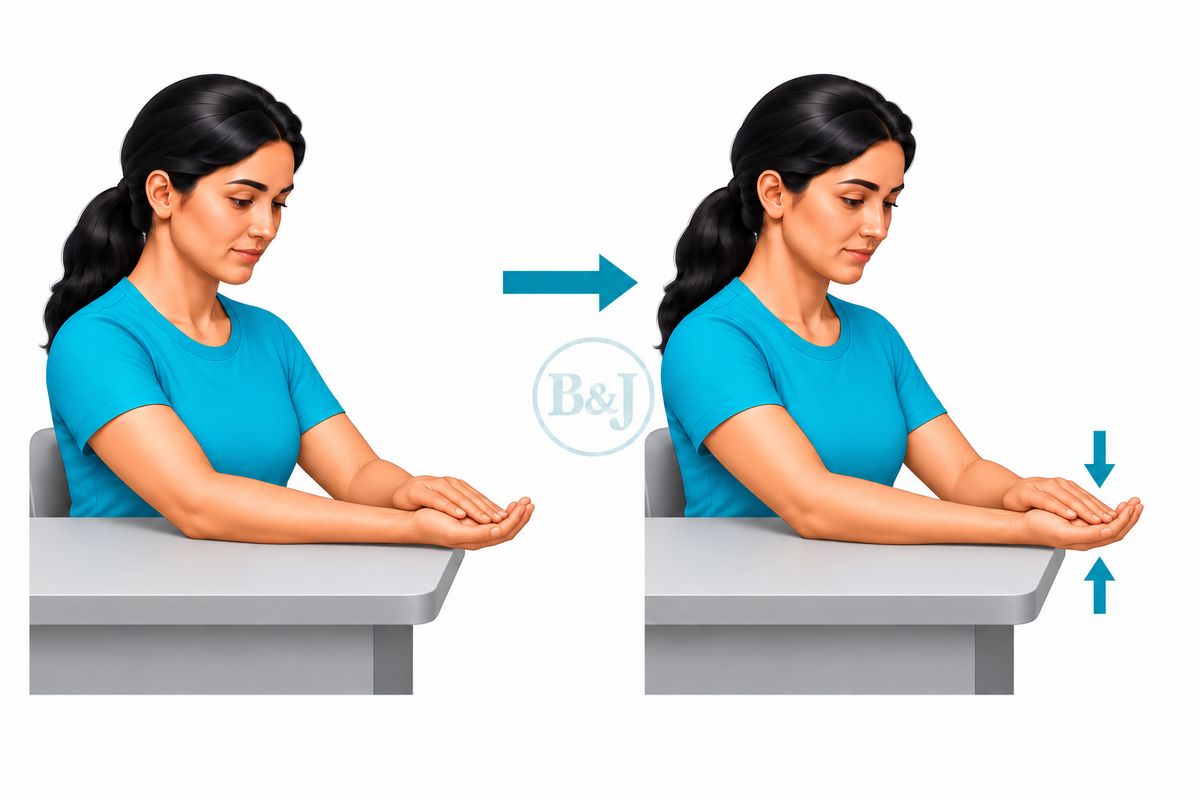
Press the palm downwards against the other hand without moving.
Should feel: The forearm working Should not feel: Pain
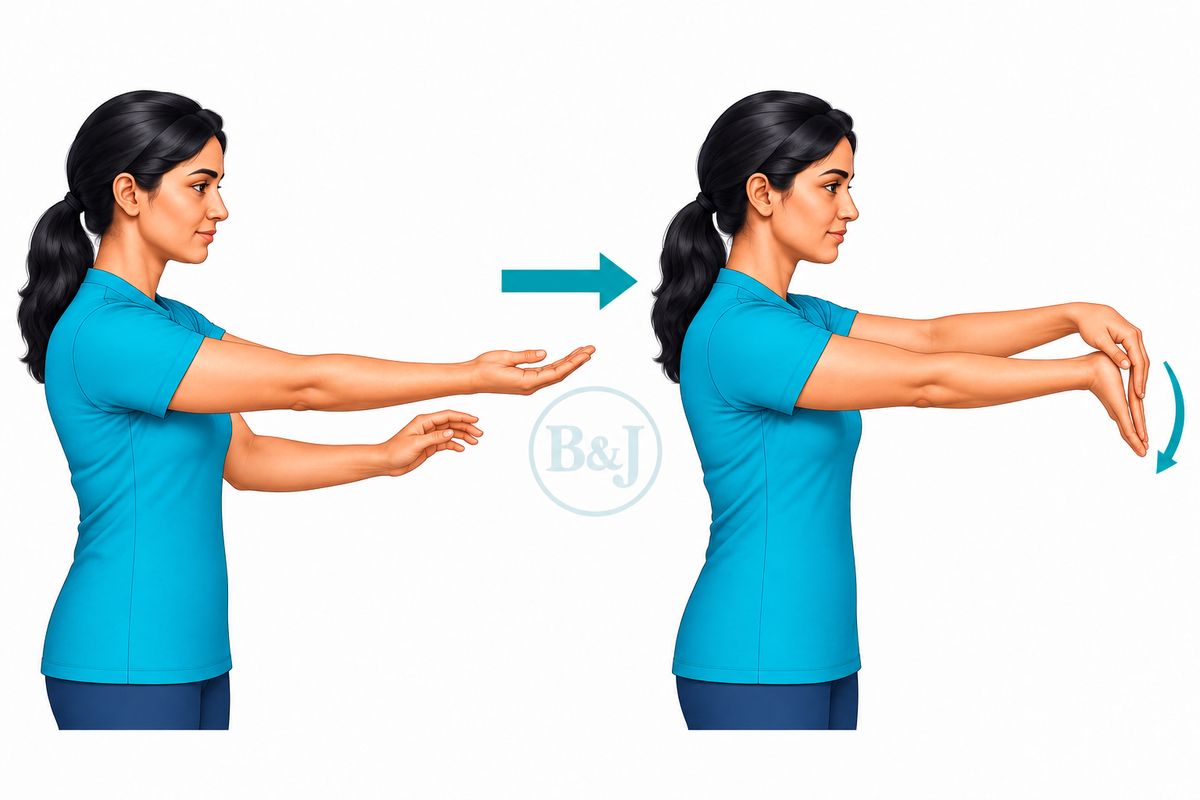
Straighten the elbow, palm up, and gently pull the fingers back.
Should feel: A stretch under the forearm Should not feel: Tingling in the little finger
Not yet Heavy lifting, push-ups, or sport that loads the wrist, until we clear you.
Call either clinic during consulting hours, or send a WhatsApp message any time.