
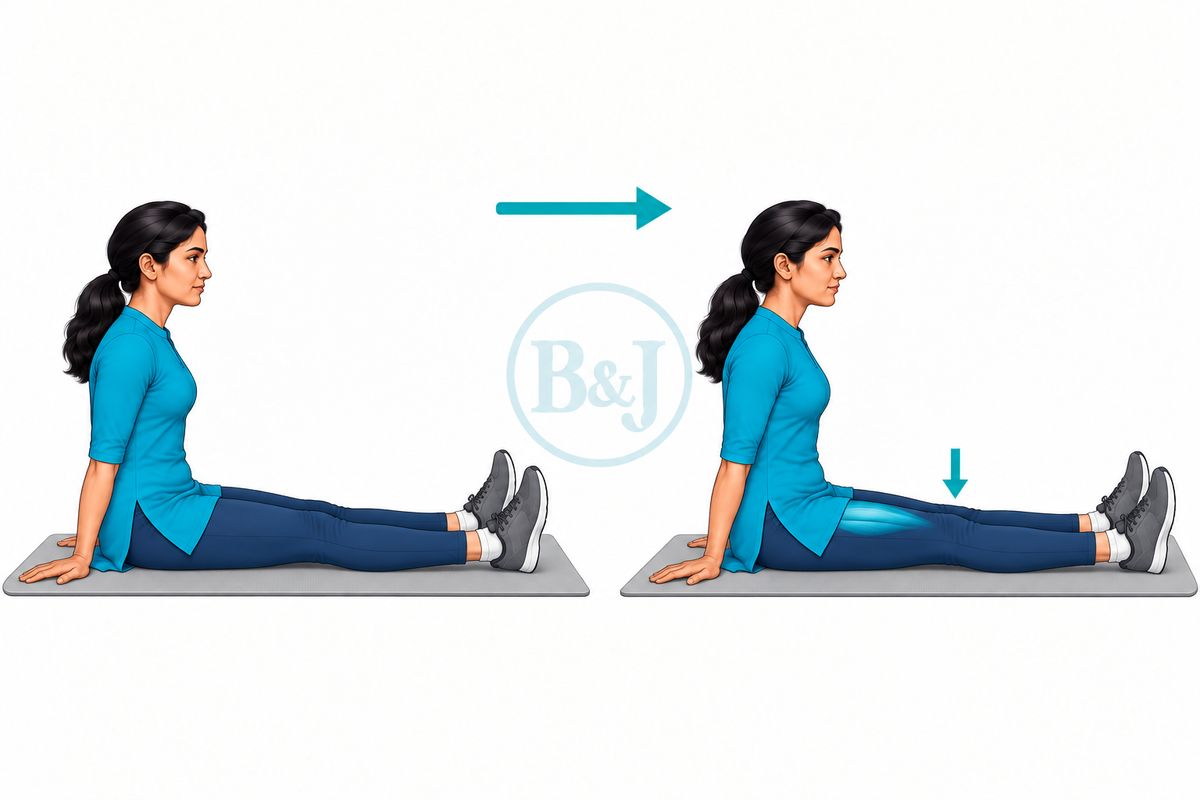
Quad sets
Sit with the leg straight. Press the back of the knee down and tighten the thigh.
- Hold 5 seconds
- 10 times
- 3 times a day
Should feel: The thigh muscle tightening Should not feel: Knee pain
Home / Patient library / Exercise sheets / Sheet 65
Hip & knee · PCL and back-of-knee ligament injury
Count the weeks from the day of your injury. The date is on your prescription.
If your doctor wrote a different plan on your prescription, follow that instead of this page.
A4 PDF, 0.7 MB. Free to download — no sign-up, no email address needed.
Bring the swelling down: rest with the leg raised, and put a cold pack wrapped in a cloth on the knee for 15 minutes, 3–4 times a day. Wear the knee brace as we have advised. When you lie down, put the pillow under the calf, not under the knee, so the shin cannot sag backwards. Start the thigh exercises now: a strong front of the thigh holds the shin forward and protects the ligament.
Weight bearing As written on your prescription, with crutches, and the knee brace if we gave you one.
Sit with the leg straight. Press the back of the knee down and tighten the thigh.
Should feel: The thigh muscle tightening Should not feel: Knee pain
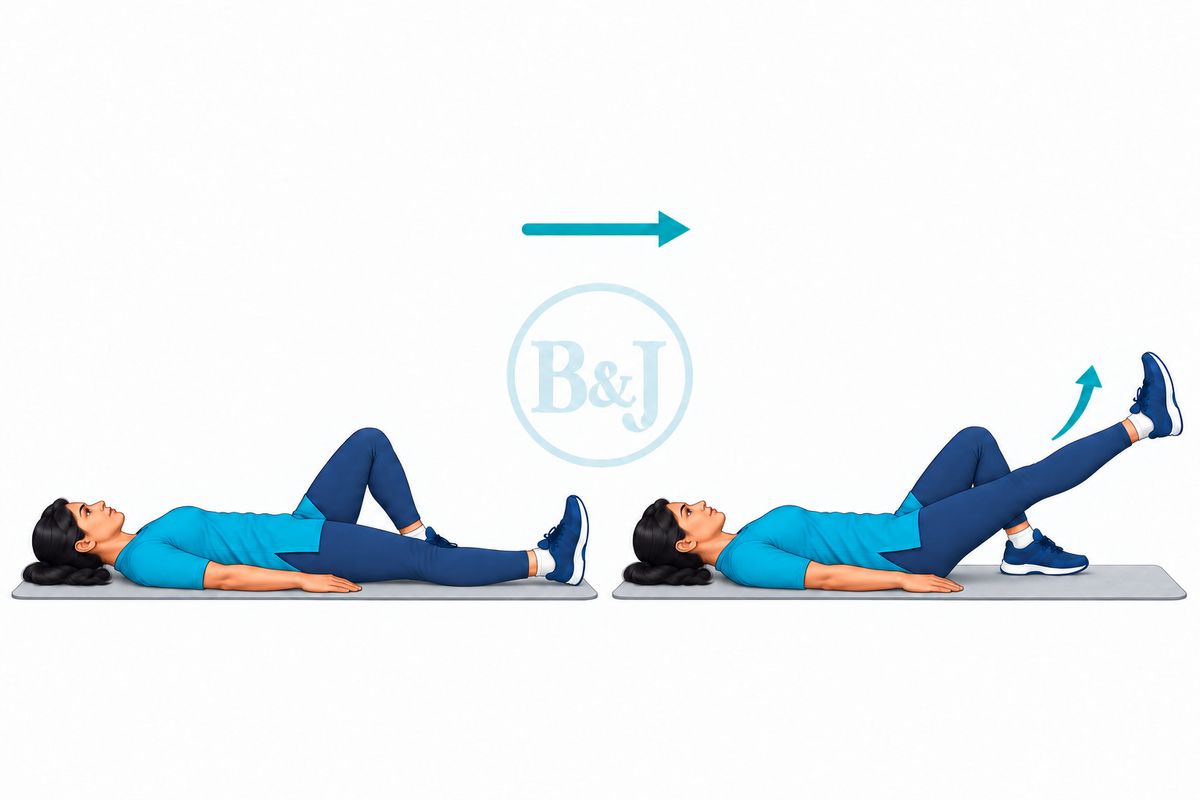
Lie down, one knee bent. Keep the other knee straight and lift the leg 20 cm.
Should feel: The thigh working Should not feel: The knee bending or back pain
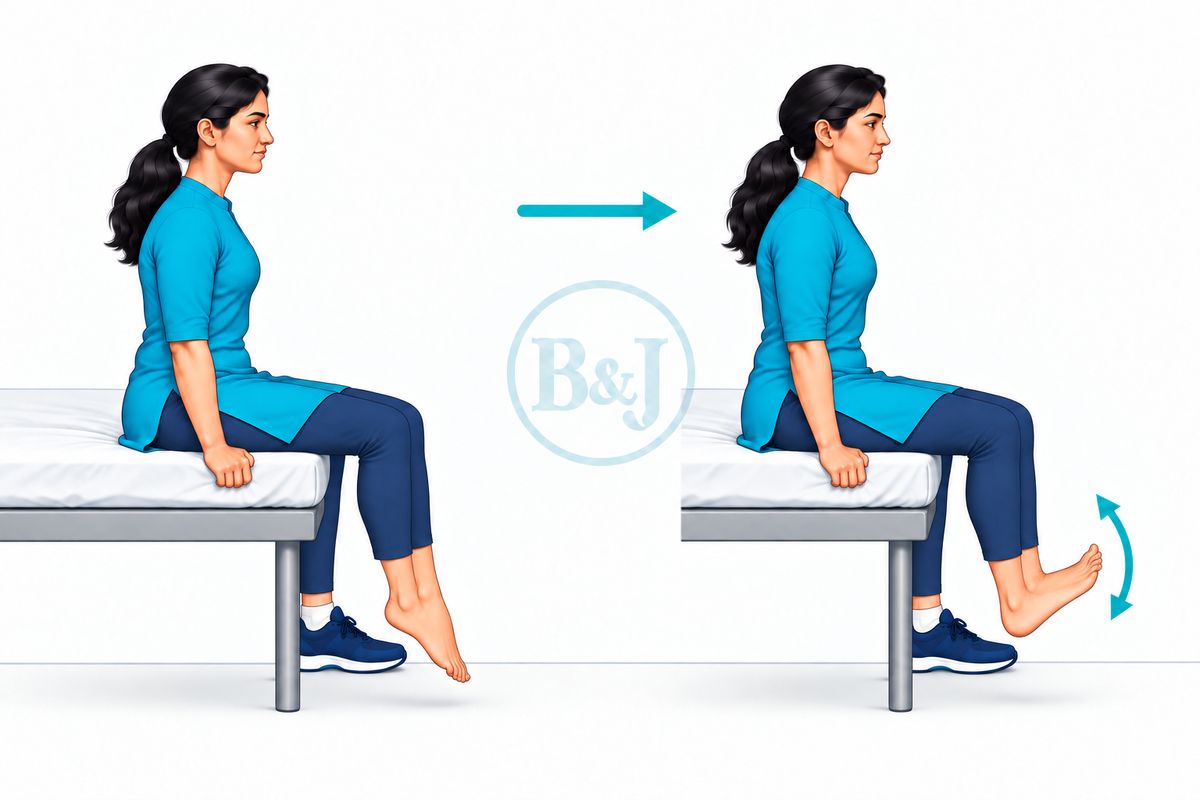
Pump the feet up and down to keep the blood moving.
Should feel: The calf working Should not feel: Calf pain or swelling — tell us
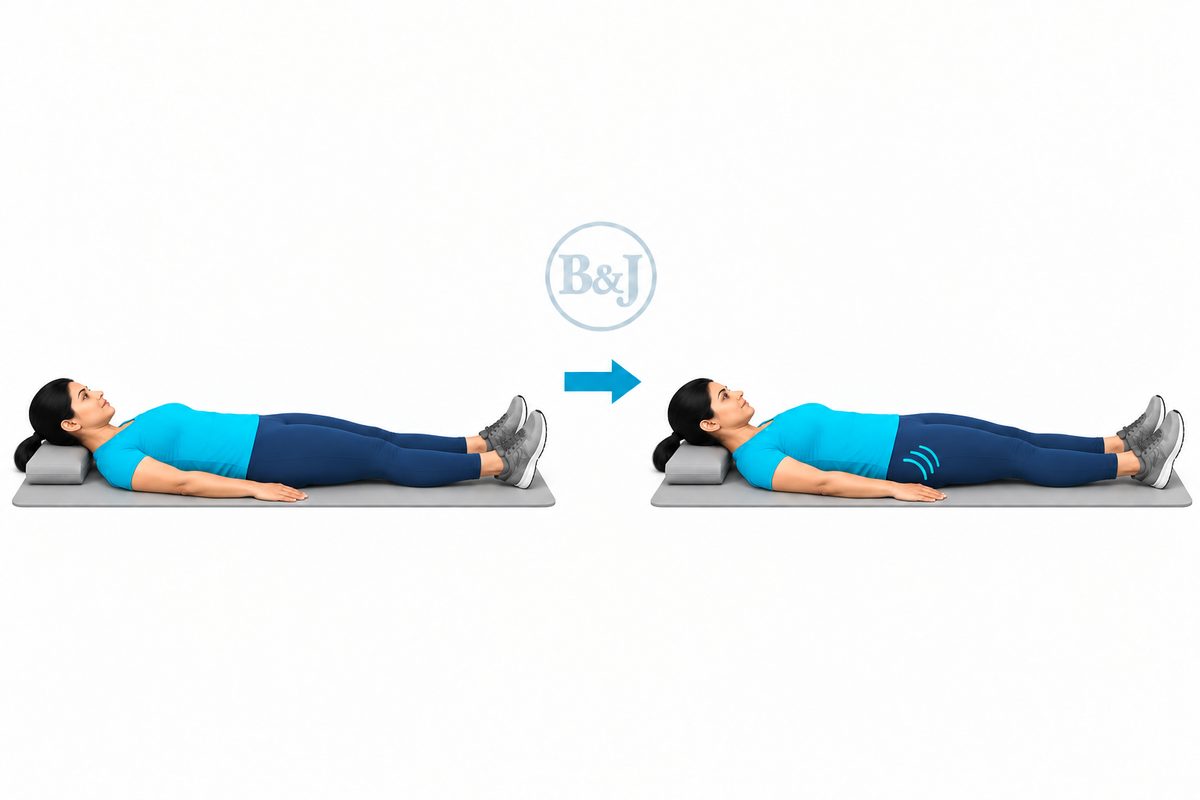
Lie on your back with the legs straight. Squeeze the buttocks together, hold, then relax.
Should feel: The buttocks tightening Should not feel: Back pain
Not yet A pillow under the knee, bending the knee further than we have allowed, bending the knee against resistance (hamstring curls), twisting on the injured leg, or driving. Letting anyone, a bone-setter included, pull, push or massage the knee.
Move to the next stage only after we have seen you, and the X-ray if one was planned.
Bend the knee a little further each week, as we advise, aiming for about a right angle by 6 weeks. Bend it lying on your front, as shown, so the shin is not pulled backwards. Come out of the brace step by step when we tell you. Carry on with the earlier exercises.
Weight bearing Full, as comfortable, in the brace, until we tell you to stop wearing it.
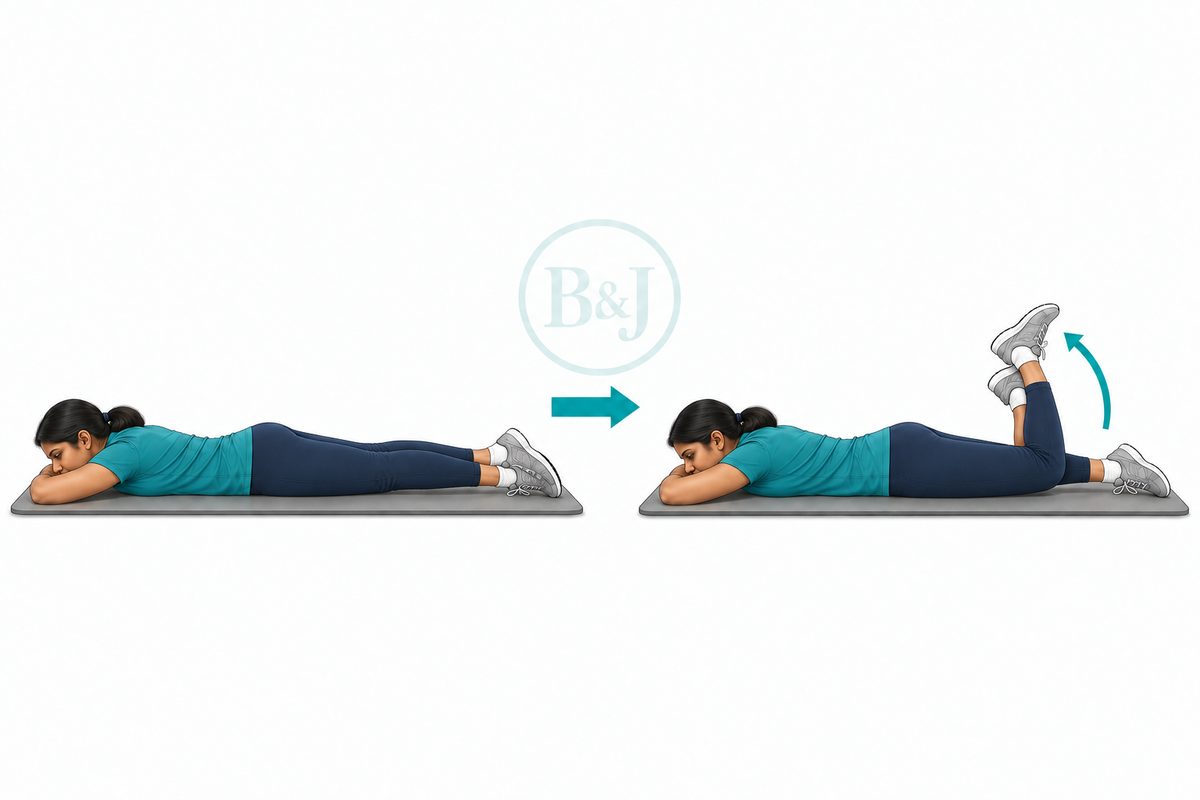
Lie on your front. Hook the good foot under the ankle of the injured leg and use it to bend the knee slowly, only as far as we have allowed, then lower it. Keep the muscles of the injured leg relaxed.
Should feel: A gentle stretch at the front of the knee Should not feel: Pain at the back of the knee, or the thigh cramping
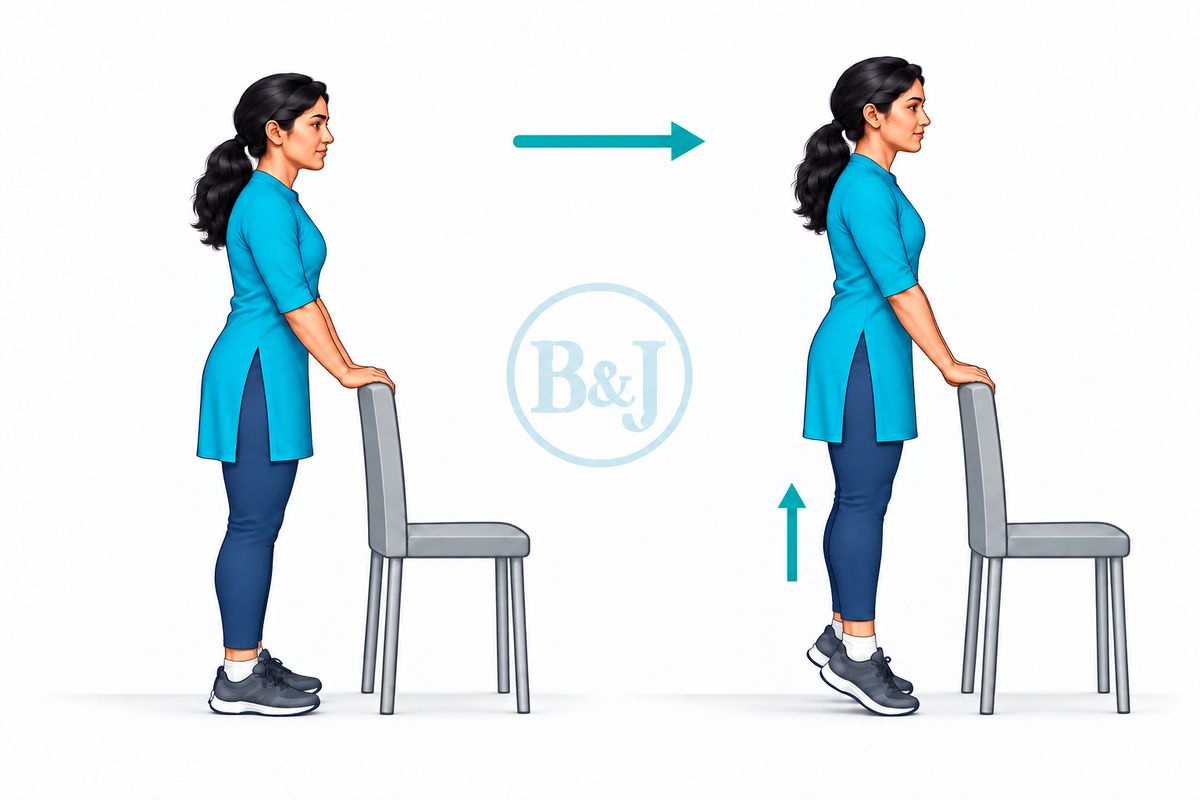
Rise onto both toes and lower under control.
Should feel: The calf working Should not feel: Sharp pain
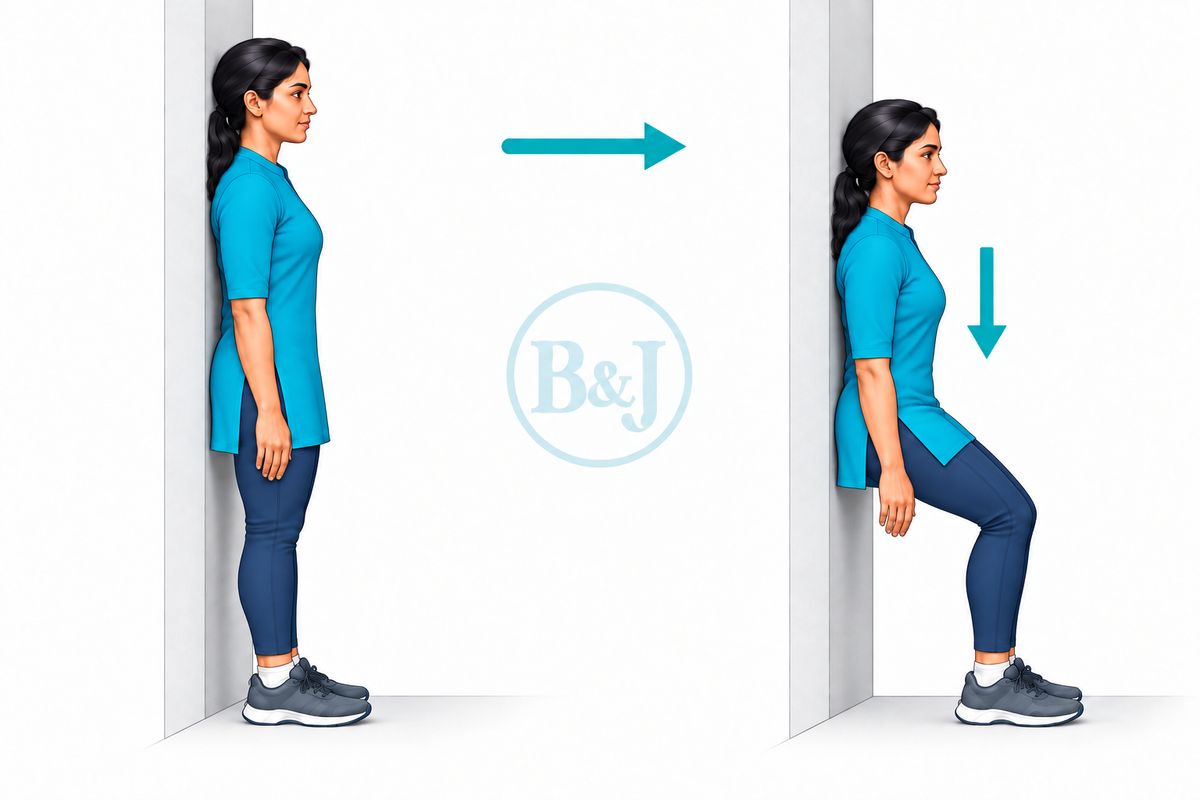
Back against a wall, slide down a little way, hold, then stand.
Should feel: The thighs working Should not feel: Knee pain at the front
Not yet Hamstring curls or bending the knee against resistance, bridging (lifting the hips with the knees bent), pushing the knee back beyond straight, twisting on the injured leg, running or jumping. Squatting, sitting on the floor or using an Indian toilet — until we have told you it is safe.
Move to the next stage only after we have seen you, and the X-ray if one was planned.
Get the knee bending fully and walk without a limp. Build the front of the thigh with exercises done standing, and improve your balance. Start the cycling only once the knee bends far enough to pedal round without forcing it. Carry on with the earlier exercises.
Weight bearing Full.
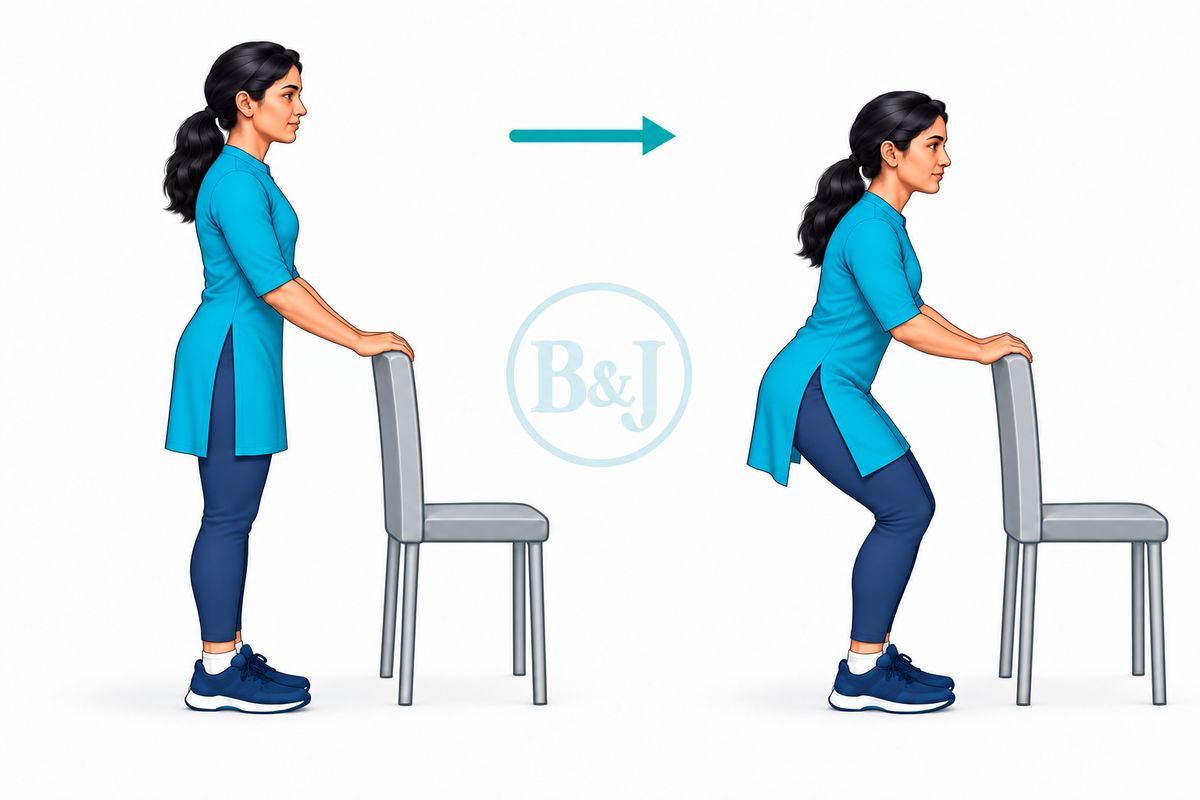
Hold a support and bend the knees a little way.
Should feel: The thighs working Should not feel: Knee pain
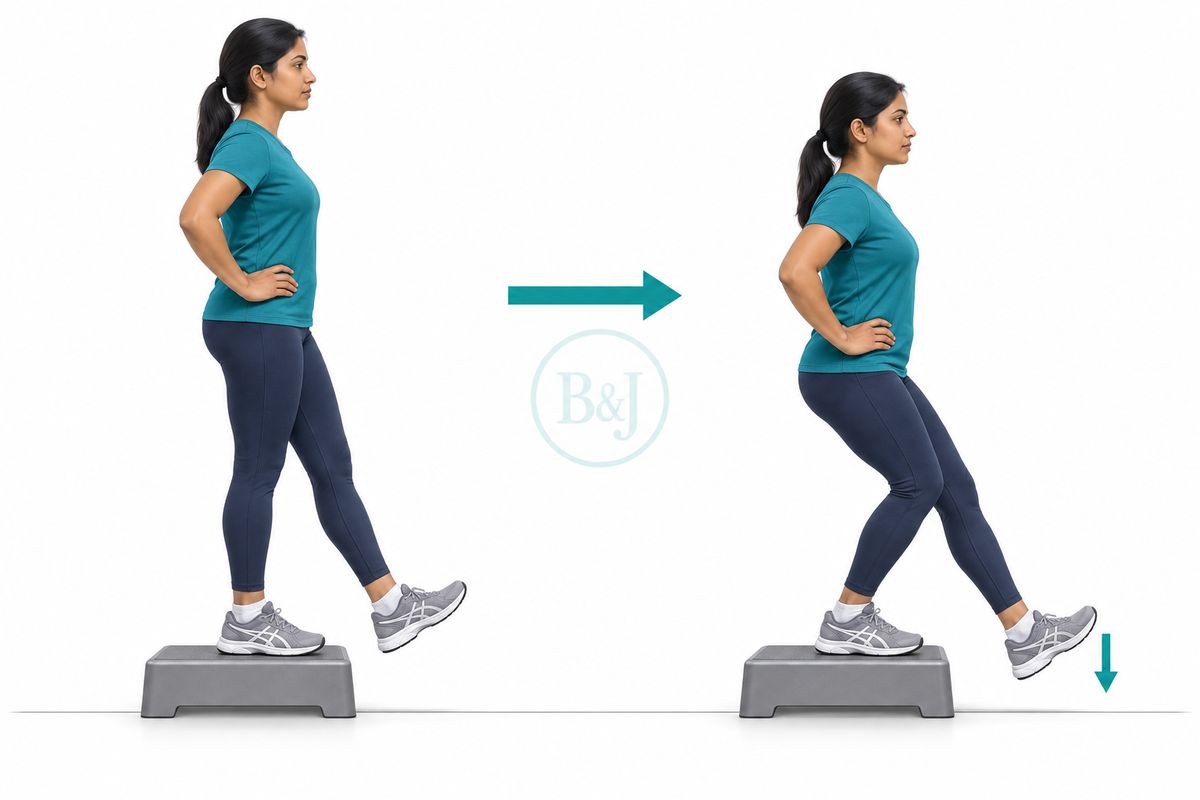
Stand on a low step on the painful leg and lower the other heel slowly towards the floor.
Should feel: Controlled lowering Should not feel: The knee falling inwards
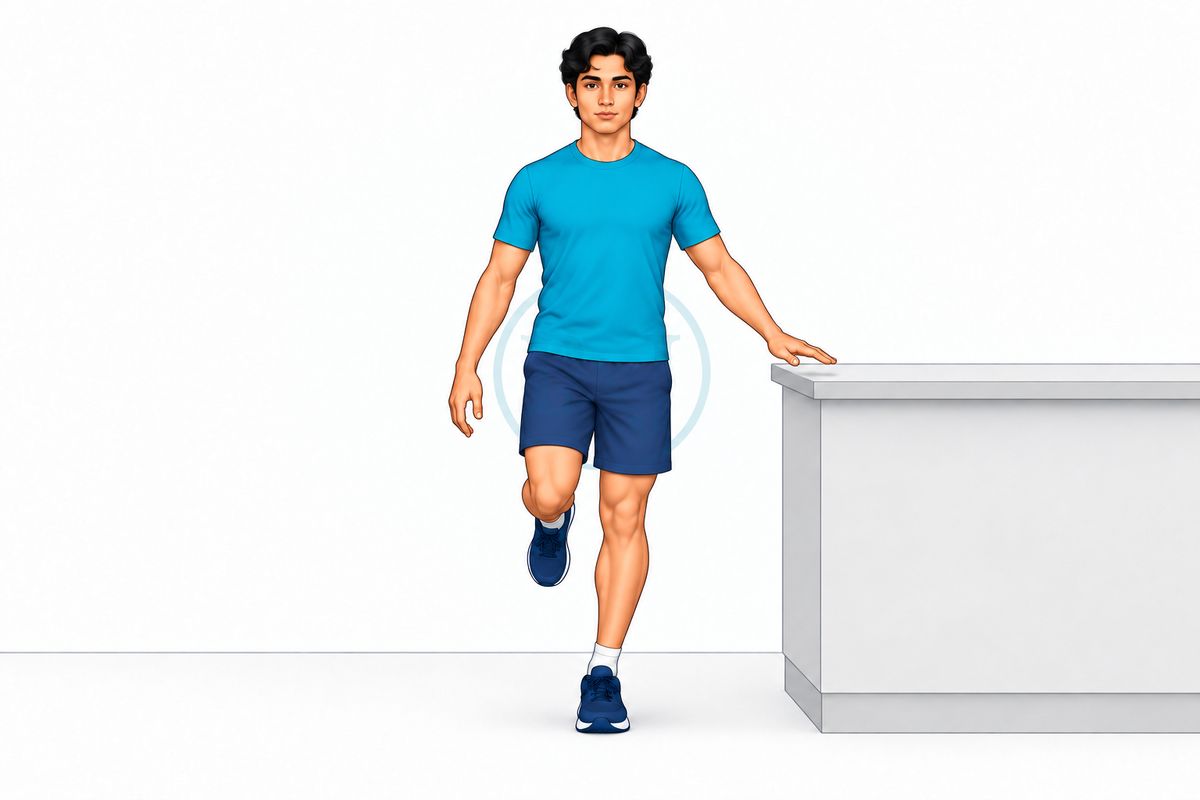
Stand on one leg. Progress to eyes closed.
Should feel: Steady control Should not feel: The knee giving way
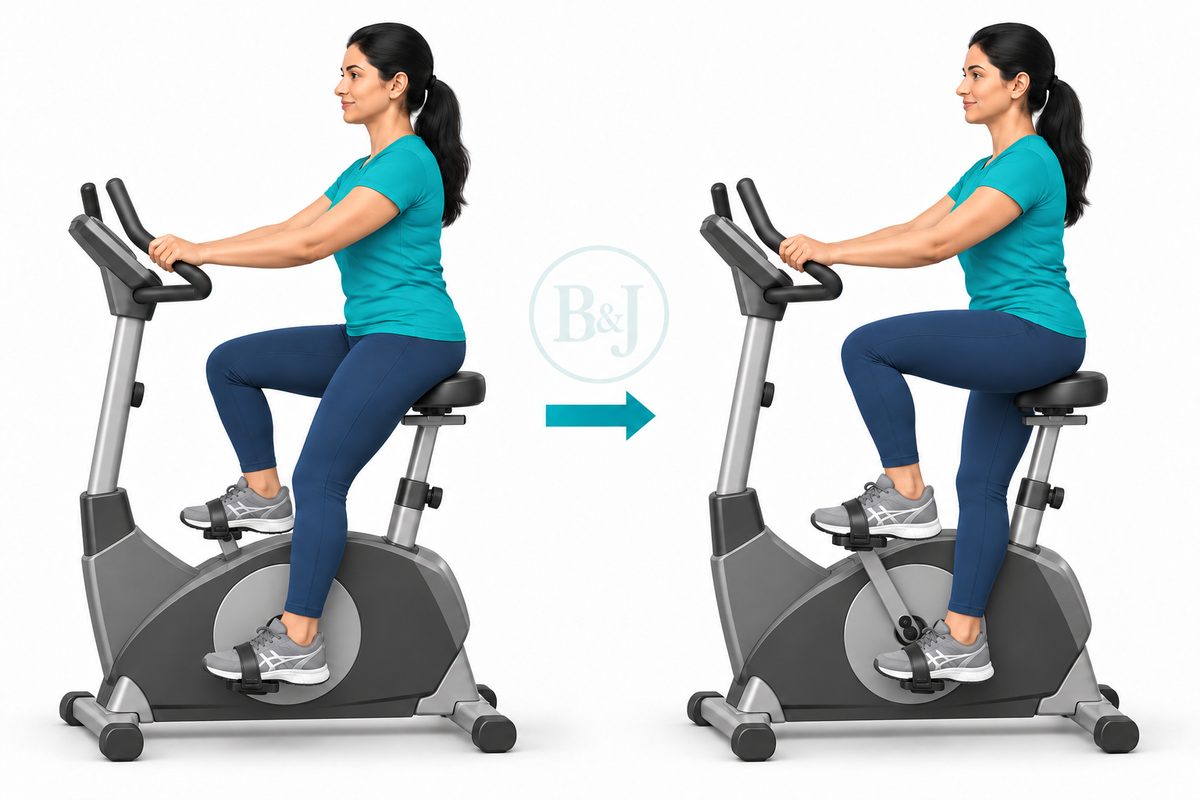
Set the seat high, so the knee is almost straight at the bottom. Pedal gently with little resistance.
Should feel: The knee moving freely Should not feel: Pain in the knee or hip
Not yet Hamstring curls, until we tell you. Running, jumping or turning sport. Squatting, sitting on the floor or using an Indian toilet — until we have told you it is safe.
Move to the next stage only after we have seen you, and the X-ray if one was planned.
Back to sport step by step, if we agree: straight-line jogging first, then turning and contact sport, usually from about 3 to 6 months, once the injured thigh is about as strong as the other. We will tell you when to start strengthening the back of the thigh. Carry on with the third-stage exercises.
Weight bearing Full.
Rise onto both toes and lower under control.
Should feel: The calf working Should not feel: Sharp pain
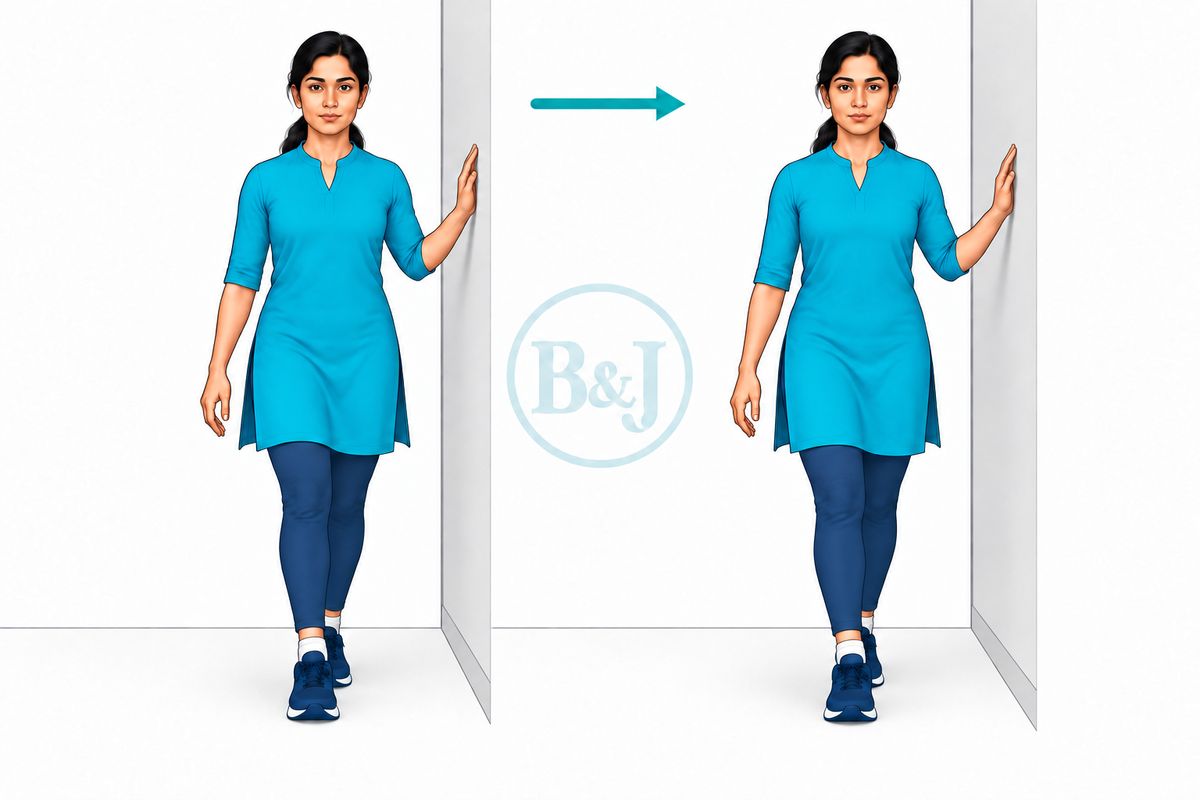
Walk heel to toe along a line, beside a support.
Should feel: Steadier walking Should not feel: Wobbling — use the wall
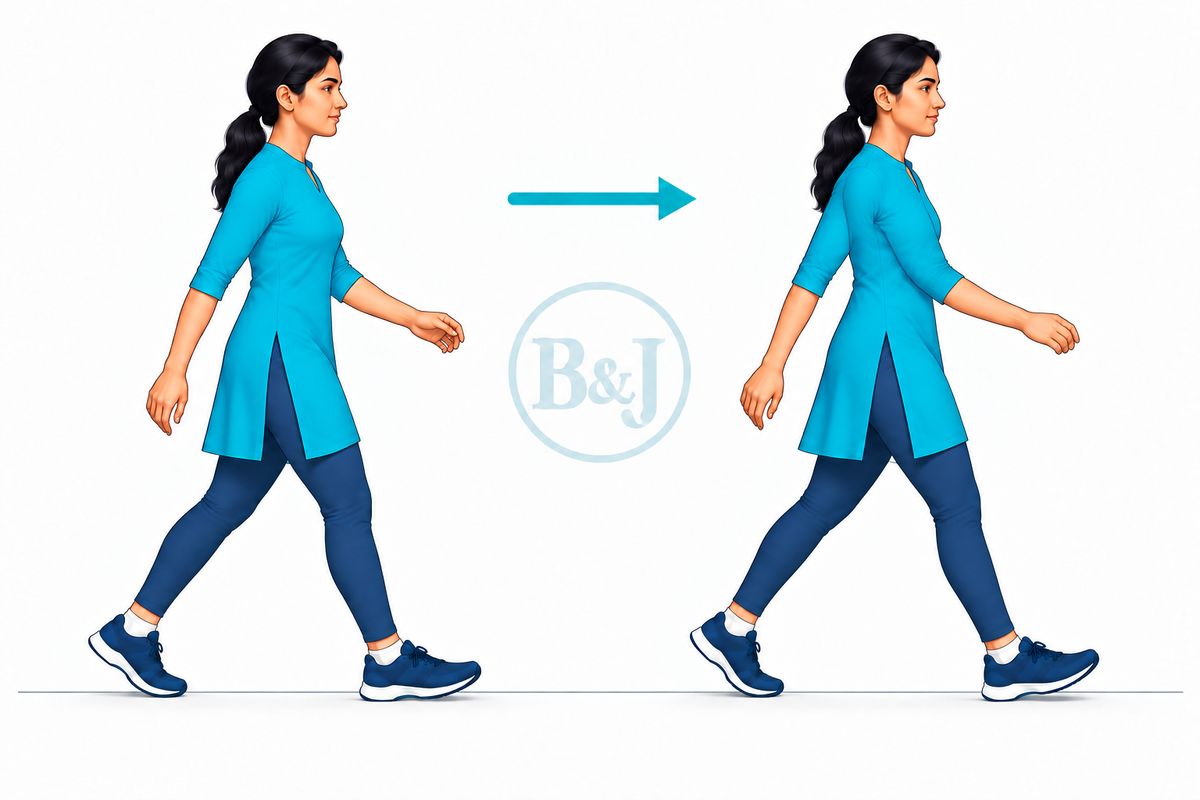
Walk daily. Build the distance slowly.
Should feel: Easier walking over weeks Should not feel: Swelling next day — do less
Not yet Football, kabaddi, cricket fielding or other turning and contact sport until we clear you.
Call either clinic during consulting hours, or send a WhatsApp message any time.