Home / Patient library / Exercise sheets / Sheet 62

Strong bones — age 50 and above

Preventive bone health · Bone protection and fall prevention

Most hip fractures are a fall, not a collapse. So half of this programme is balance work. Balance improves at any age — but only if practised often. Little and often beats long sessions.

Print this sheet

A4 PDF, 0.3 MB. Free to download — no sign-up, no email address needed.

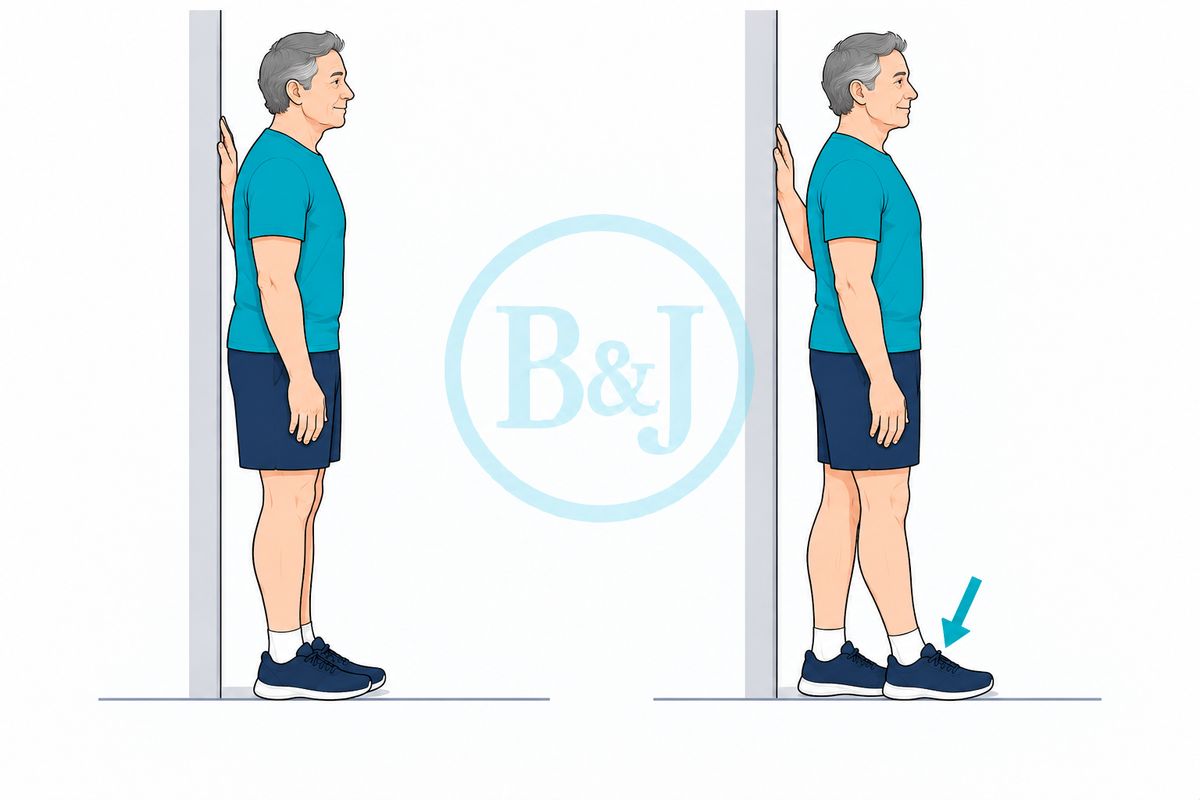
Heel-to-toe stand

Heel-to-toe stand

Stand beside a wall or counter with one hand resting on it. Place one foot directly in front of the other, heel touching toe. Look ahead at a fixed point, not at your feet.

  • Hold 10–30 seconds
  • Twice each side, daily

Should feel: Steady, with support within reach Should not feel: Practising in the middle of a room
One-leg stand

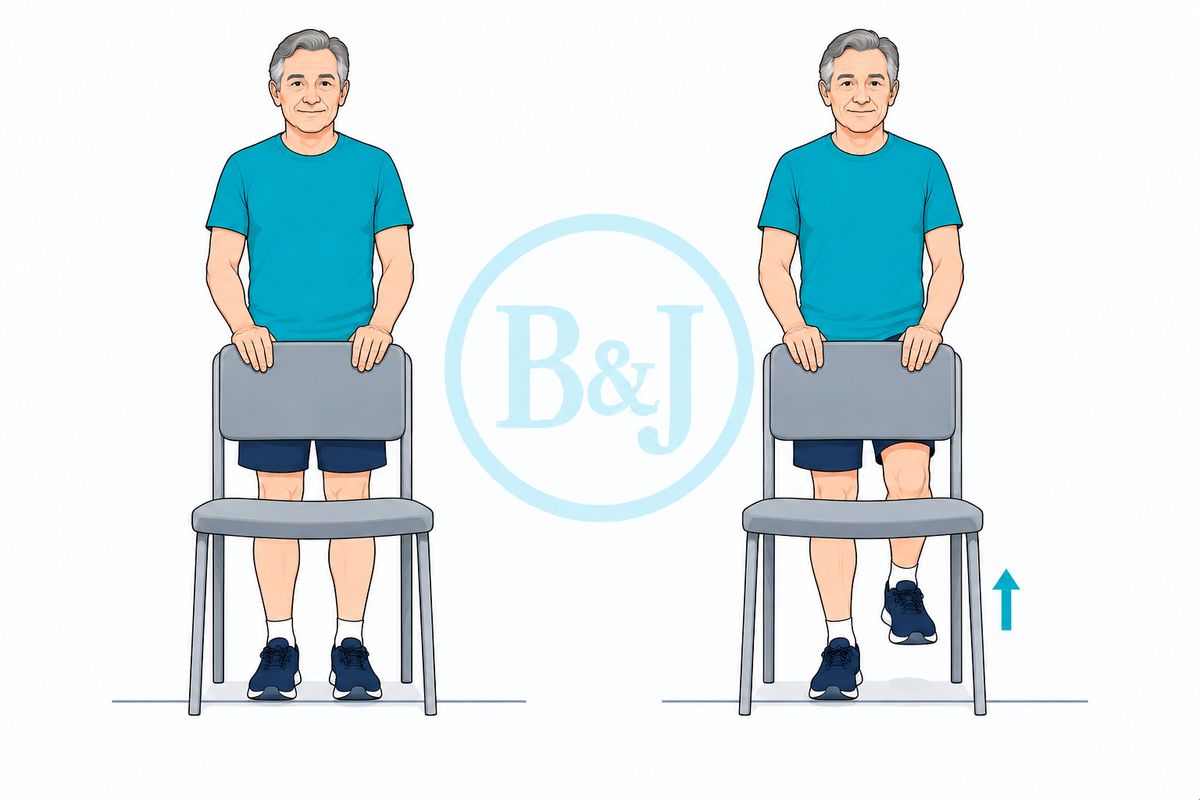
One-leg stand

Hold a counter or sturdy chair with one hand. Lift one foot just clear of the floor, keeping the standing knee soft. Look ahead at a fixed point.

  • Hold 10–30 seconds
  • Twice each leg, daily

Should feel: Steady balance improving week by week Should not feel: Holding your breath — count out loud instead

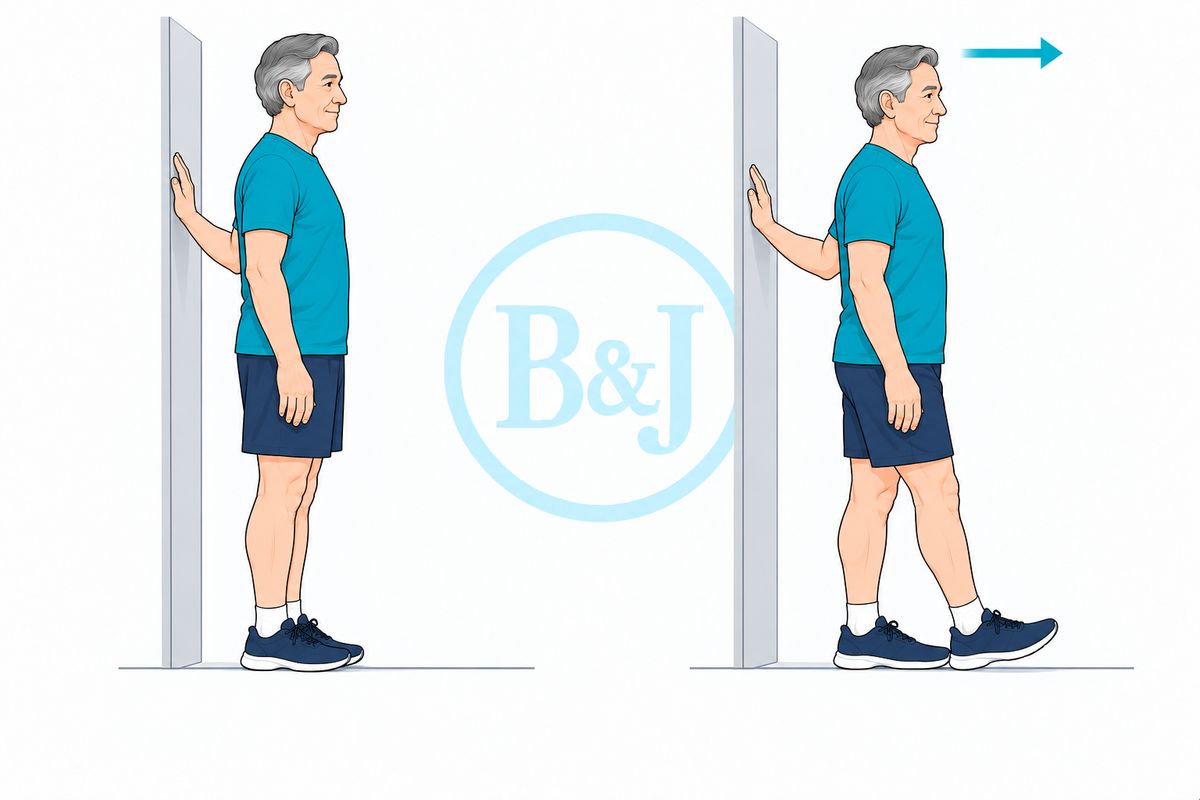
Heel-to-toe walk

Heel-to-toe walk

Walk along a wall you can touch. Place the heel of one foot directly in front of the toes of the other. Eyes ahead, not on your feet.

  • 10 steps
  • 2–3 times, daily

Should feel: Controlled steps Should not feel: Turning quickly — turn slowly in small steps

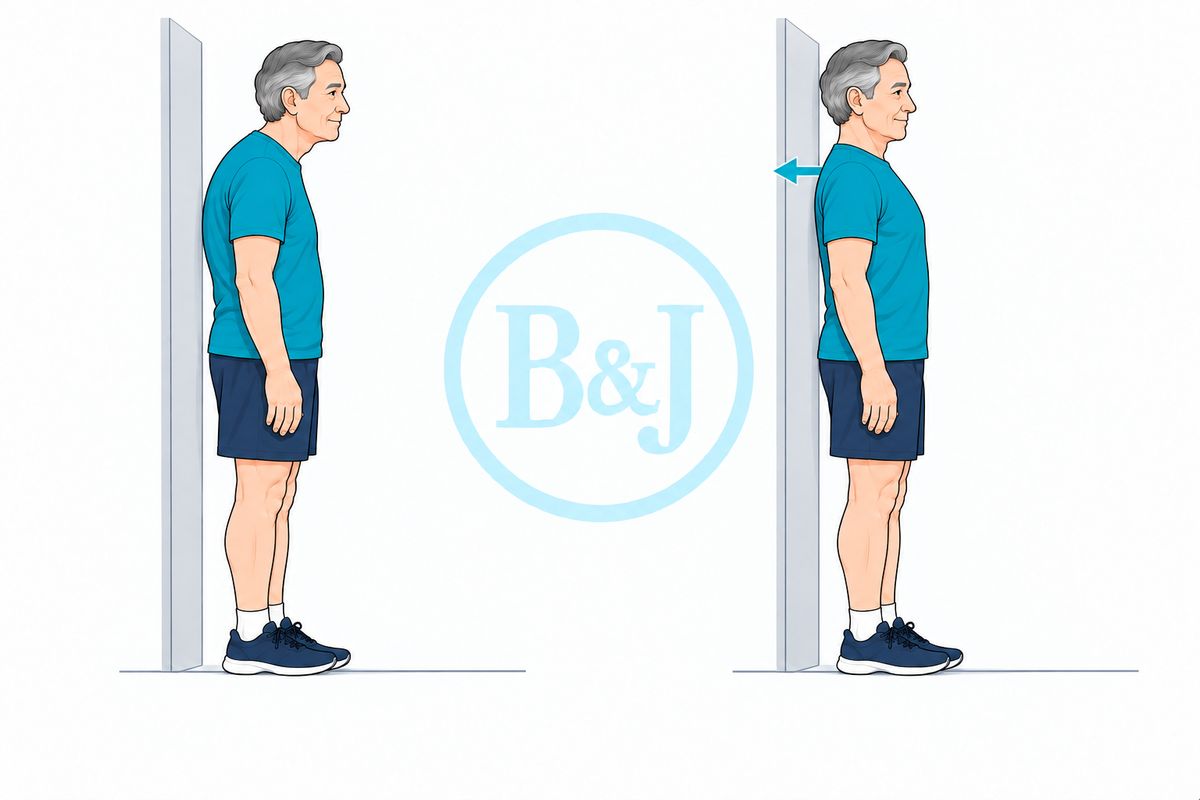
Wall posture hold

Wall posture hold

Back against a wall, heels a few inches away. Bring buttocks, upper back and the back of the head to the wall. Draw the chin gently back.

  • Hold 20–30 seconds
  • 5 times, daily

Should feel: The upper back opening out Should not feel: Forcing the head back if it will not reach

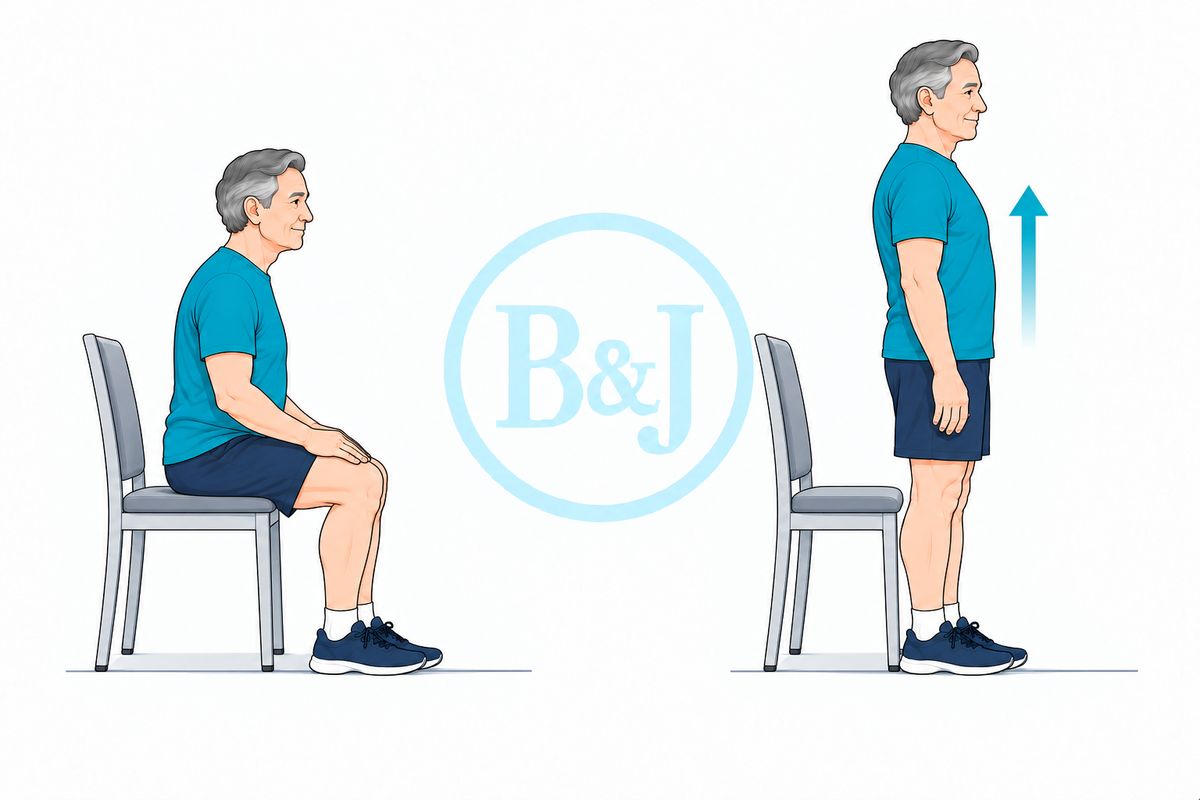
Stand up from a chair

Stand up from a chair

Sit towards the front of a firm, high chair placed against a wall. Lean forward over the knees and push up through the legs. Lower slowly.

  • 5–10 times
  • 2 sets, most days

Should feel: The legs doing the work Should not feel: A chair with wheels, or a soft sofa

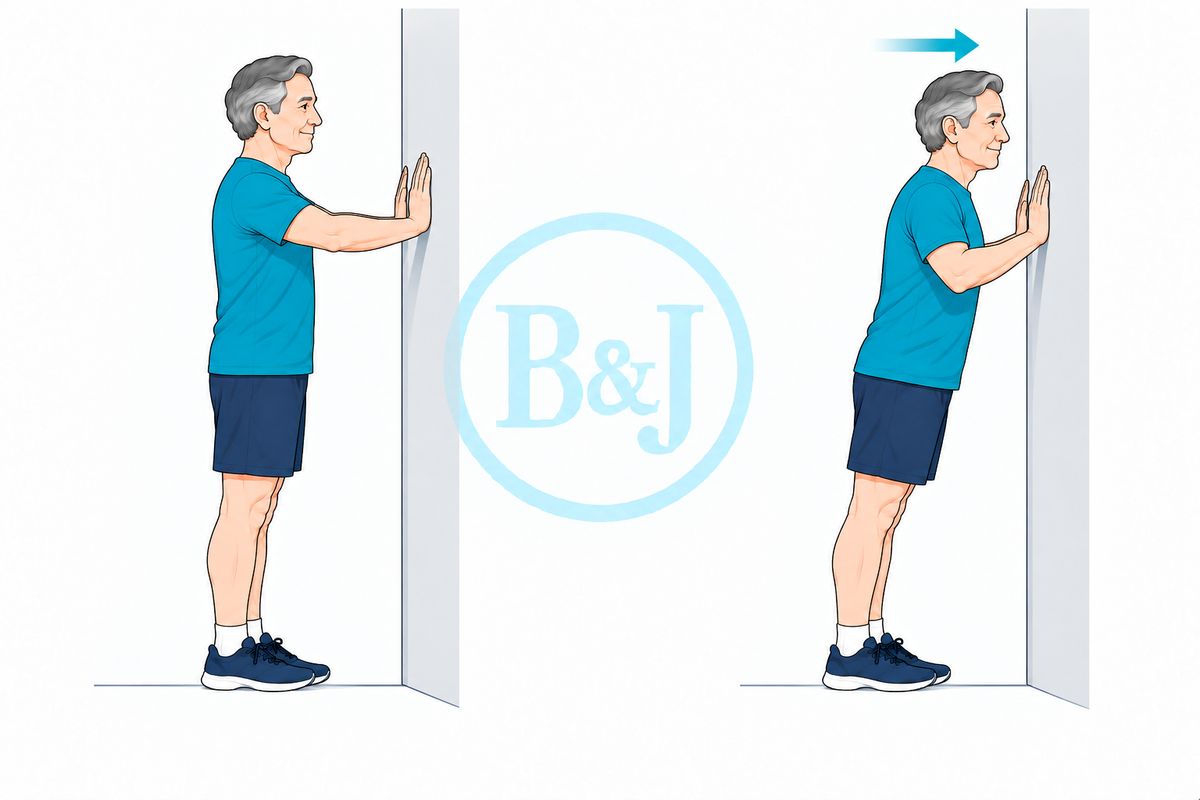
Wall push-up

Wall push-up

Stand an arm’s length from a wall, palms at shoulder height. Keep the body straight and the neck relaxed. Bend the elbows, then push back slowly.

  • 8–12 times
  • 2 sets, 3 days a week

Should feel: The arms and wrists loading Should not feel: The heels lifting off the floor

Stop and telephone us if

  • An exercise causes pain rather than effort
  • You feel dizzy, unsteady, or you have a fall
  • Chest pain or tightness, unusual breathlessness, or an irregular heartbeat — stop and seek advice
  • Sudden sharp joint pain

Ready when you are.

Call either clinic during consulting hours, or send a WhatsApp message any time.