Home / Patient library / Exercise sheets / Sheet 54

Exercise for fibromyalgia

Bone & joint disease · Fibromyalgia (whole-body pain)

How to use this sheet. Start low and go slow: begin with less than you think you can manage, and add a little more each week. Aching the next day is common and is not harm — do a little less, then build up again. Fibromyalgia pain is real, but it does not damage the joints. Keep fixed times for going to bed and getting up, every day.

Print this sheet

A4 PDF, 0.5 MB. Free to download — no sign-up, no email address needed.

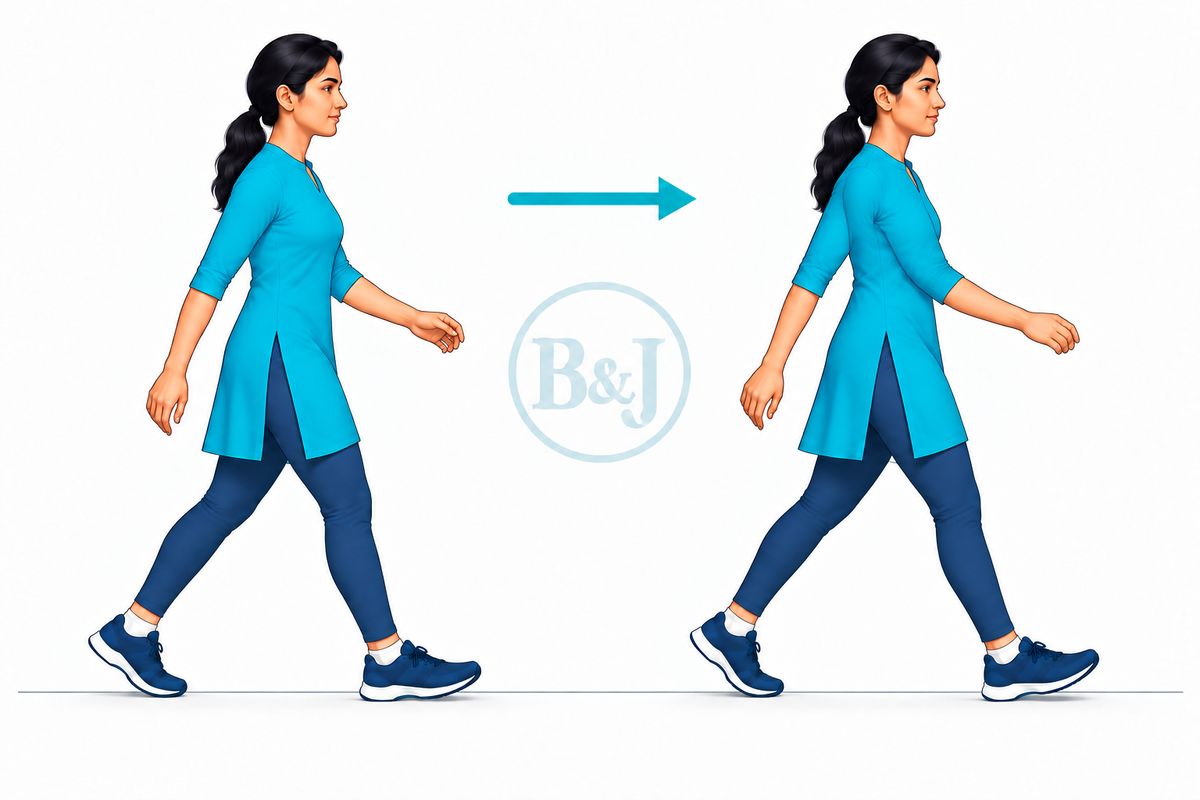
Walking

Walking

Walk at a comfortable pace, where you can still talk. Start with 10 minutes and add a few minutes each week, building up towards about 30 minutes on most days.

  • 10 minutes
  • Most days

Should feel: Easier movement Should not feel: Exhaustion or pain that lasts into the next day — do a little less, then build up again
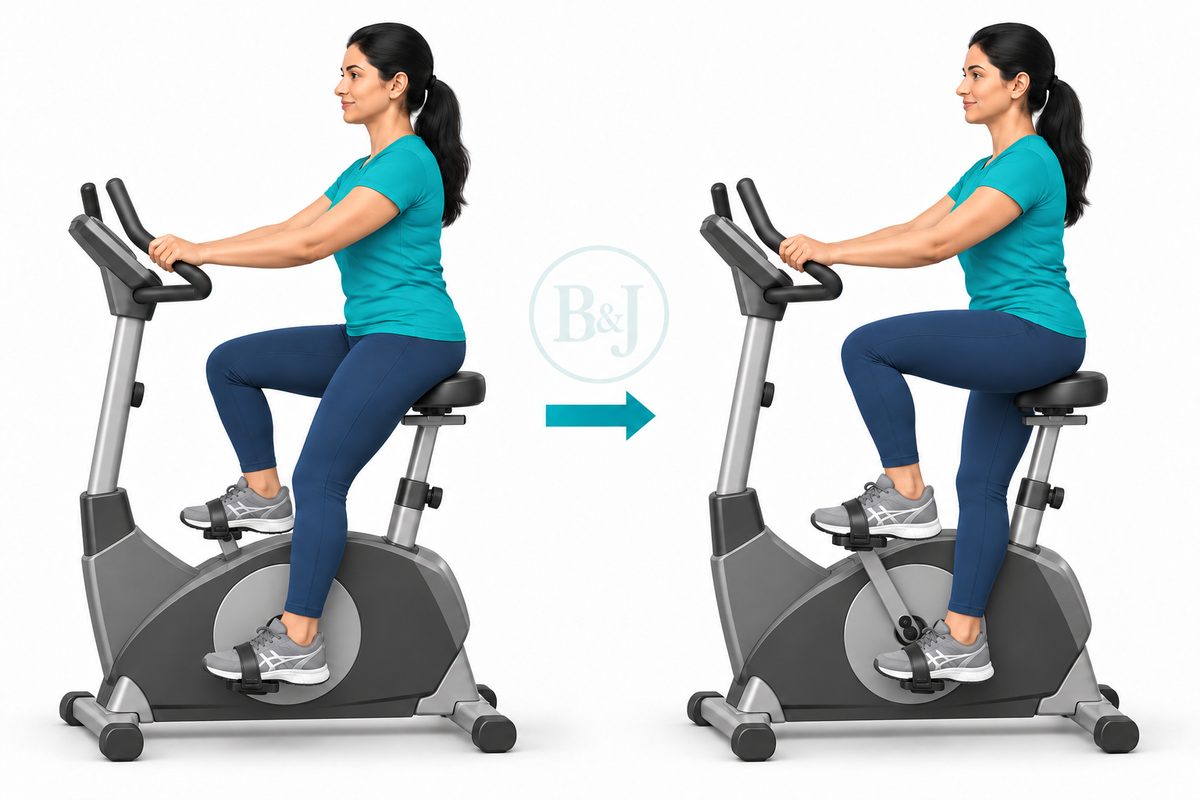
Static cycling

Static cycling

Set the seat high, so the knee is almost straight at the bottom. Pedal gently with little resistance. If you have no static cycle, take a second short walk instead.

  • 10 minutes
  • Most days

Should feel: The legs warming up and the breathing a little faster Should not feel: Being too breathless to talk

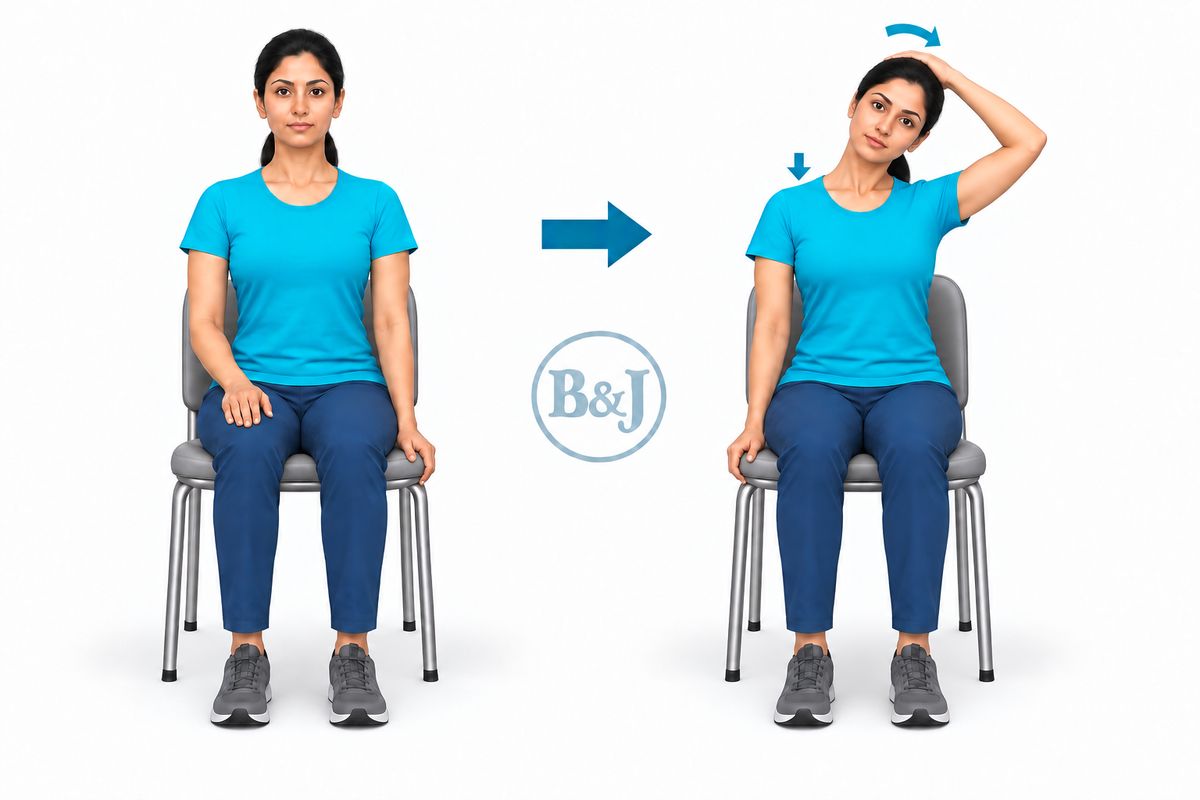
Upper trapezius stretch

Upper trapezius stretch

Sit tall and hold the edge of the chair seat with your right hand. Tilt your left ear towards your left shoulder until you feel a stretch down the right side of the neck. You may rest your left hand lightly on your head, but do not pull. Repeat on the other side.

  • Hold 20 seconds
  • 3 each side

Should feel: A stretch down the side of the neck Should not feel: Sharp or shooting pain

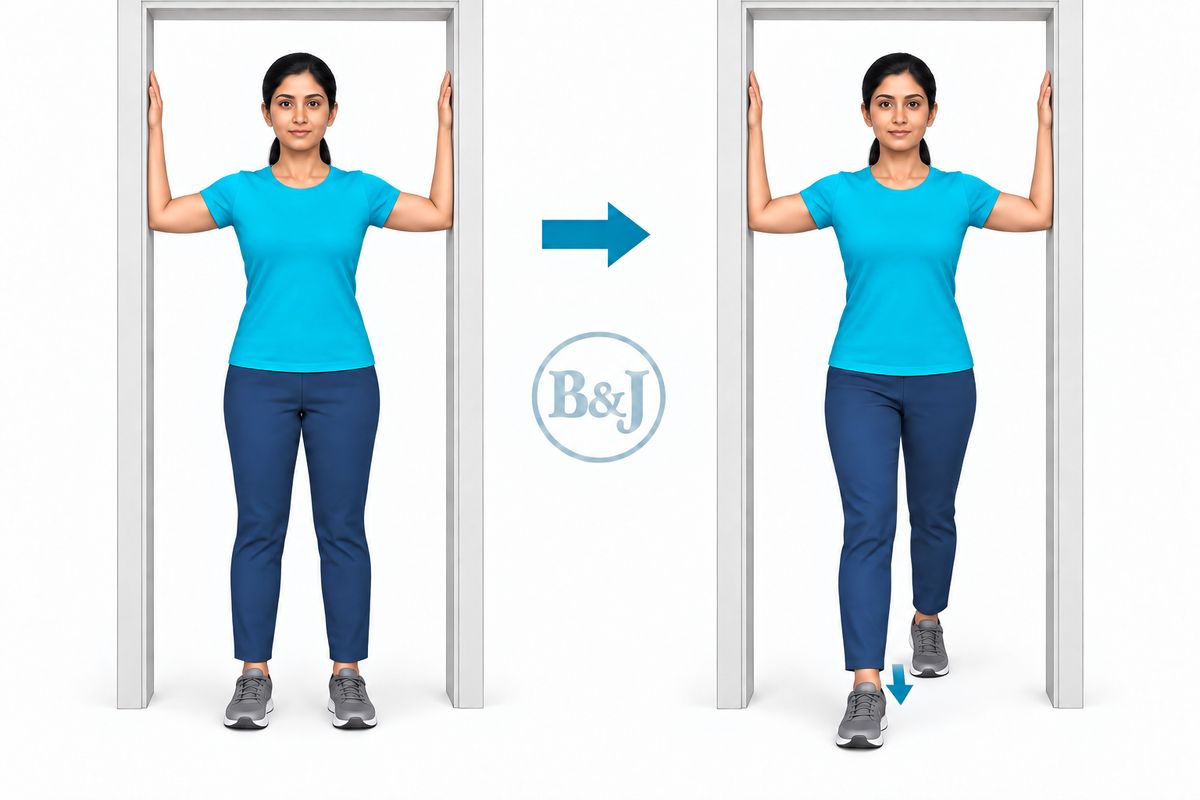
Doorway chest stretch

Doorway chest stretch

Stand in a doorway with your hands on the frame at about head height, elbows bent. Step one foot forward and gently lean through the doorway until you feel a stretch across the chest.

  • Hold 20 seconds
  • 3 times

Should feel: A stretch across the chest Should not feel: Shoulder pain at the front

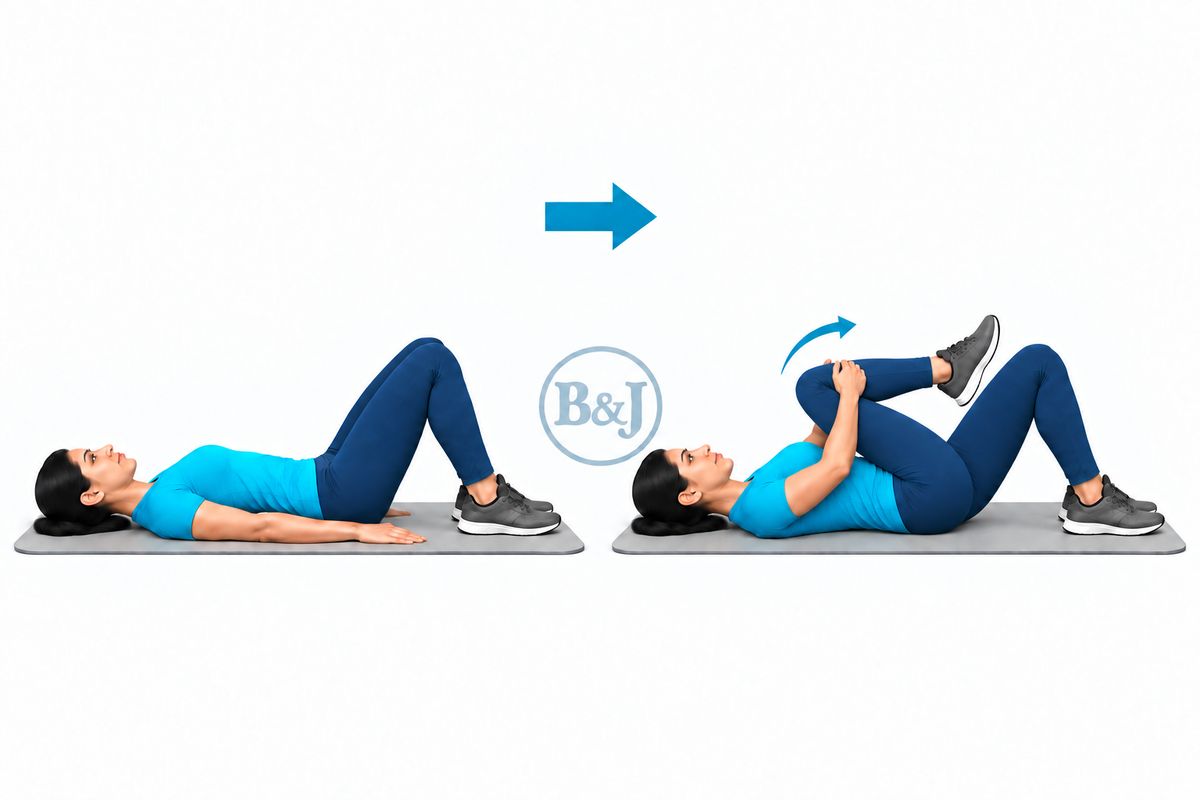
Knee to chest

Knee to chest

Lie on your back. Bring one knee up towards your chest, hold, then lower slowly.

  • Hold 15 seconds
  • 5 each side

Should feel: A stretch in the lower back and buttock Should not feel: Leg pain getting worse

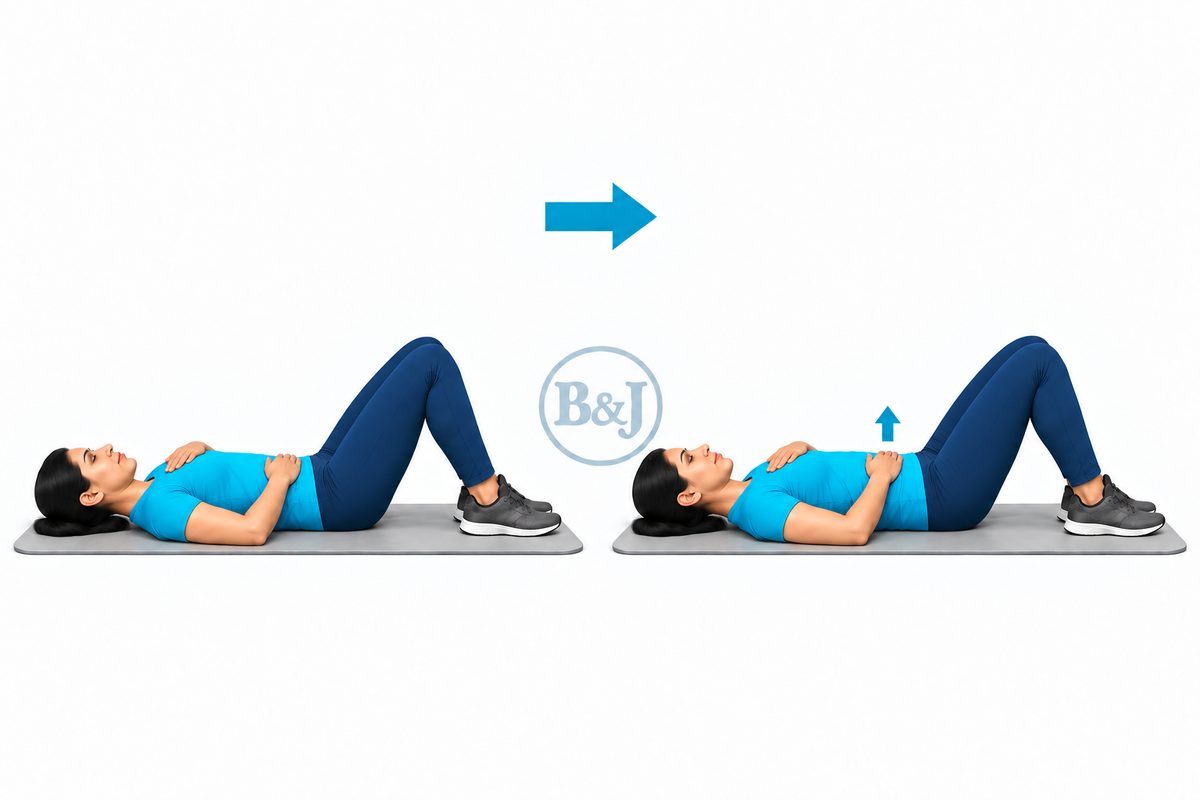
Belly breathing

Belly breathing

Lie on your back with the knees bent, one hand on the chest and one on the belly. Breathe in slowly through the nose so that the belly hand rises, then breathe out slowly. The chest hand stays still.

  • 5 minutes
  • At bedtime

Should feel: Calm, slow breathing Should not feel: Dizziness — breathe more gently

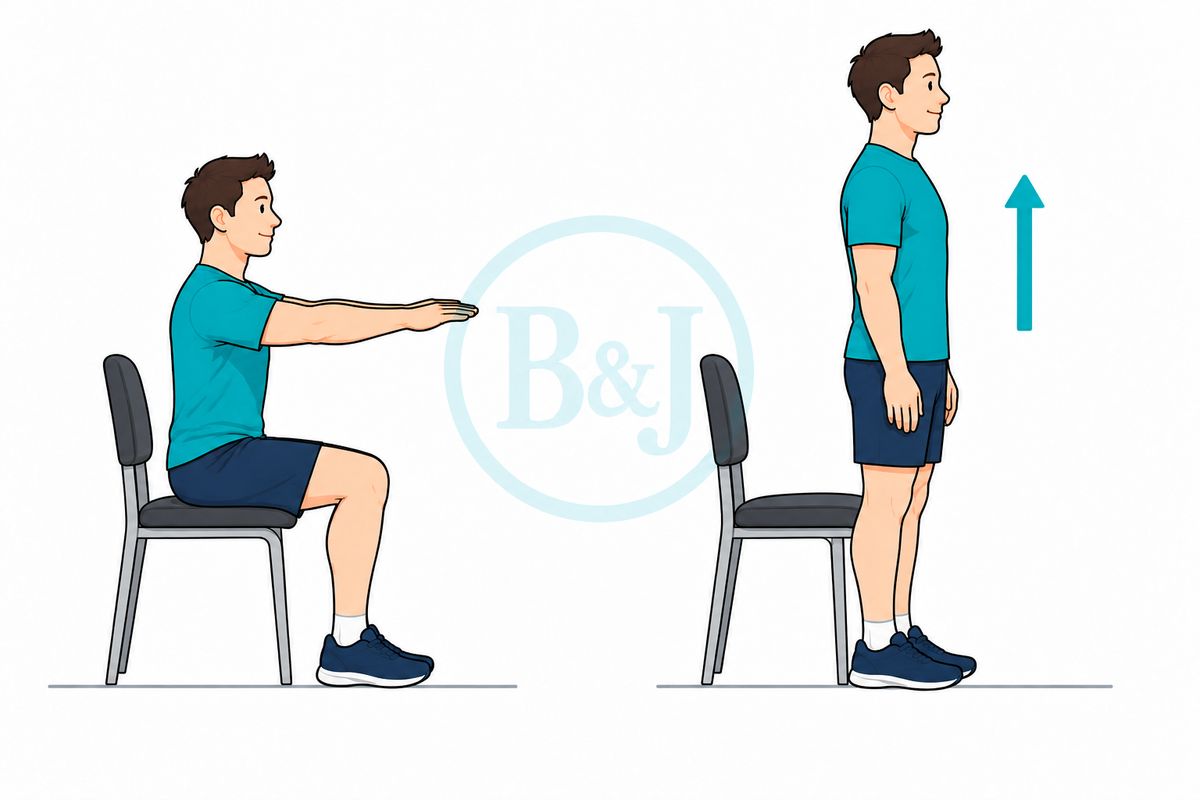
Sit to stand

Sit to stand

Sit on a firm chair with your feet flat. Stand up without using your arms if you can, then sit down slowly.

  • 5 times to begin, adding 1 or 2 each week up to 10
  • Once a day

Should feel: The thighs working Should not feel: Aching that lasts into the next day — do fewer

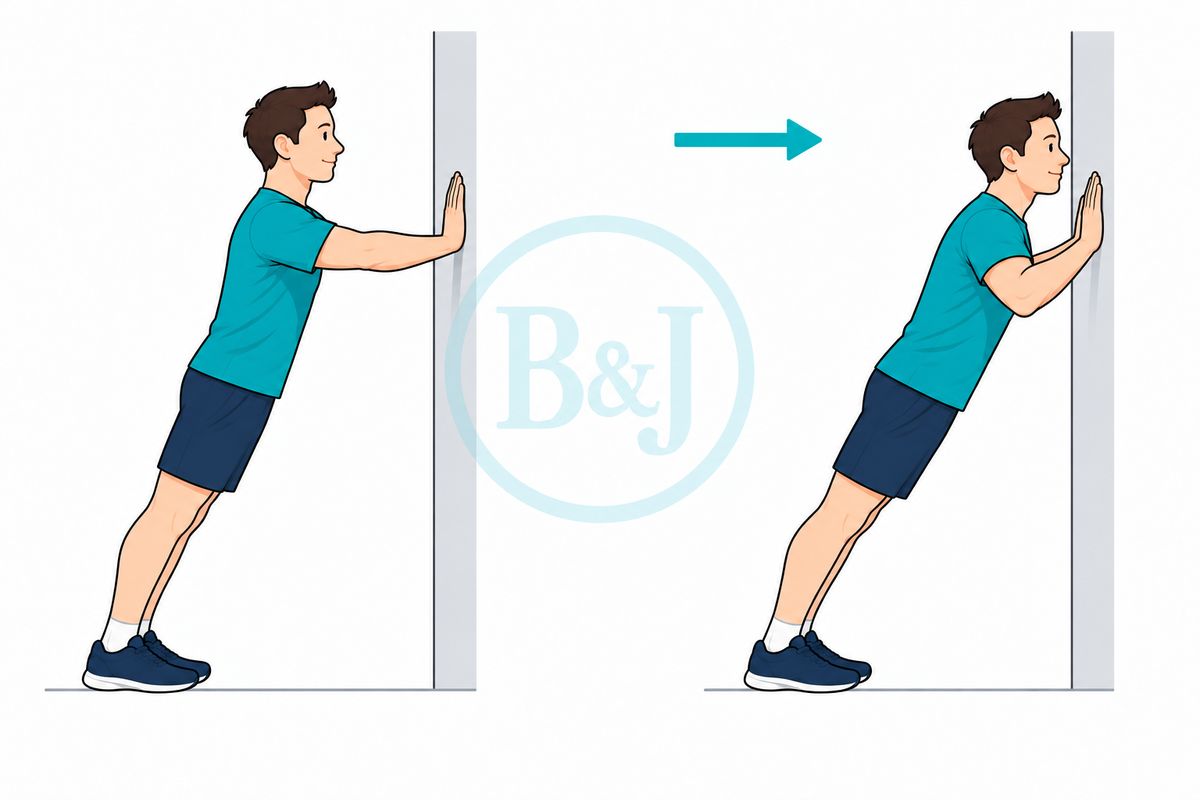
Wall push-up

Wall push-up

Stand an arm's length from a wall with your hands on it at shoulder height. Bend the elbows to bring your chest towards the wall, then push back.

  • 5 times to begin, building up to 10
  • Once a day

Should feel: The arms and chest working Should not feel: Shoulder or neck pain

Stop and telephone us if

  • One or more joints swell up
  • You get new numbness, tingling or weakness
  • You feel unwell or feverish
  • You feel low or hopeless most of the time, or you have thoughts of harming yourself

Ready when you are.

Call either clinic during consulting hours, or send a WhatsApp message any time.