
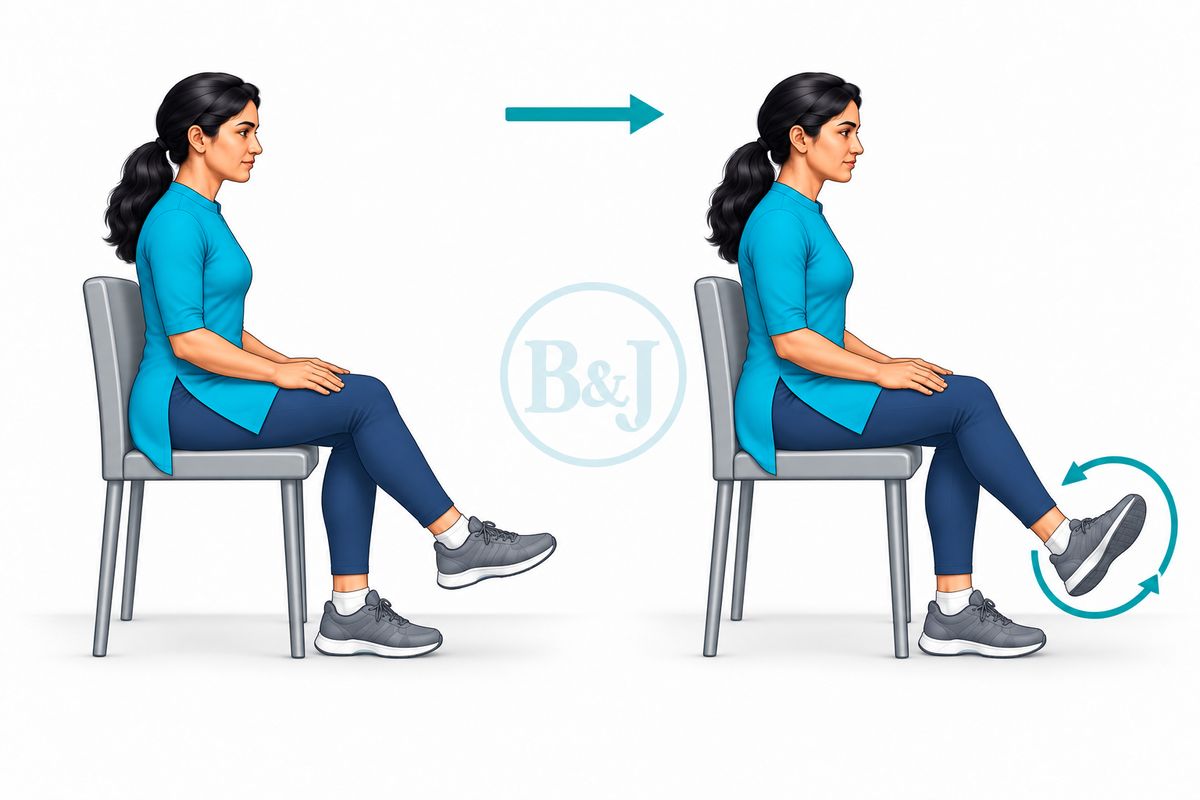
Ankle circles
Move the ankle slowly in circles both ways.
- 10 each way
- 4 times a day
Should feel: The ankle loosening Should not feel: Sharp pain
Home / Patient library / Exercise sheets / Sheet 47
Foot & ankle · Foot drop (peroneal nerve palsy)
A4 PDF, 0.5 MB. Free to download — no sign-up, no email address needed.
Move the ankle slowly in circles both ways.
Should feel: The ankle loosening Should not feel: Sharp pain
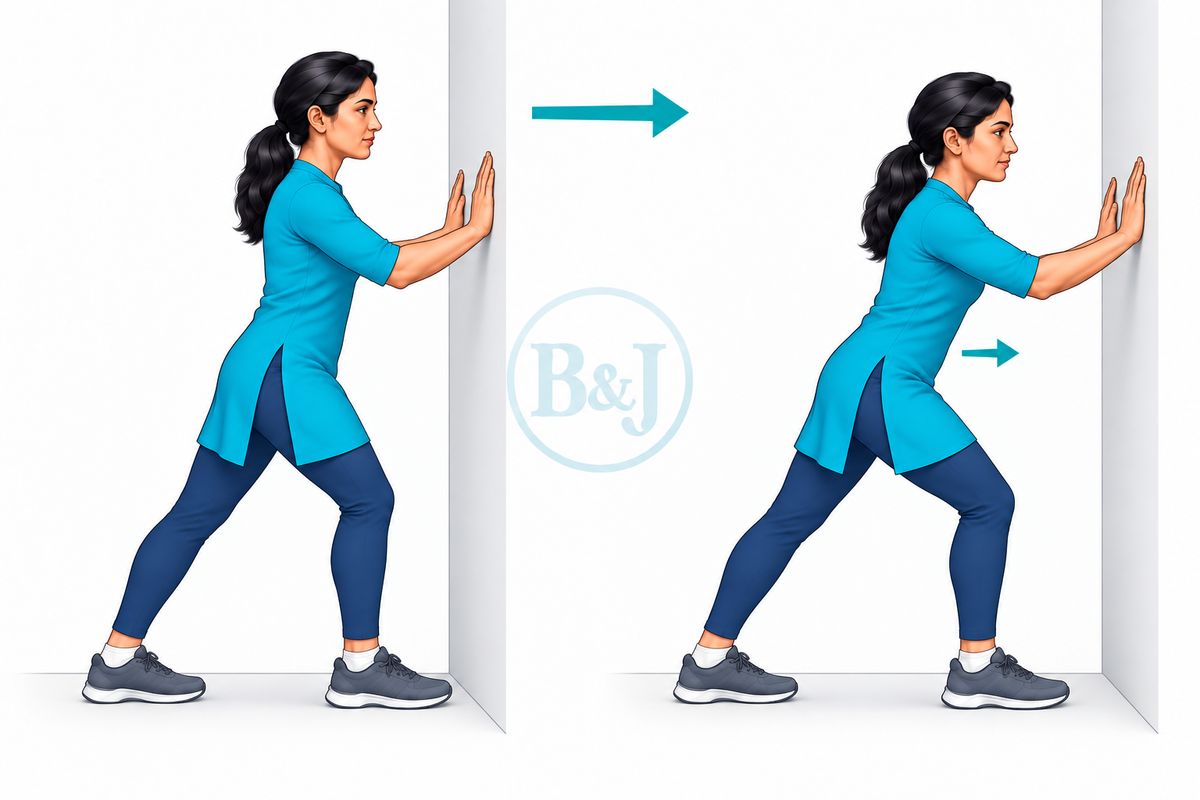
Hands on a wall, the weak leg behind and straight, heel down.
Should feel: A stretch in the upper calf Should not feel: Pain in the heel
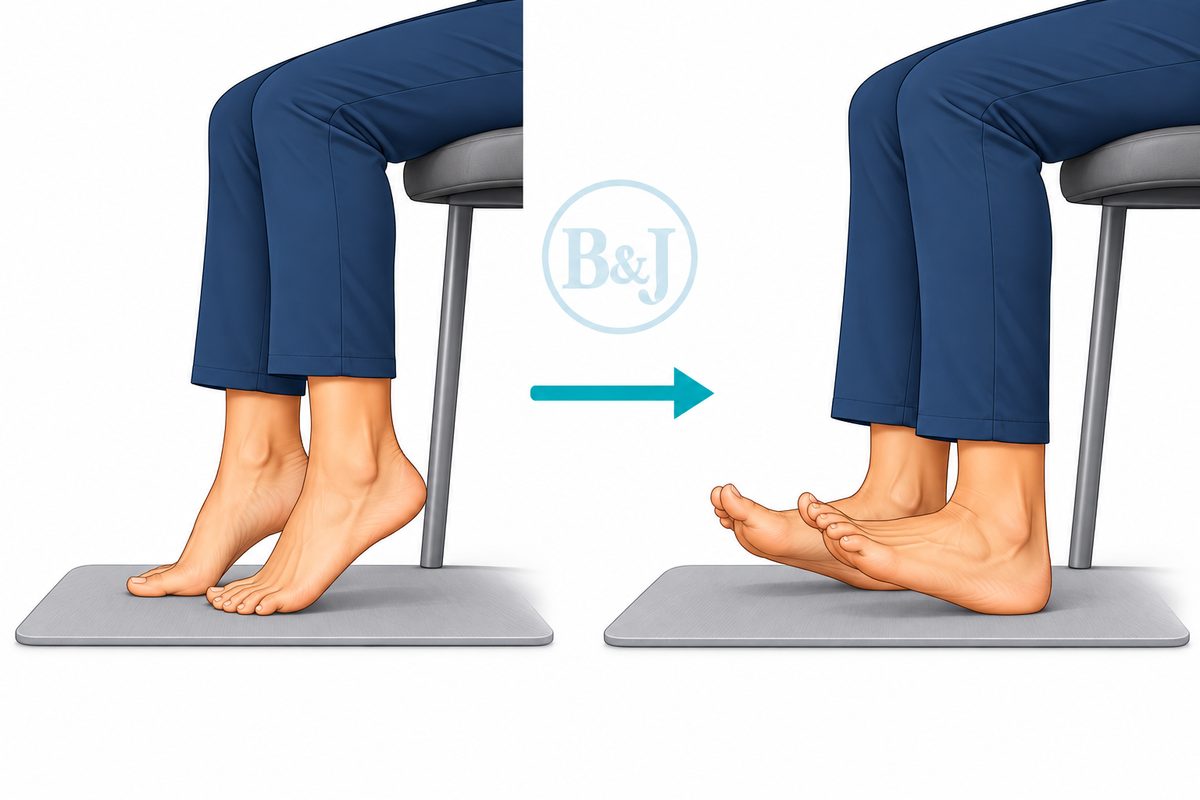
Sit with both feet flat on the floor. Lift the heels, lower them, then lift the toes.
Should feel: The calf and the front of the shin working Should not feel: Sharp pain
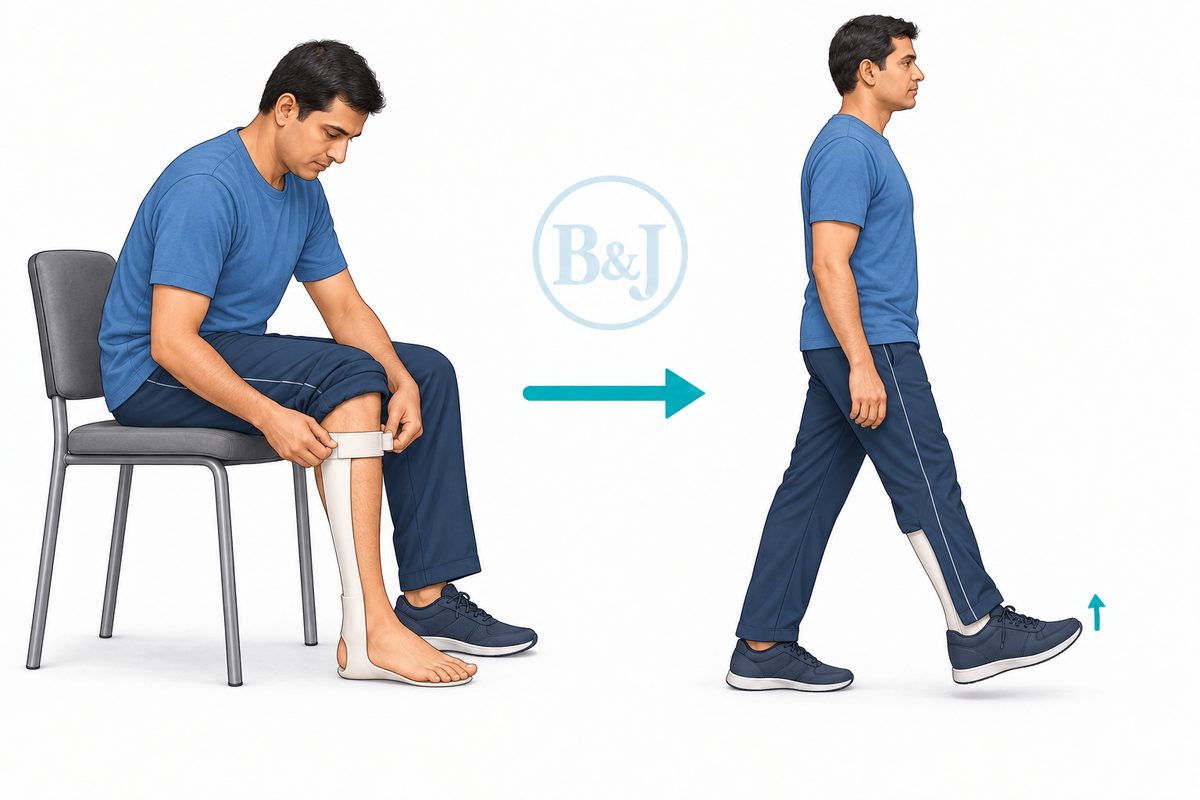
Put the splint on sitting down, with the heel right back in it and the strap snug, inside a shoe with a closed back. Wear it whenever you are on your feet, and at night too if we have advised.
Should feel: The toes no longer catching the floor Should not feel: Rubbing, or a red mark that does not fade — tell us
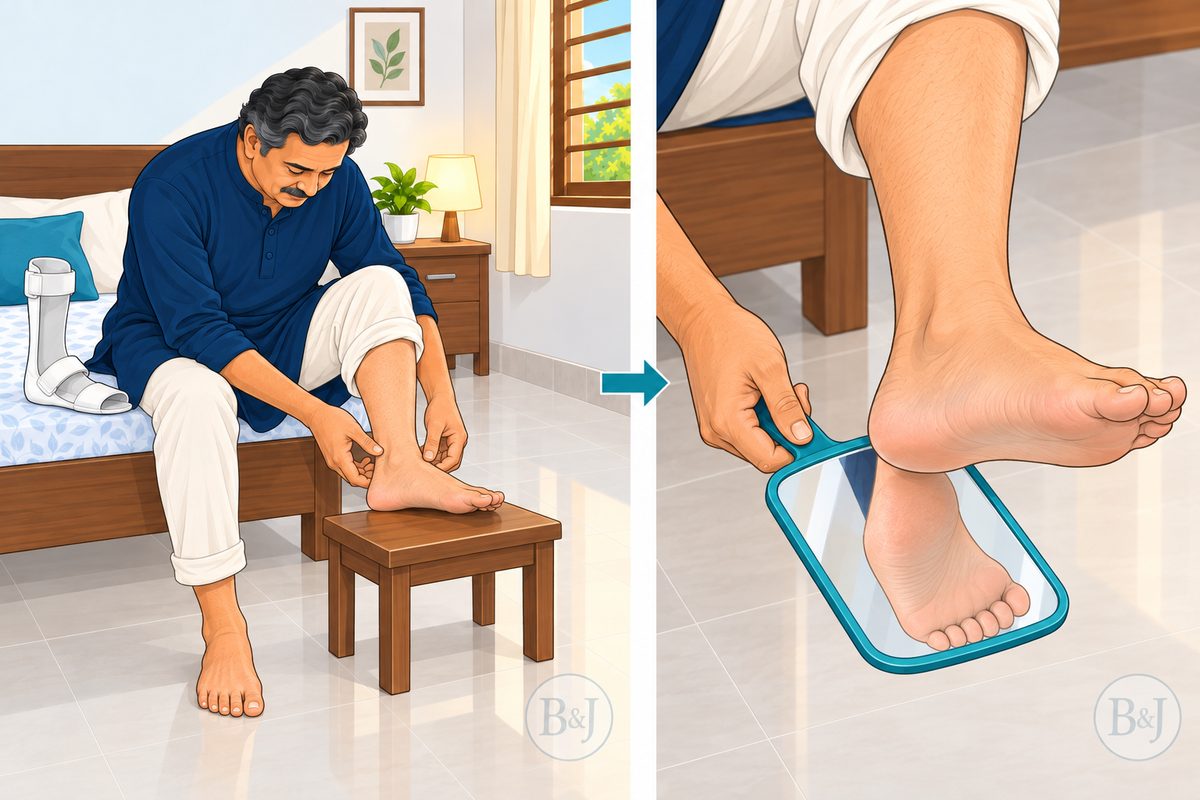
Take the splint off and look at the whole foot, especially the heel, the ankle bones and the top of the foot. The top of the foot may be numb, so you may not feel a sore starting. Use a mirror or ask someone to look.
Should feel: Skin that is clean and unbroken Should not feel: A red mark that does not fade, a blister or a sore
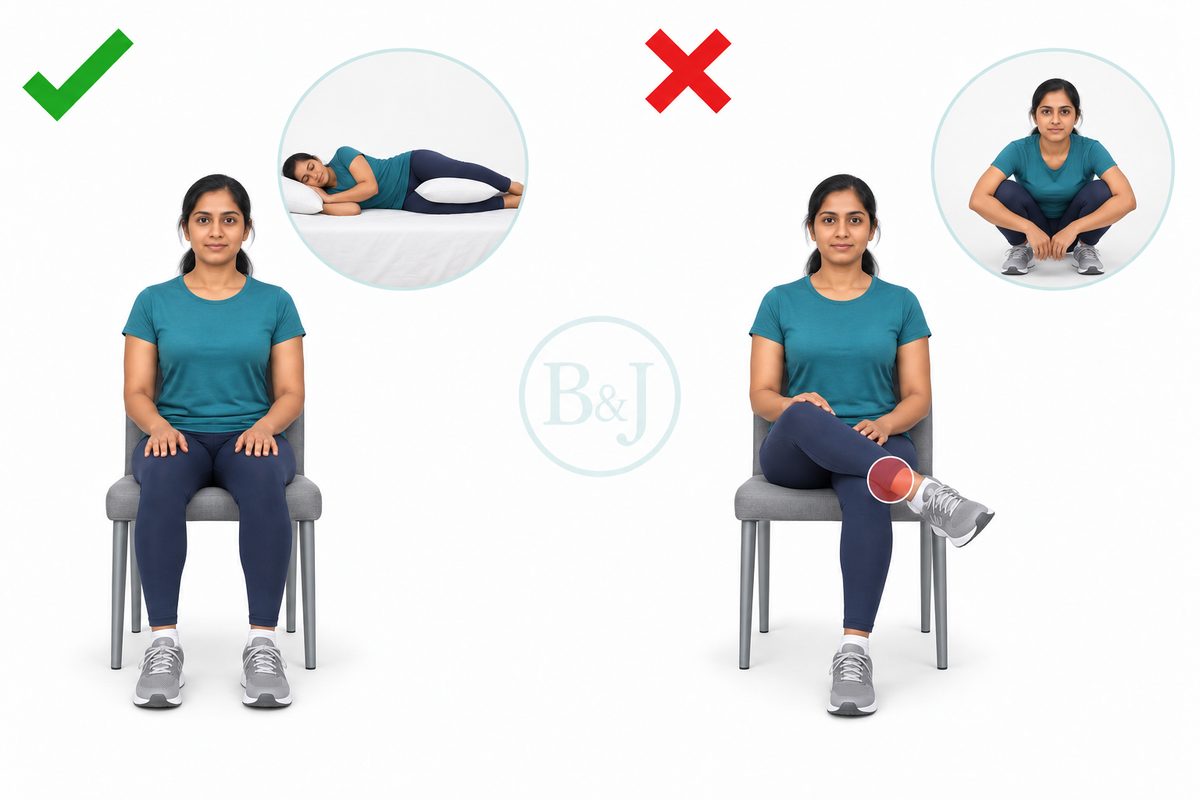
This nerve runs just below the outer side of the knee. Do not sit with your legs crossed, and do not rest the outer side of the knee on anything hard. Sit on a chair with both feet flat on the floor. Lying on your side, keep a pillow between the knees. Avoid squatting, sitting on the floor or using an Indian toilet until we have told you it is safe.
Should feel: Less pressure on the outer side of the knee Should not feel: Tingling at the outer knee or on the top of the foot
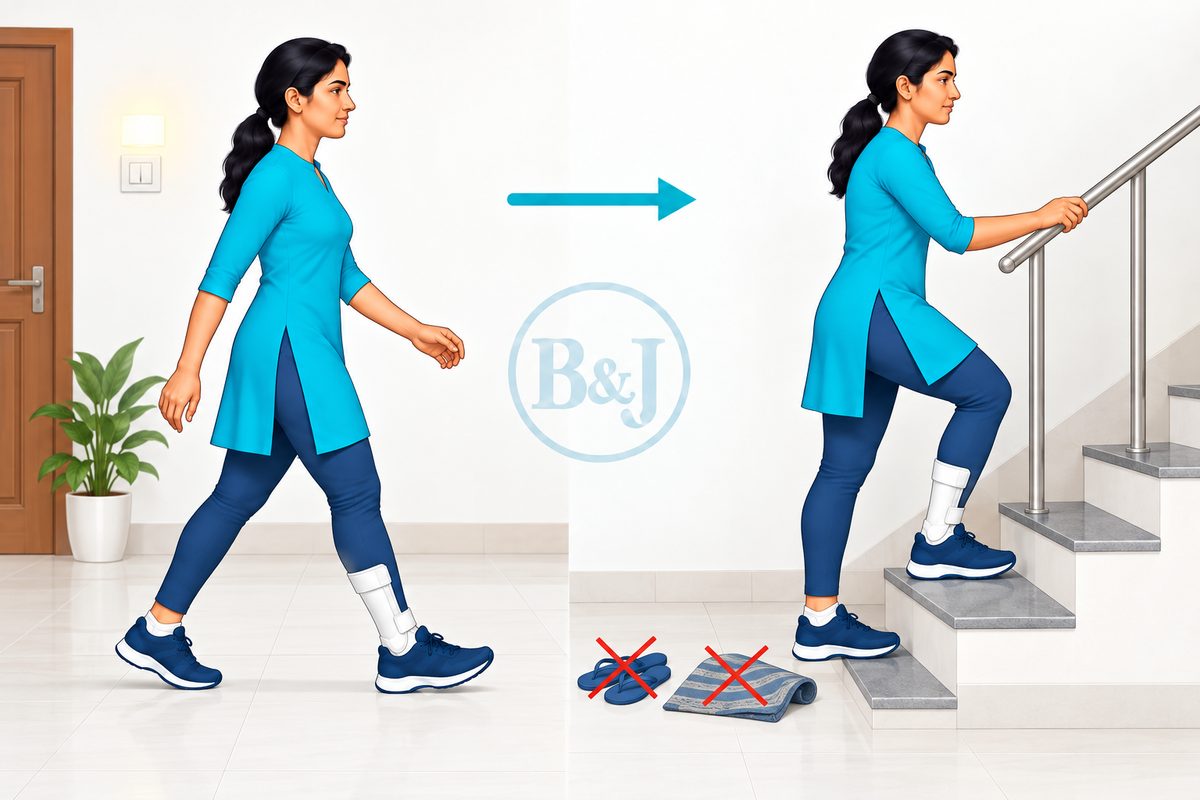
Wear the splint and a shoe with a back, not loose chappals. Keep the floor clear of loose mats, wires and water, keep a light on at night, and hold the rail on stairs. Take extra care on a wet bathroom floor. Do not ride a two-wheeler or drive until we agree.
Should feel: Steady, safe steps Should not feel: Tripping or catching the toes — tell us
Call either clinic during consulting hours, or send a WhatsApp message any time.