
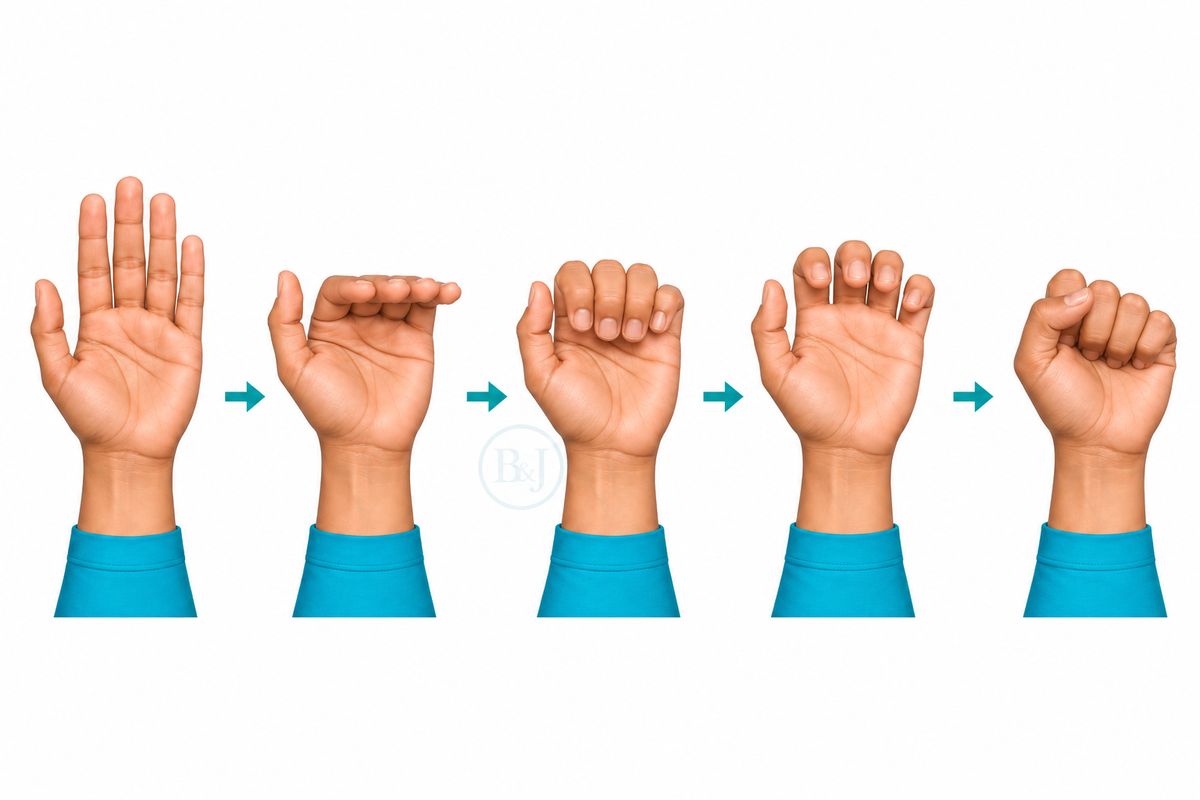
Tendon glides
Move the fingers through the positions slowly to keep them mobile.
- 10 times
- 3 times a day
Should feel: The fingers moving freely Should not feel: Pain that lasts hours afterwards
Home / Patient library / Exercise sheets / Sheet 27
Hand & wrist · Complex regional pain syndrome (CRPS) of the hand
A4 PDF, 0.4 MB. Free to download — no sign-up, no email address needed.
Move the fingers through the positions slowly to keep them mobile.
Should feel: The fingers moving freely Should not feel: Pain that lasts hours afterwards
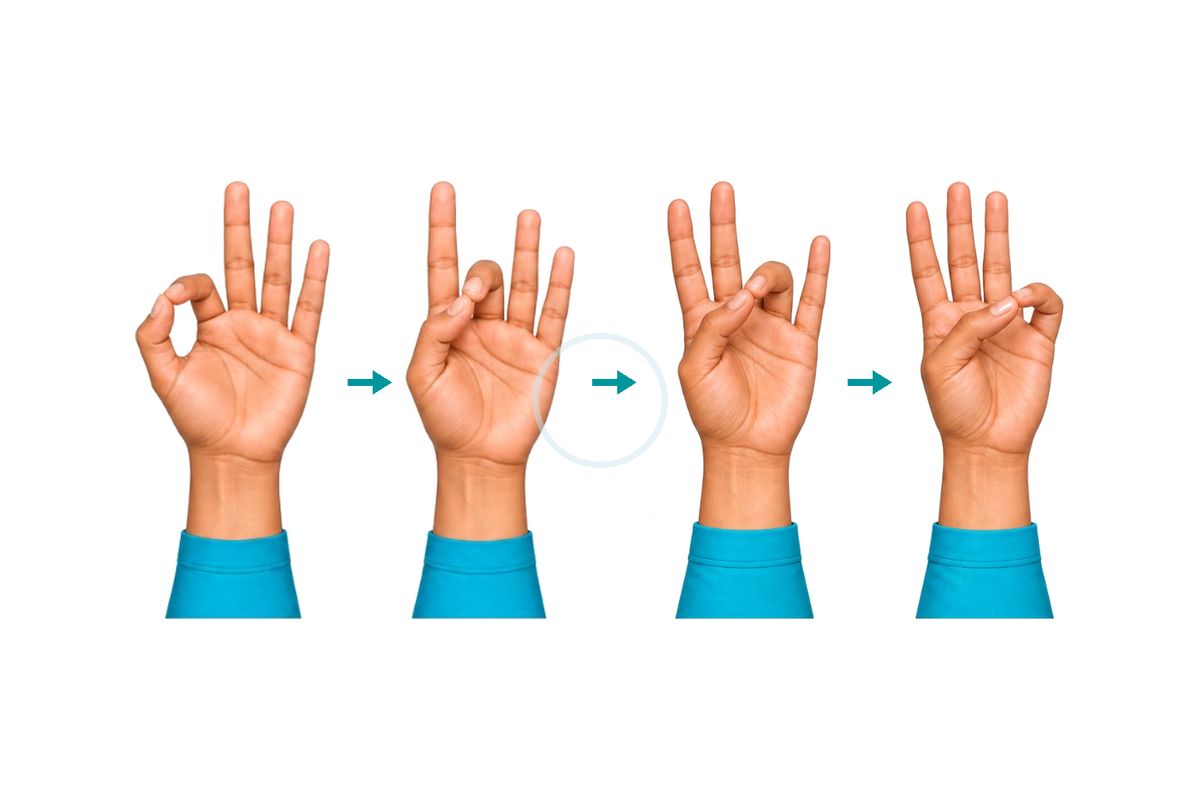
Touch each fingertip to the thumb.
Should feel: Control Should not feel: Pinching pain
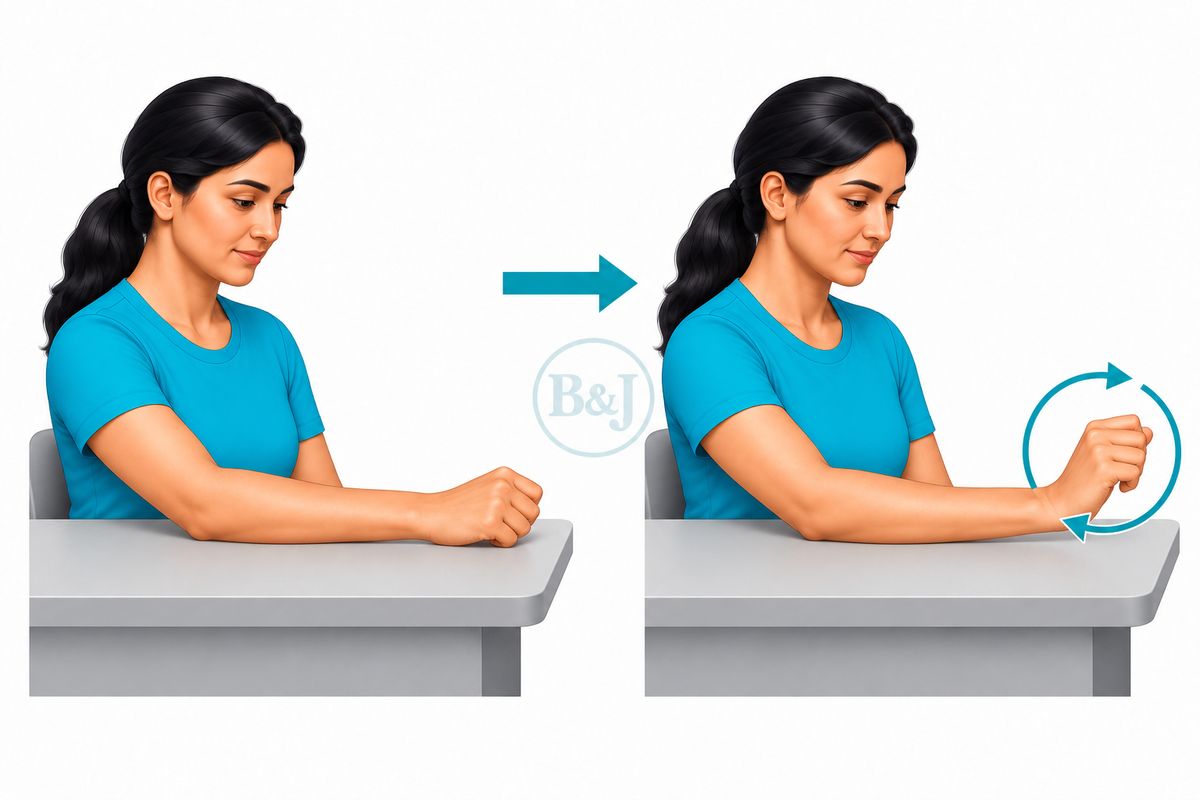
Make slow, gentle circles with the wrist, only as far as is comfortable.
Should feel: Free movement Should not feel: Forcing into sharp pain
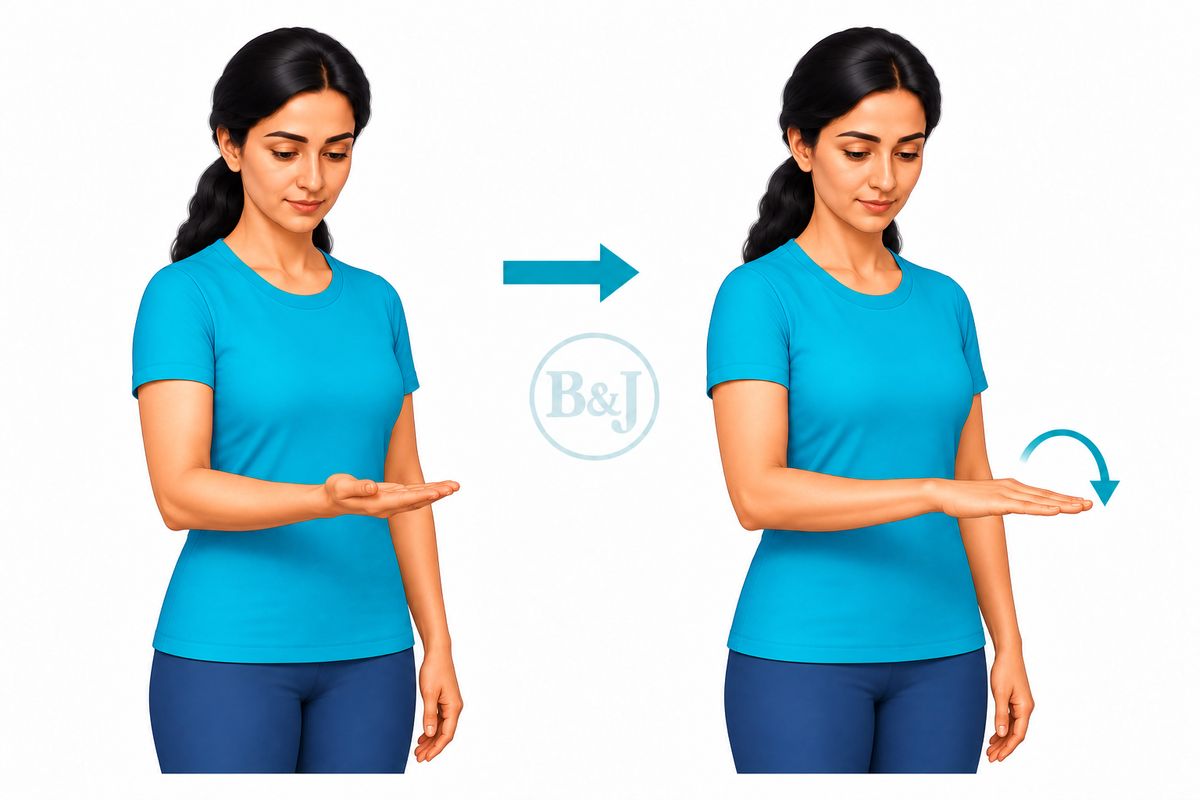
Elbow tucked in, turn the palm up and down slowly.
Should feel: Free movement Should not feel: Clicking with pain
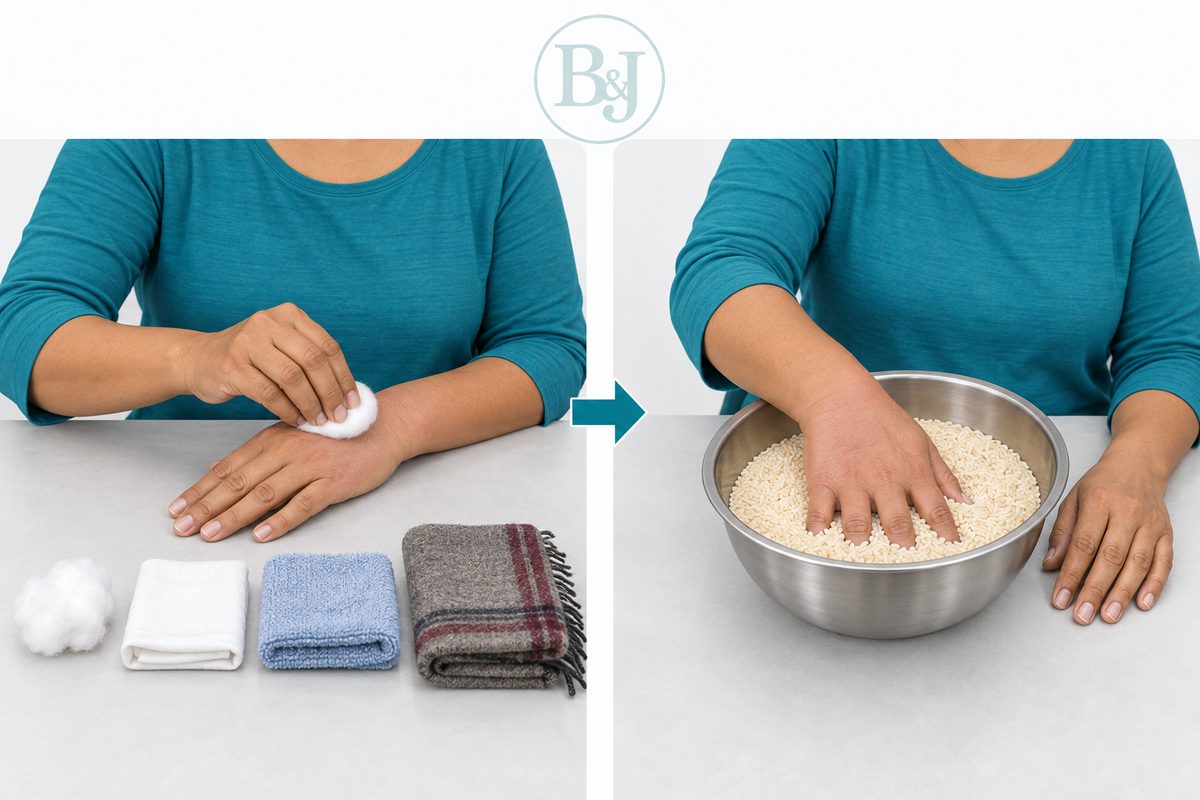
Gently stroke the sensitive skin with something soft, such as cotton wool or a soft cotton cloth. When that feels ordinary, move on to something a little rougher: a towel, then a woollen shawl. You can also rest the hand in a bowl of dry rice or dal and move the fingers through it. Start at the edge of the most sensitive area and work inwards.
Should feel: The touch feeling a little more ordinary each week Should not feel: Pain that stays raised for hours afterwards
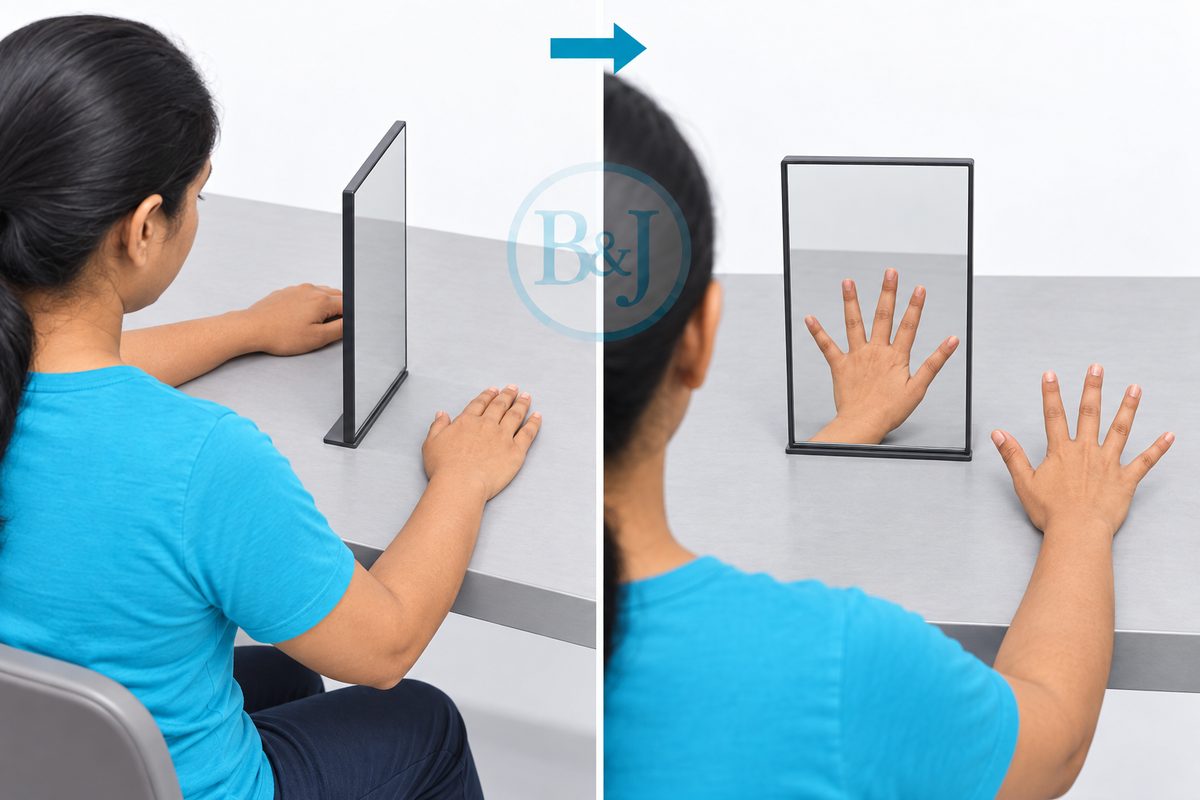
Sit at a table with a mirror standing upright in the middle, its shiny side facing your good hand. Put the painful hand behind the mirror, out of sight. Look only at the reflection while you slowly move the good hand: open and close it, touch the thumb to each fingertip, turn the palm up and down. It will look as if the painful hand is moving easily. Start this when we tell you, after the first two steps above.
Should feel: The hand in the mirror looking like your own painful hand Should not feel: Pain or swelling going up during or after
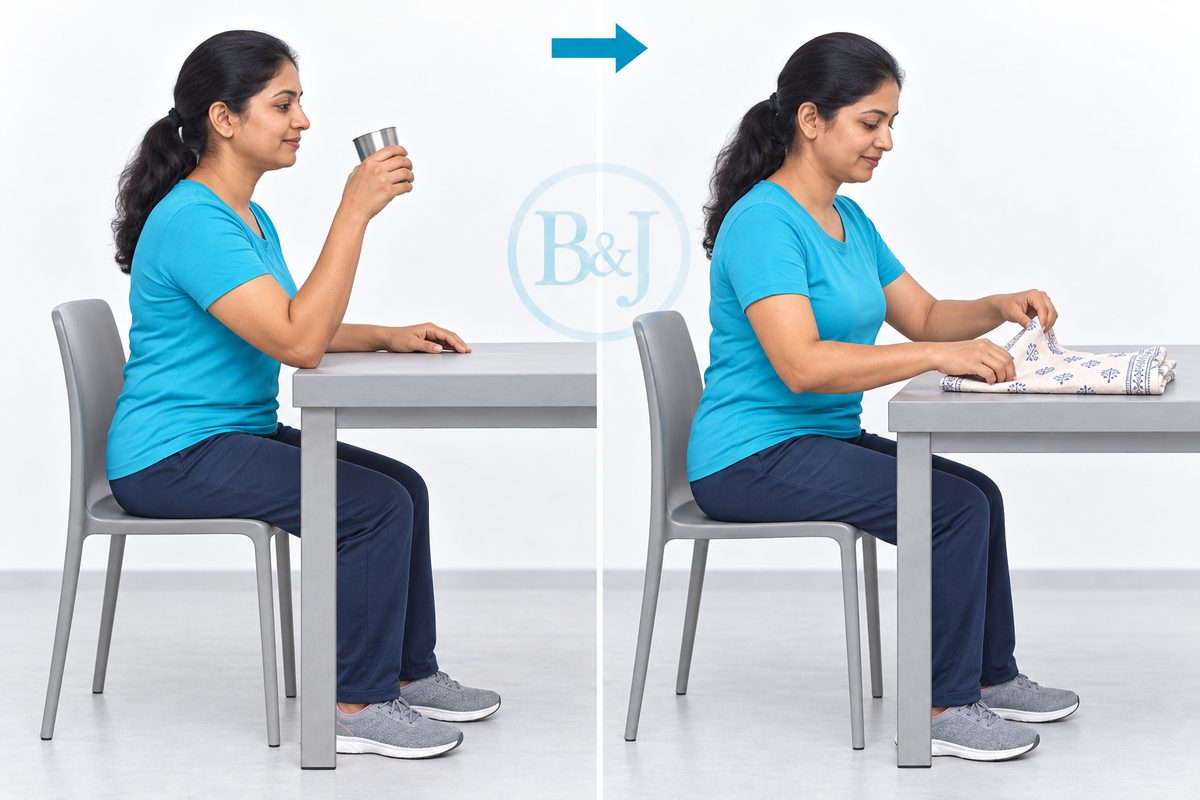
Use the painful hand in ordinary jobs every day, adding a little more as it allows: holding a glass of water, eating with that hand, combing your hair, buttoning a shirt, folding clothes. Start with light, easy jobs. Keep it steady: do not do a lot on a good day.
Should feel: The hand joining in a little more each week Should not feel: Much more pain the day after a busy day
Call either clinic during consulting hours, or send a WhatsApp message any time.