
Home / Patient library / Exercise sheets / Sheet 26

Wrist exercises for little-finger-side pain

Hand & wrist · Pain on the little-finger side of the wrist

How to use this sheet. If we gave you a wrist splint, wear it as we advised and take it off only for these exercises. If the splint stops the forearm turning, keep it on and do only the first exercise until we tell you. Keep the wrist straight, in line with the forearm, and move slowly within comfort. Avoid: bending the wrist towards the little finger under load, wringing out clothes, twisting open tight lids, and pushing up from the floor or a chair with this hand. Start the three pressing exercises (the last three on this sheet) only when the pain has settled. Grip strengthening starts later, when we tell you.

Print this sheet

A4 PDF, 0.3 MB. Free to download — no sign-up, no email address needed.

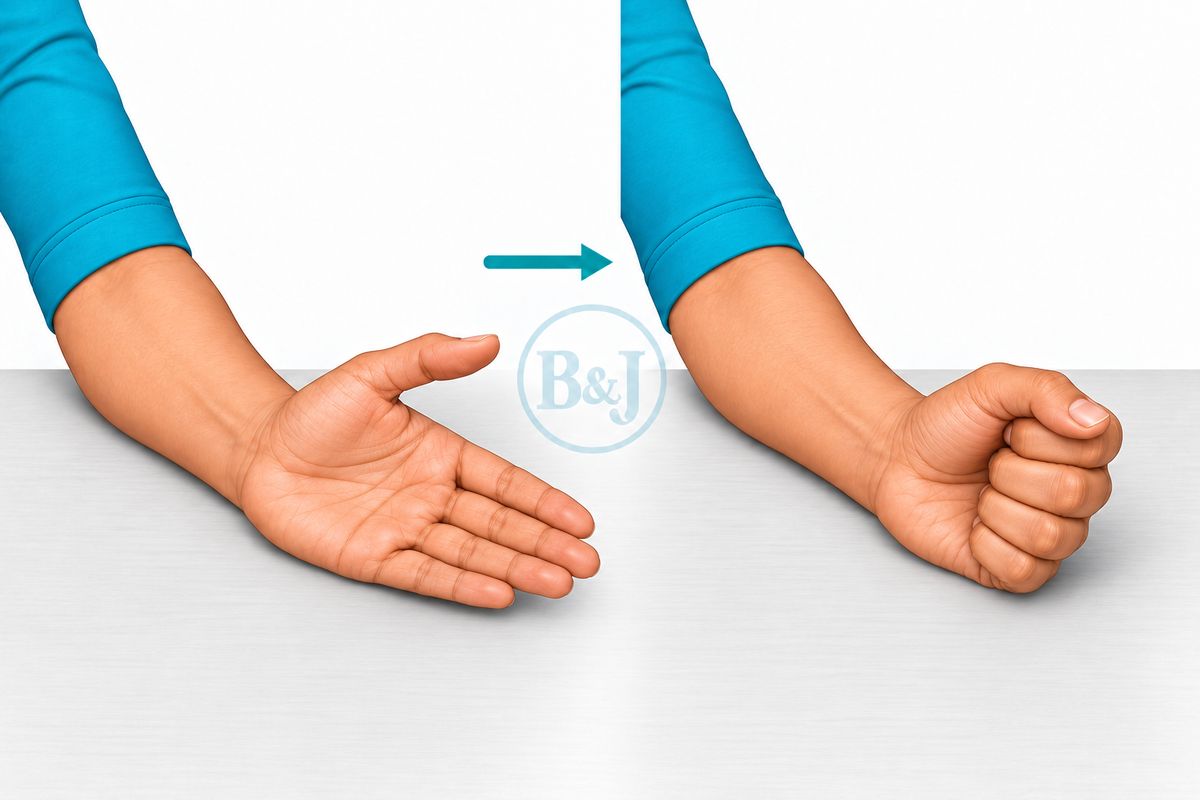
Composite fist

Composite fist

Make a full fist slowly, then open fully.

  • 10 times
  • 3 times a day

Should feel: Full movement Should not feel: Catching that hurts
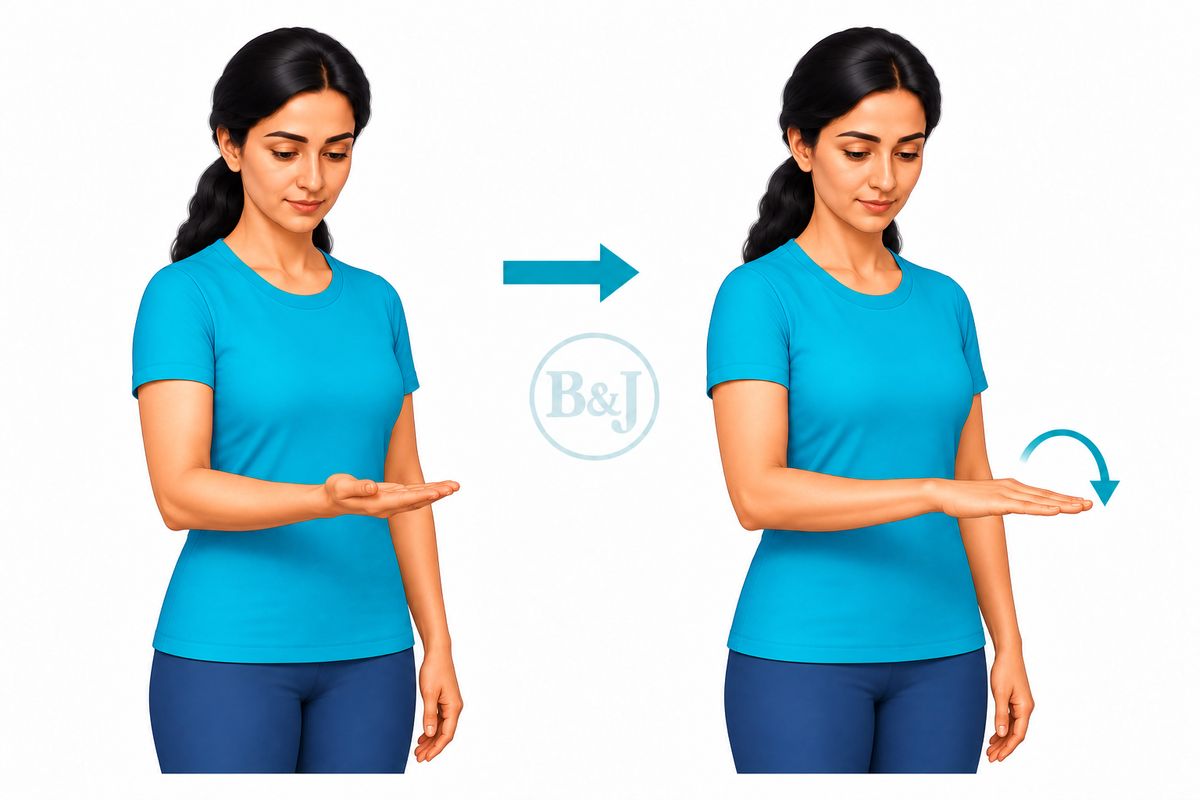
Forearm rotation

Forearm rotation

Elbow tucked in, turn the palm up and down slowly.

  • 10 times
  • 2 times a day

Should feel: Free movement Should not feel: Clicking with pain
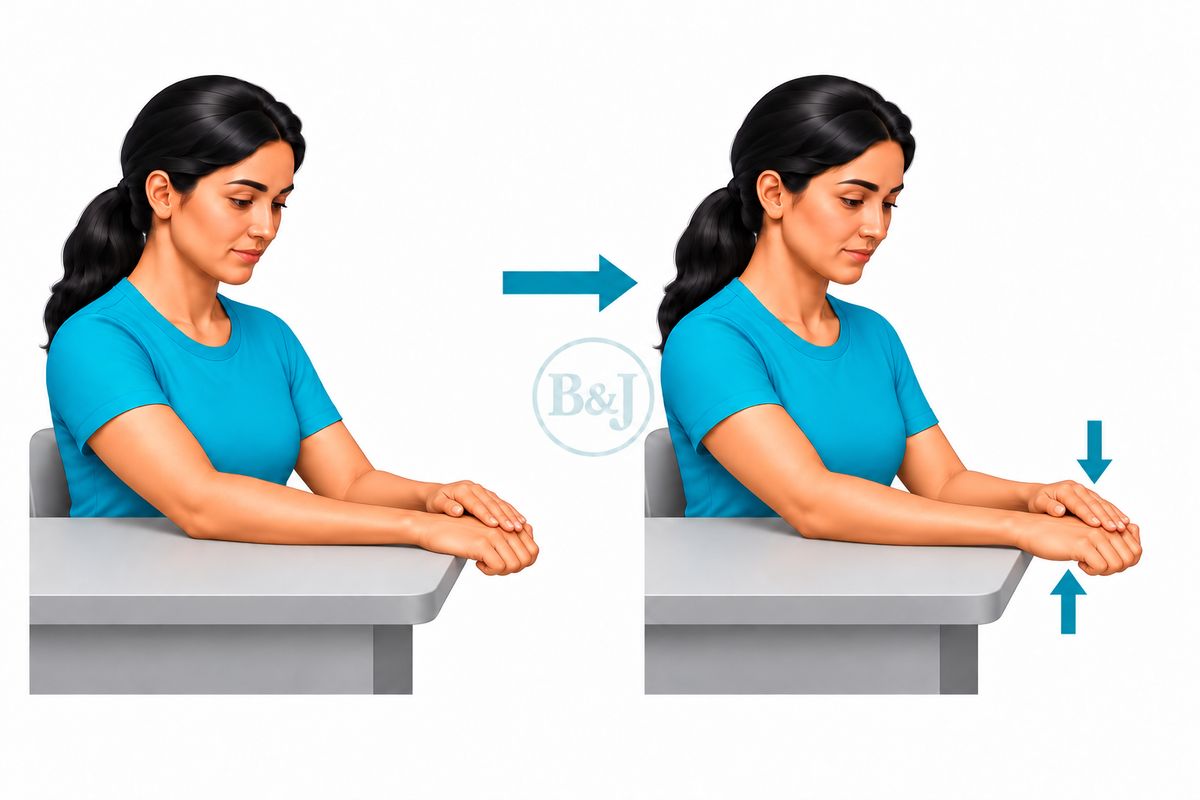
Isometric wrist extension

Isometric wrist extension

Press the back of the hand upwards against the other hand without moving.

  • Hold 10 seconds
  • 10 times

Should feel: The forearm working Should not feel: Pain
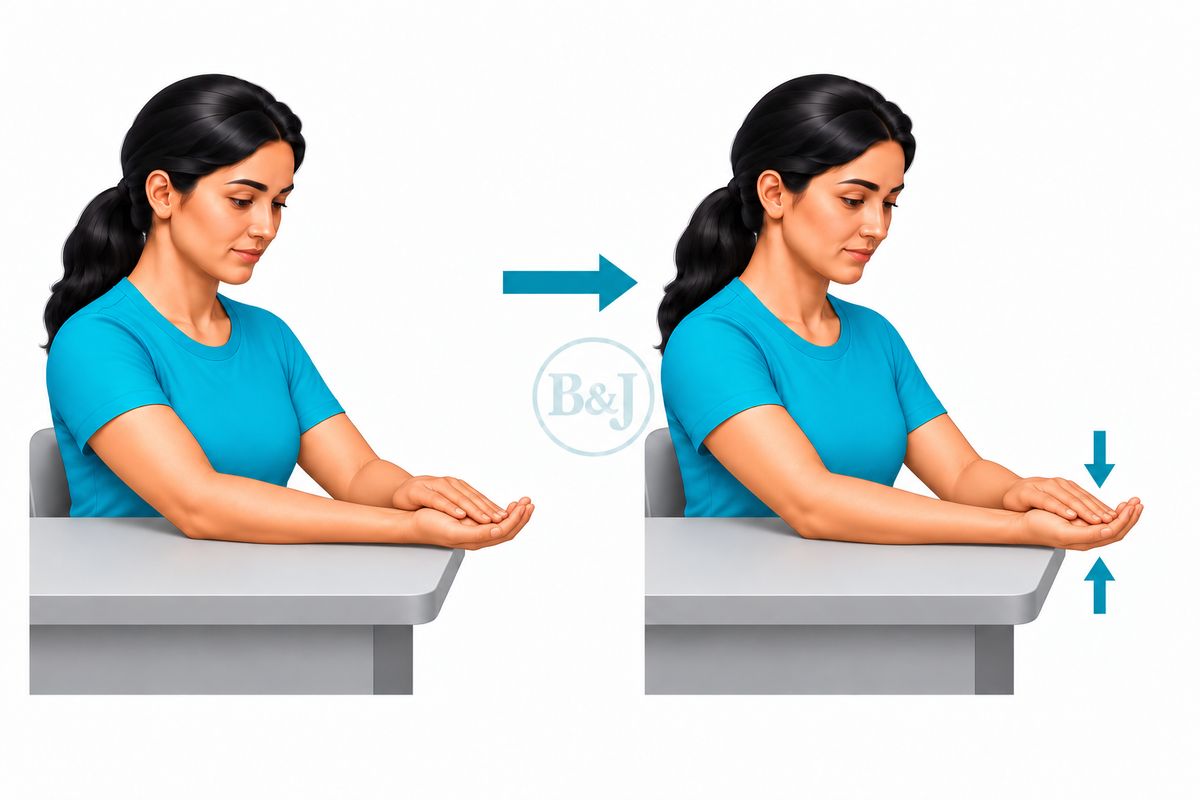
Isometric wrist flexion

Isometric wrist flexion

Press the palm downwards against the other hand without moving.

  • Hold 10 seconds
  • 10 times

Should feel: The forearm working Should not feel: Pain
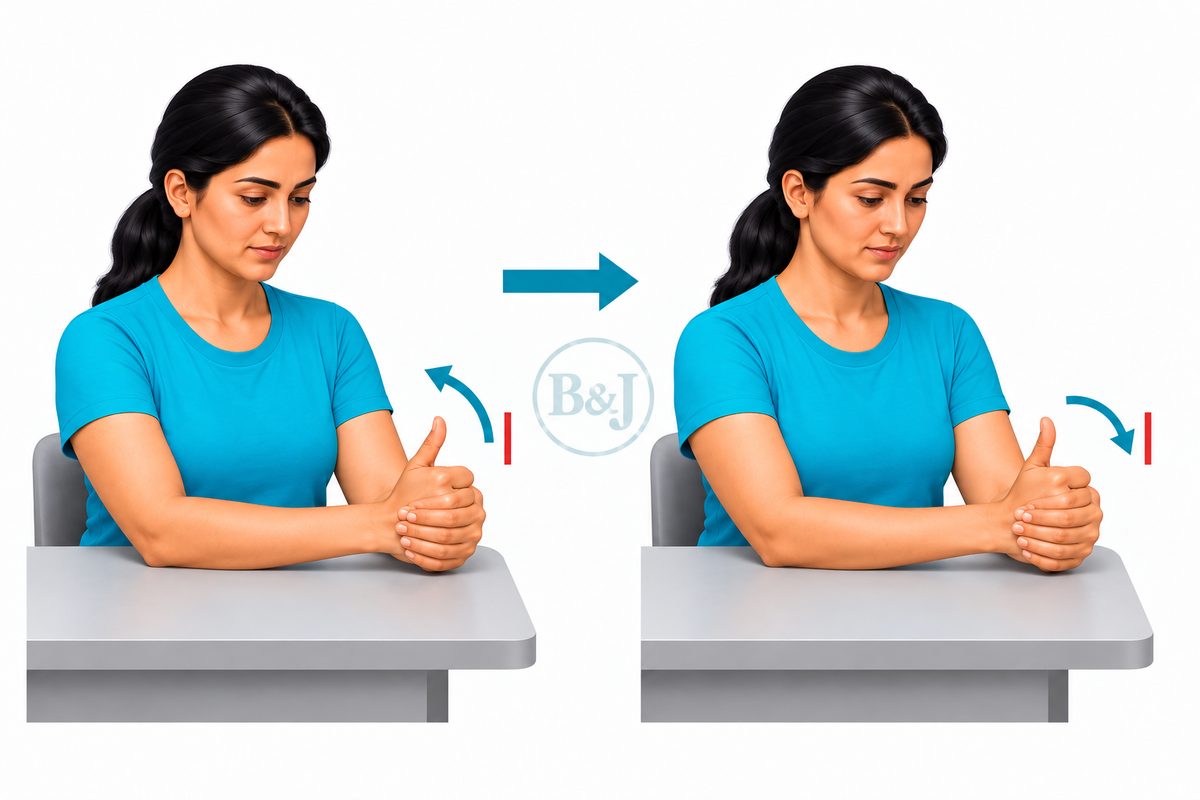
Isometric forearm turn

Isometric forearm turn

Sit with the elbow bent and tucked in, wrist straight. Hold the hand of the painful wrist with the other hand and try gently to turn the palm up, then down, without letting it move.

  • Hold 5 seconds
  • 10 times

Should feel: The forearm working Should not feel: A clunk or pain on the little-finger side of the wrist

Stop and telephone us if

  • The wrist clicks, catches or gives way, or keeps clunking
  • You have a fever, or the wrist becomes very warm, red or swollen
  • You have a bad fall or injury, the forearm becomes very painful or looks bent, or you cannot use the hand
  • The pain is getting worse, not better, after two weeks
  • You get new numbness, tingling or weakness

Ready when you are.

Call either clinic during consulting hours, or send a WhatsApp message any time.