Home / Patient library / Exercise sheets / Sheet 25

Mallet finger — the splint and after

Hand & wrist · Mallet finger (drooping fingertip)

Count the weeks from the day of your injury. The date is on your prescription.

If your doctor wrote a different plan on your prescription, follow that instead of this page.

Print this sheet

A4 PDF, 0.5 MB. Free to download — no sign-up, no email address needed.

Splint on, day and night — usually 6 to 8 weeks

Keep the fingertip straight in the splint all the time, day and night. Even one bend of the fingertip can undo the healing, and the 6–8 weeks then start again. To clean the skin or change the splint, keep the fingertip flat on a table the whole time. Keep the middle joint and the other fingers moving.

Arm use Normal light use of the hand with the splint on. Keep the splint and the skin under it dry.

Changing the splint safely

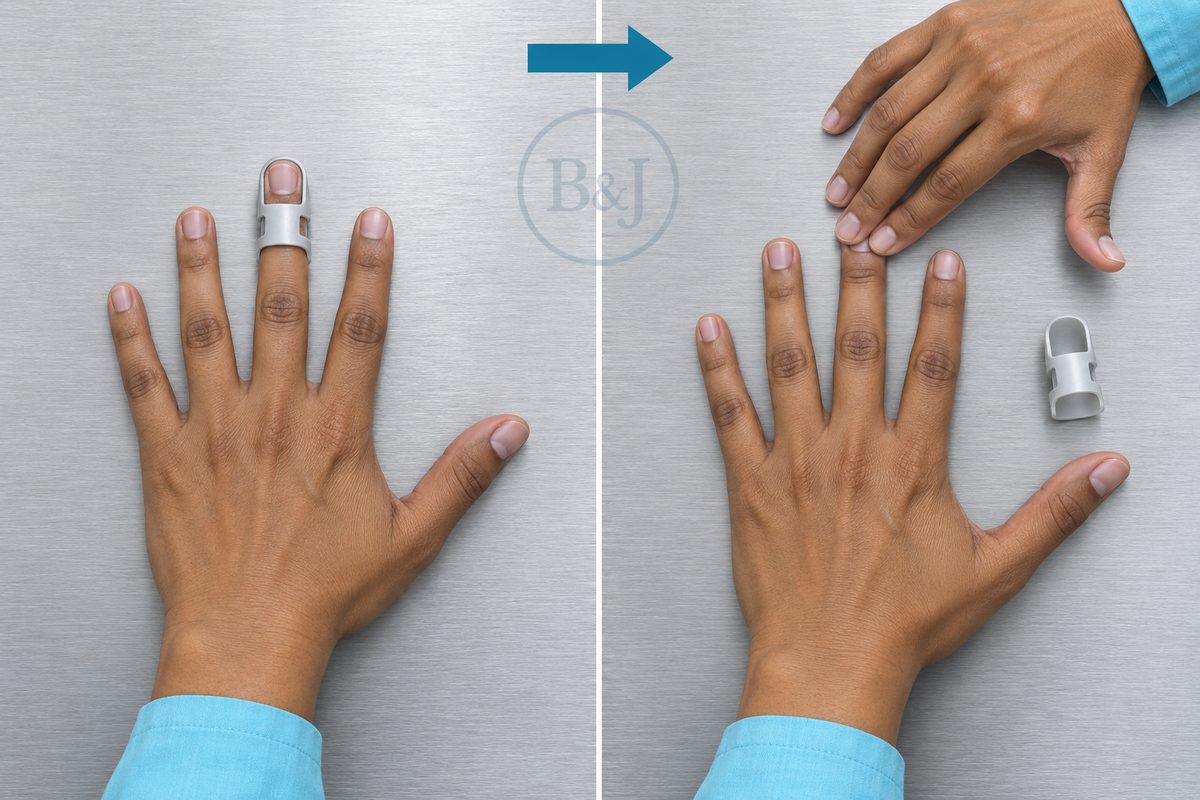
Changing the splint safely

Rest the hand flat on a table. Keep the fingertip pressed flat on the table while you slide the splint off, clean and dry the skin, and slide the splint back on.

  • Each time you change the splint

Should feel: The fingertip staying straight the whole time Should not feel: The fingertip lifting or bending
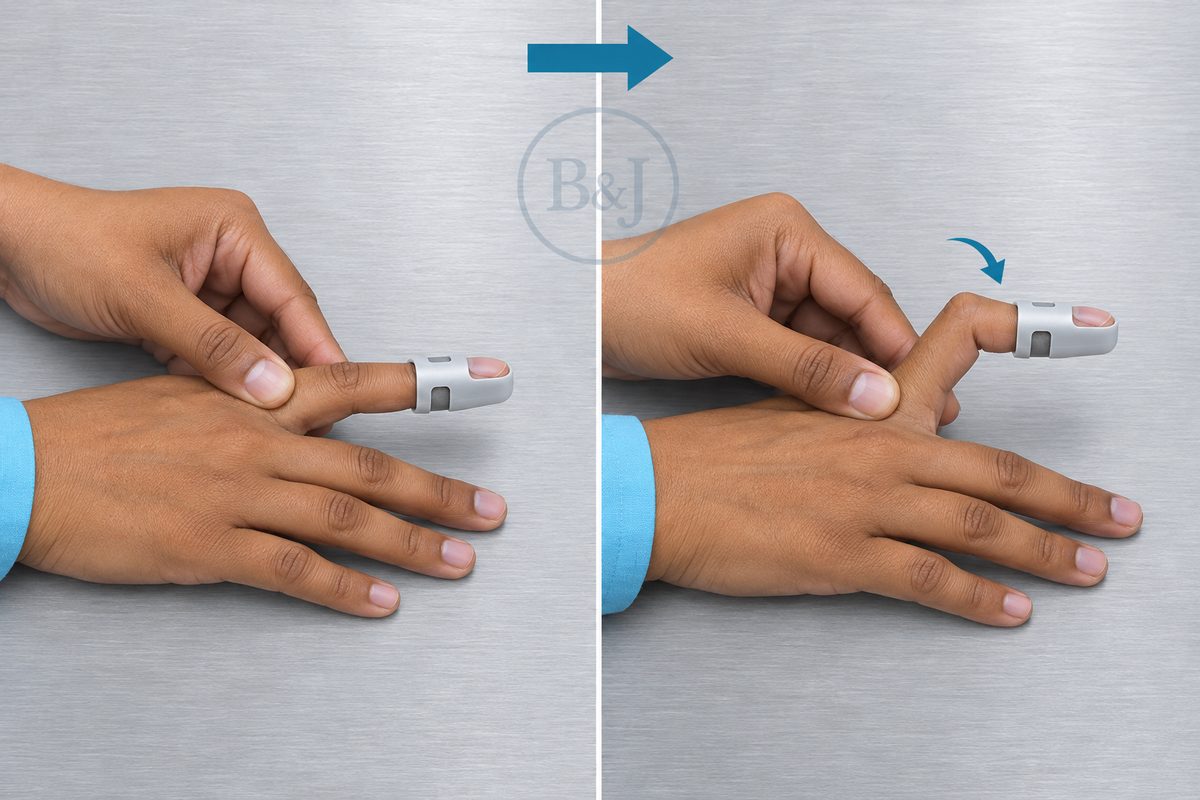
Middle joint bend

Middle joint bend

Hold the injured finger just below the middle joint with the other hand. Keeping the fingertip straight, bend the middle joint as far as it goes, then straighten it.

  • 10 times
  • Every hour while awake

Should feel: The middle joint moving freely Should not feel: The fingertip bending

Not yet Taking the splint off to test the finger, letting the fingertip bend even once, gripping hard, or sport with this hand.

Move to the next stage only after we have seen you, and the X-ray if one was planned.

First 2 weeks out of the splint

We check that the fingertip stays straight before the splint comes off in the day. Start bending the fingertip gently, a little further each day. If the fingertip starts to droop again, put the splint back on and call us. Carry on with the earlier exercise.

Arm use Light use of the hand in the day. Splint on at night, and for heavy work, until we tell you to stop.

Gentle fingertip bend

Hold the injured finger just below the fingertip joint with the other hand. Using the finger's own muscles, bend the fingertip gently, only as far as is easy, then straighten it fully. Do not push the fingertip down with the other hand. Go a little further each day.

  • 10 times
  • 3 times a day

Should feel: The fingertip straightening fully after each bend Should not feel: The fingertip staying bent, or pain at the back of the fingertip joint

Middle joint bend

Middle joint bend

Hold the injured finger just below the middle joint with the other hand. Keeping the fingertip straight, bend the middle joint as far as it goes, then straighten it.

  • 10 times
  • 3 times a day

Should feel: The middle joint moving freely Should not feel: The fingertip bending

Not yet Pulling the fingertip down with the other hand, gripping hard, or catching a ball.

Move to the next stage only after we have seen you, and the X-ray if one was planned.

2 to 6 weeks out of the splint

Get the full fist back and build grip strength. The night splint usually stops in this stage, when we tell you. A small bump, or a slight droop of the fingertip, can remain and usually does not get in the way of daily use. Carry on with the earlier exercises.

Arm use Normal use. Build up gripping a little at a time.

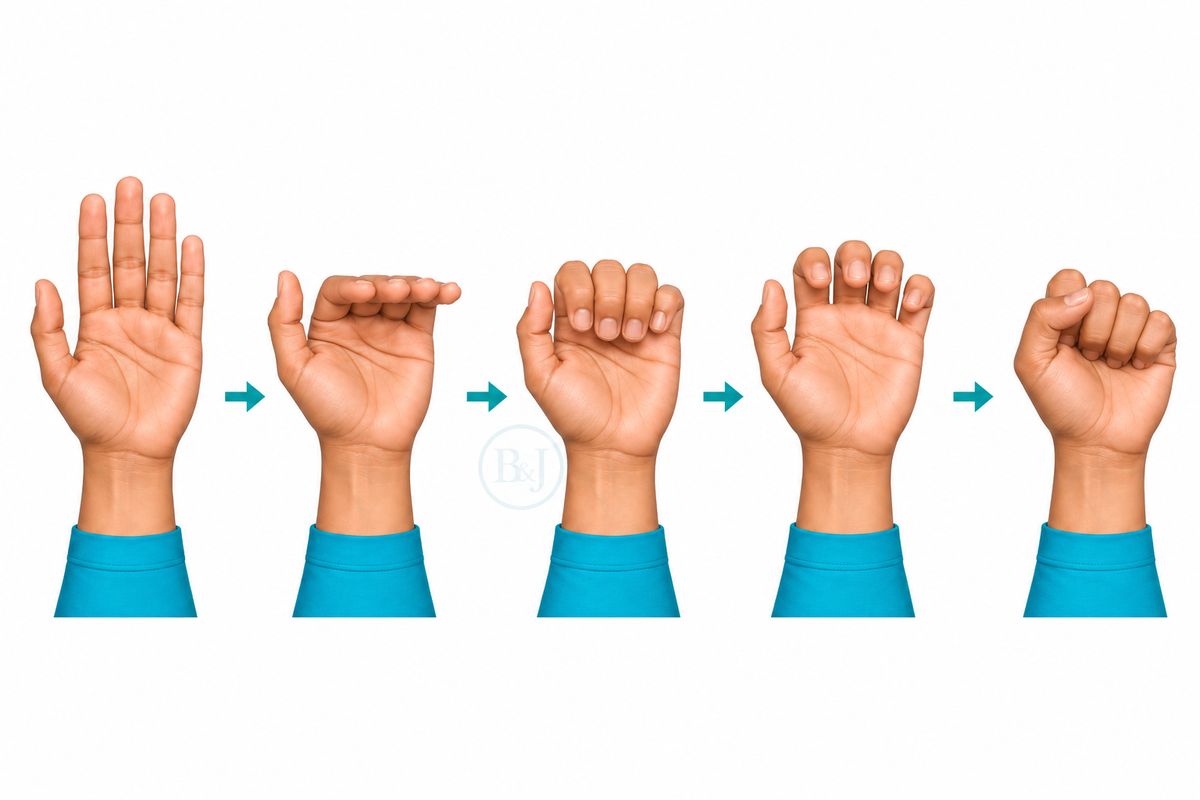
Tendon glides

Tendon glides

Move the fingers through straight, hook, full fist and back to straight.

  • 10 times
  • 3 times a day

Should feel: The tendons moving freely Should not feel: Catching

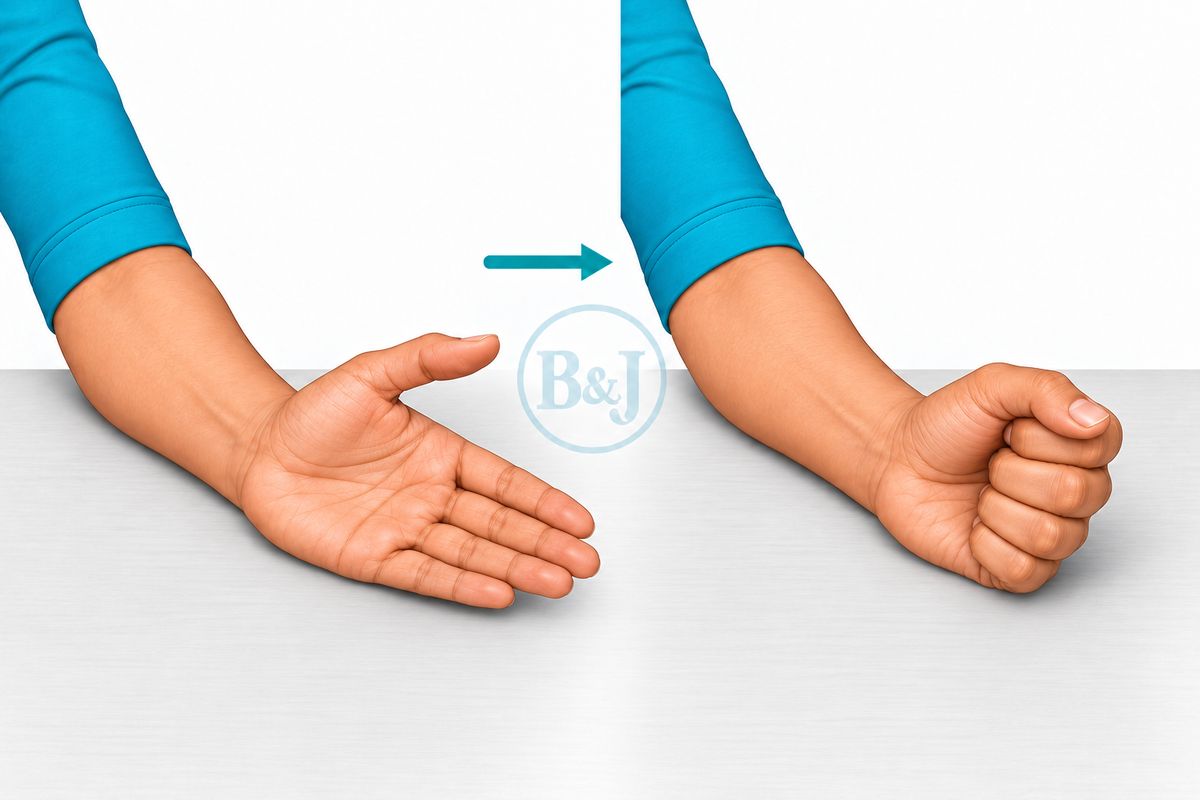
Composite fist

Composite fist

Make a full fist slowly, then open fully.

  • 10 times
  • 3 times a day

Should feel: Full movement Should not feel: Catching that hurts

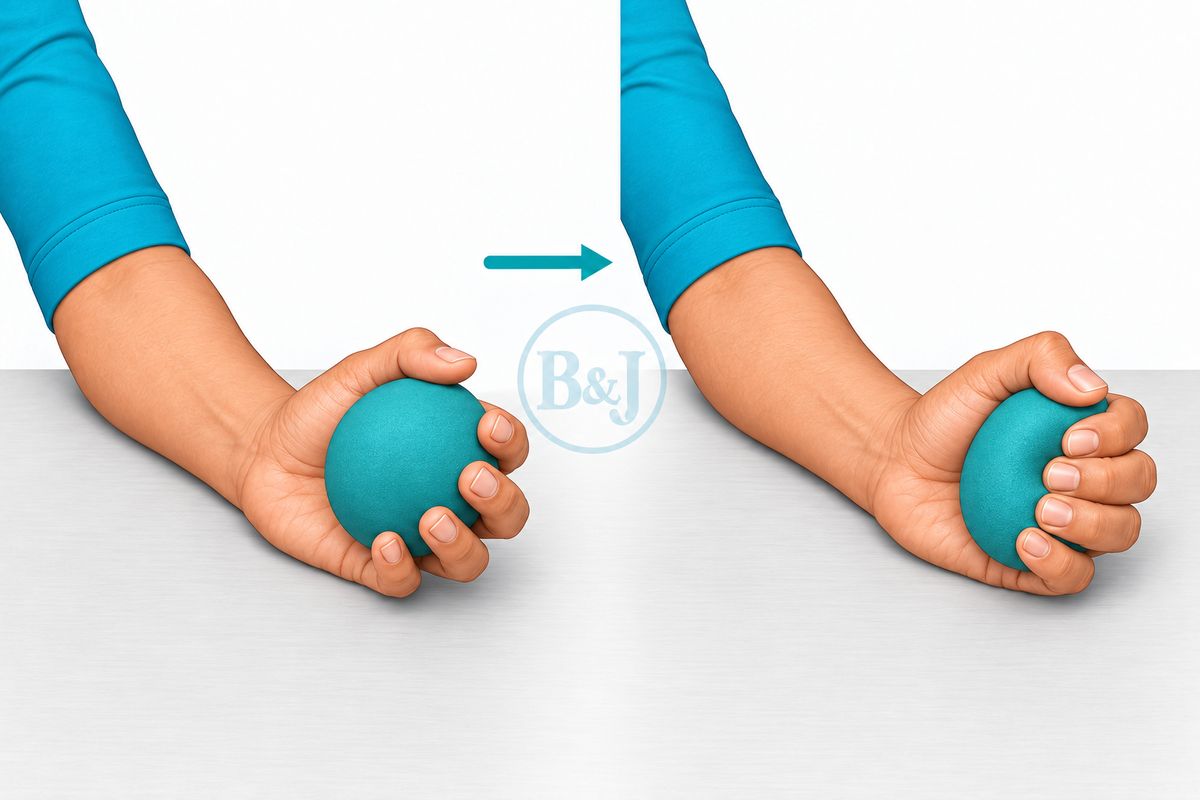
Grip squeeze

Grip squeeze

Squeeze a soft ball gently.

  • 10 times
  • 2 times a day

Should feel: The hand working Should not feel: Pain

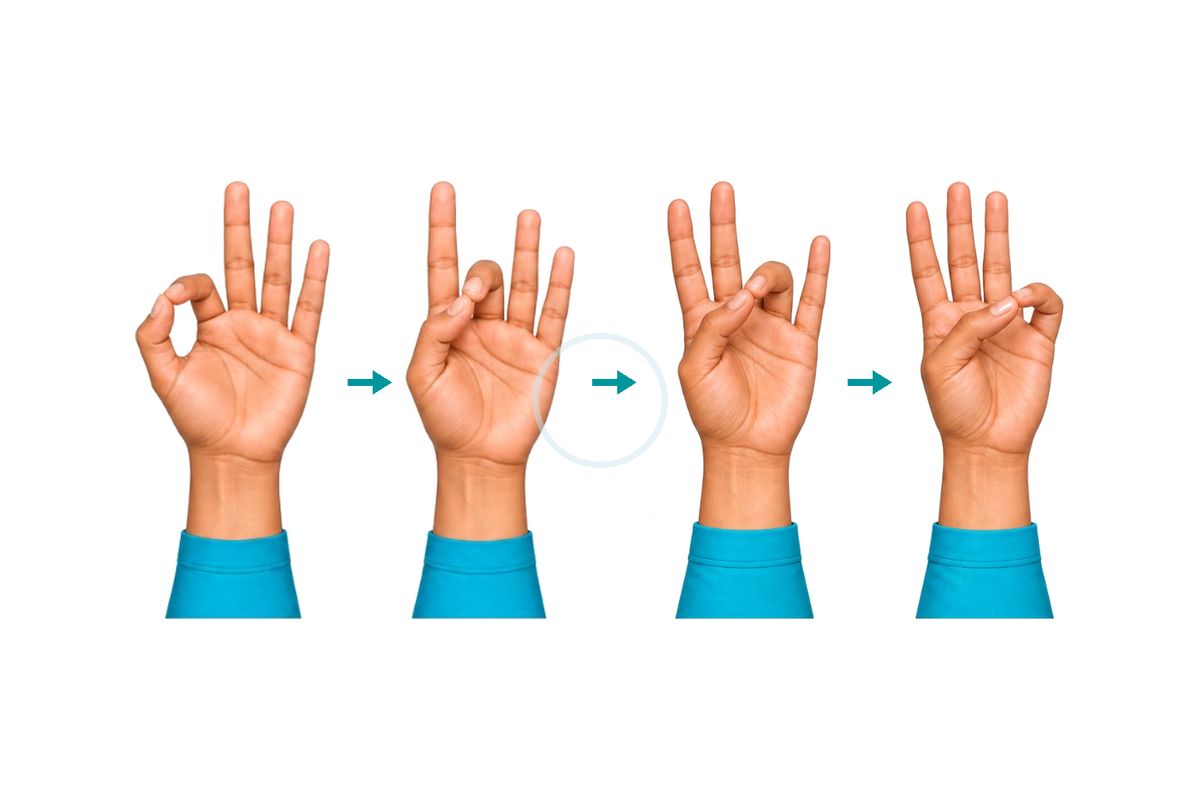
Finger to thumb touches

Finger to thumb touches

Touch each fingertip to the thumb in turn.

  • 10 times
  • 3 times a day

Should feel: Smooth control Should not feel: Locking

Not yet Ball sports or heavy gripping work until we clear you.

Stop and telephone us if

  • A cut or wound over the back of the fingertip joint — come the same day
  • The skin under the splint turns white, sore, blistered or broken
  • The fingertip becomes numb
  • The splint feels too tight, rubs, or has broken
  • The fingertip droops again after the splint comes off

Ready when you are.

Call either clinic during consulting hours, or send a WhatsApp message any time.