Wrist drop: the splint and keeping the hand supple
Hand & wrist · Wrist drop from a radial nerve palsy
How to use this sheet. The nerve that lifts the wrist, the fingers and the thumb is not working for now. Such nerves often recover slowly, over weeks to months, and we will check the recovery at each visit. Meanwhile the aim is to keep the hand useful and the joints supple, so the hand is ready when the nerve comes back. Wear the splint by day as we advised: it holds the wrist up so you can grip, and it stops the weak muscles being overstretched. Every day, move the wrist, fingers and thumb through their full range using the other hand. Do not push the wrist down hard, and do not let anyone, including a bone setter, pull, massage hard or manipulate the hand or arm. Avoid hard, repeated twisting of the forearm, such as wringing out wet clothes. If the back of the hand near the thumb is numb, protect it: numb skin does not feel a burn or a cut, so take care with a hot tawa, hot vessels, an iron and knives. Avoid tight pressure on the upper arm while the nerve recovers: do not sleep with the arm hanging over a chair back or with someone's head resting on it, and wear nothing tight round the upper arm. If the wrist drop came with a broken arm bone, also follow the advice for that fracture for the elbow and shoulder. Do not ride a two-wheeler until we have told you it is safe: a dropped wrist cannot control the handle safely. We also give this sheet for two related nerve problems in the forearm. If only the fingers and thumb have dropped and the wrist still lifts, or if you have aching in the forearm without weakness, wear a splint only if we have advised one. With aching alone, the main help is to cut down hard twisting of the forearm and heavy, repeated gripping; tell us if the fingers become truly weak, not just painful.
A4 PDF, 0.4 MB. Free to download — no sign-up, no email address needed.
Wearing the wrist splint
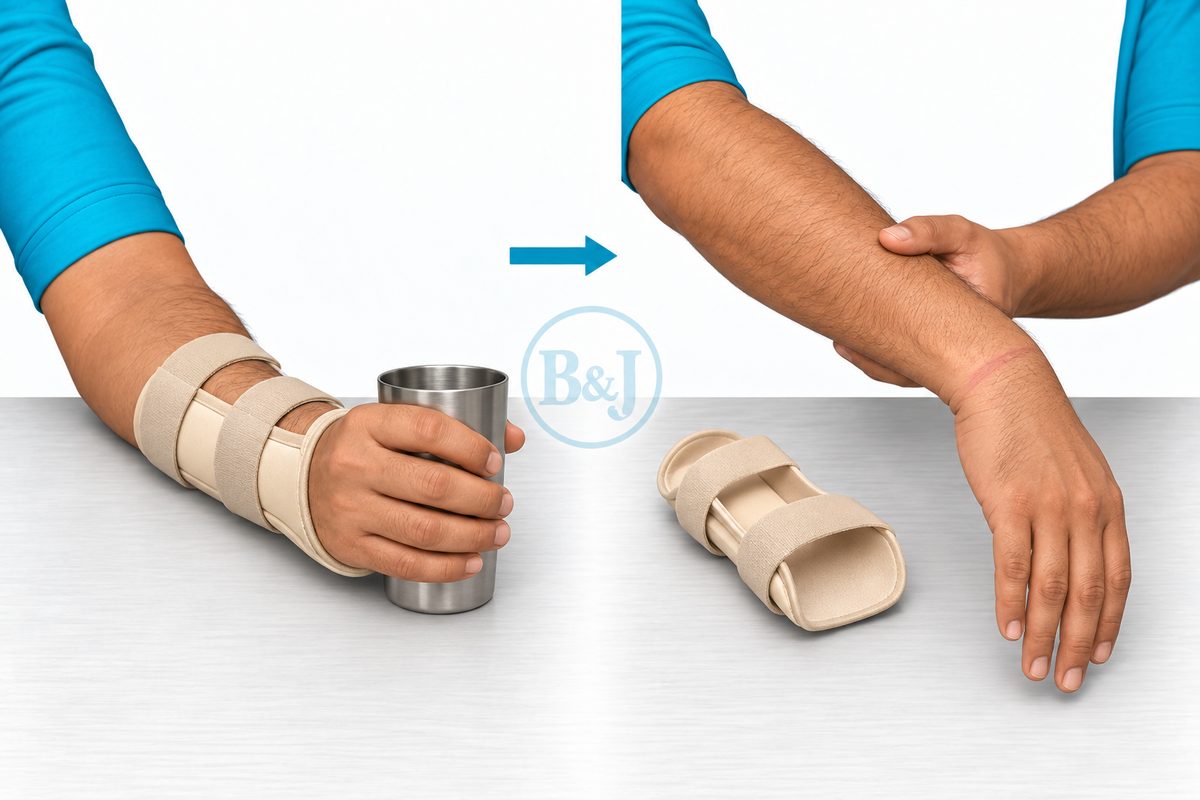
Wear the splint by day, with the wrist held up and the fingers and thumb free to move. Take it off at least twice a day to do the exercises on this sheet and to look at the skin underneath, especially over the bony points. A red mark that is still there a while after the splint comes off means it is pressing: tell us. Keep the skin and the padding clean and dry.
All day
Ask us when to stop
Should feel: The hand able to grip with the wrist held upShould not feel: Pins and needles, swelling or a sore from the splint
Lifting the wrist with the other hand
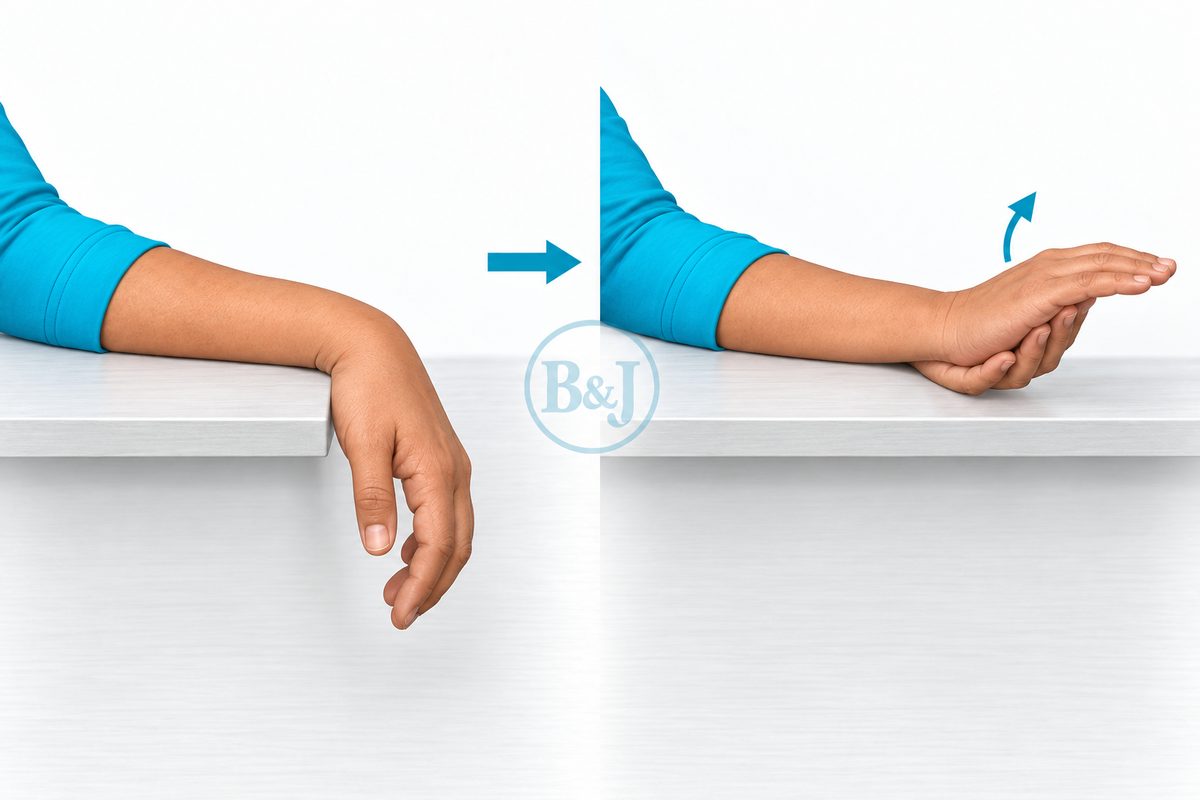
Sit with the forearm resting on a table, palm down, and the hand over the edge so the wrist hangs. Put the other hand under the palm and lift the hand until the wrist is straight and then a little further back. Hold, then lower it slowly. Do not push the wrist down.
Hold 10 seconds
10 times
3 times a day
Should feel: A gentle stretch on the palm side of the wristShould not feel: Sharp pain
Palm-up finger stretch
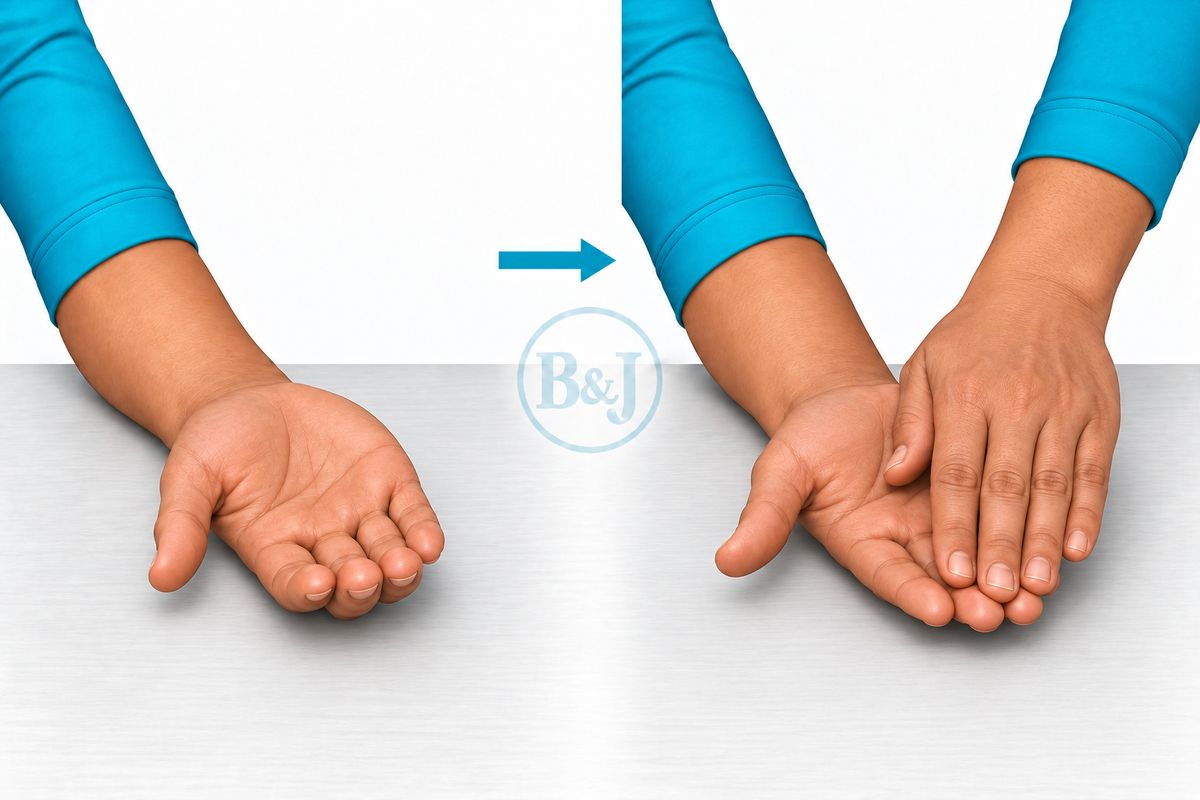
Gently straighten the fingers back with the other hand.
Hold 15 seconds
5 times
Should feel: A stretch in the palmShould not feel: Sharp pain
Thumb out to the side
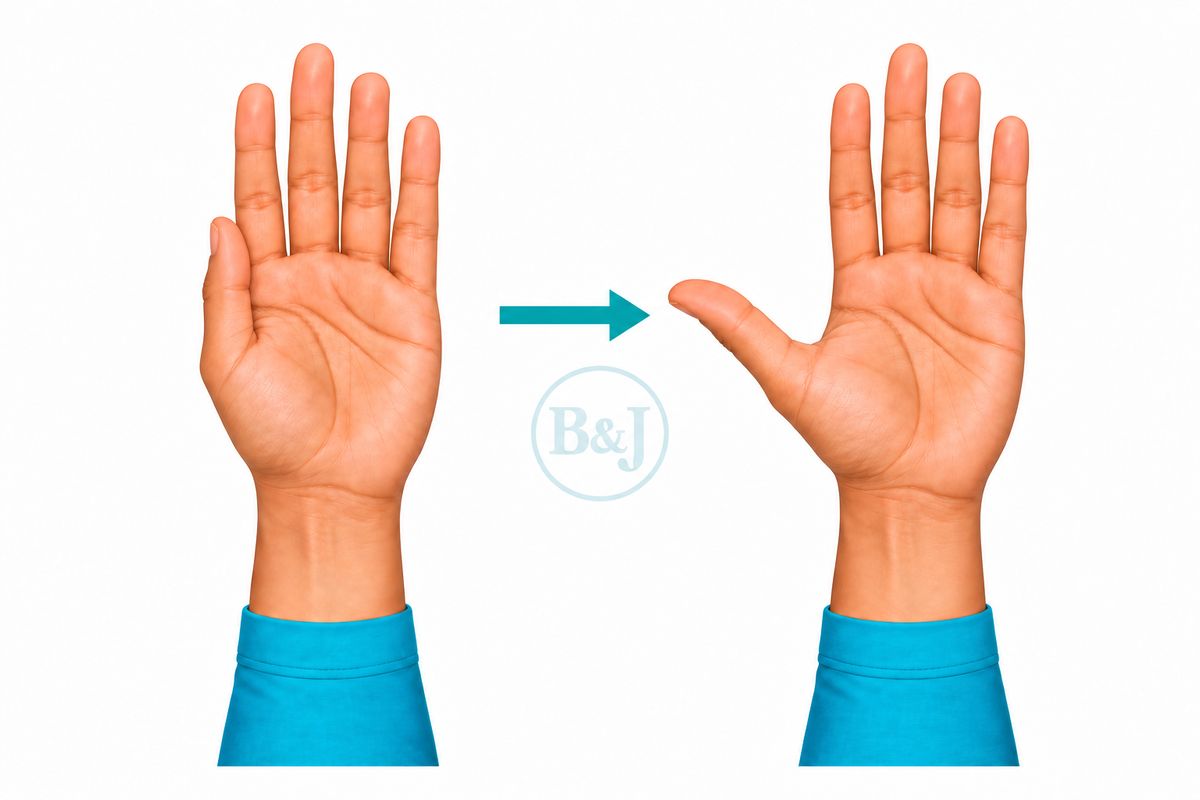
Take the thumb out to the side, away from the palm, as in the picture, so the web between the thumb and the index finger stays open. If the thumb will not move out by itself, move it gently with the other hand.
Hold 15 seconds
5 times
Should feel: A stretch in the web of the thumbShould not feel: Sharp pain
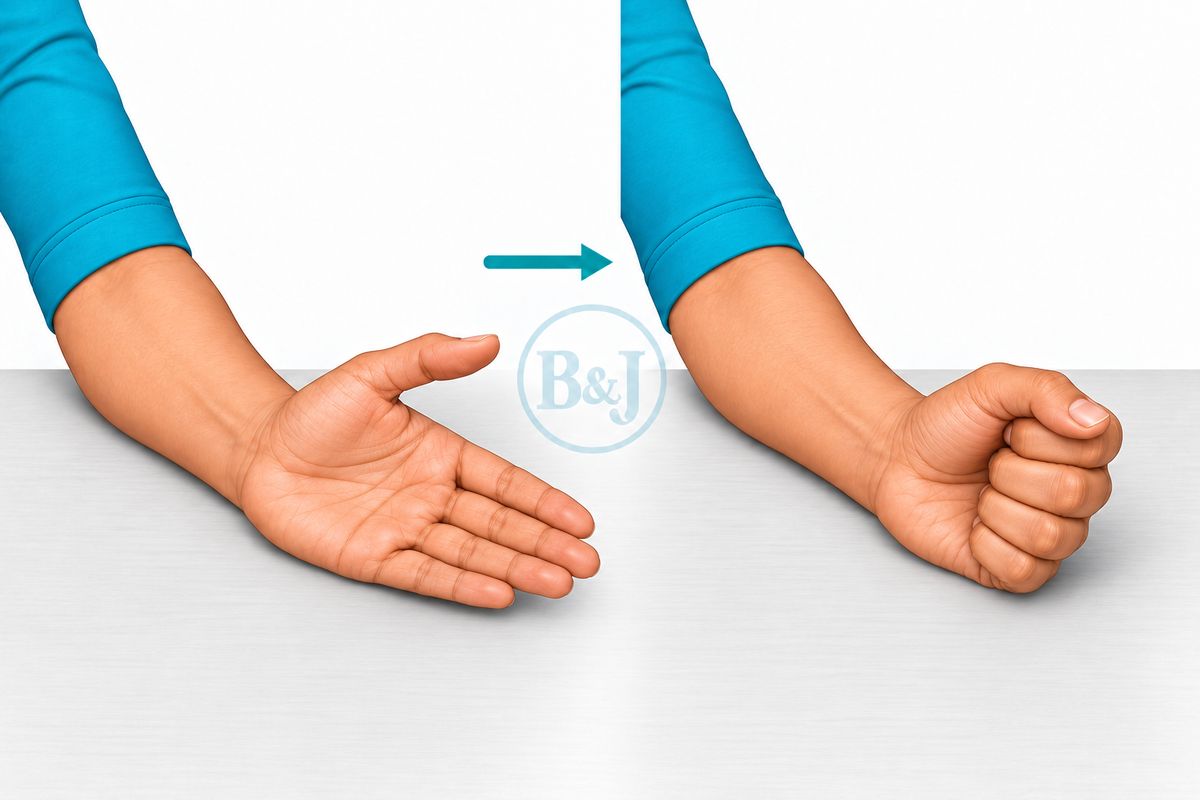
Making a fist
Close the fingers slowly into a full fist, then relax. It is easier with the splint on, because the splint holds the wrist up. If the fingers will not straighten by themselves, open them with the other hand.
10 times
3 times a day
Should feel: The grip workingShould not feel: Pain
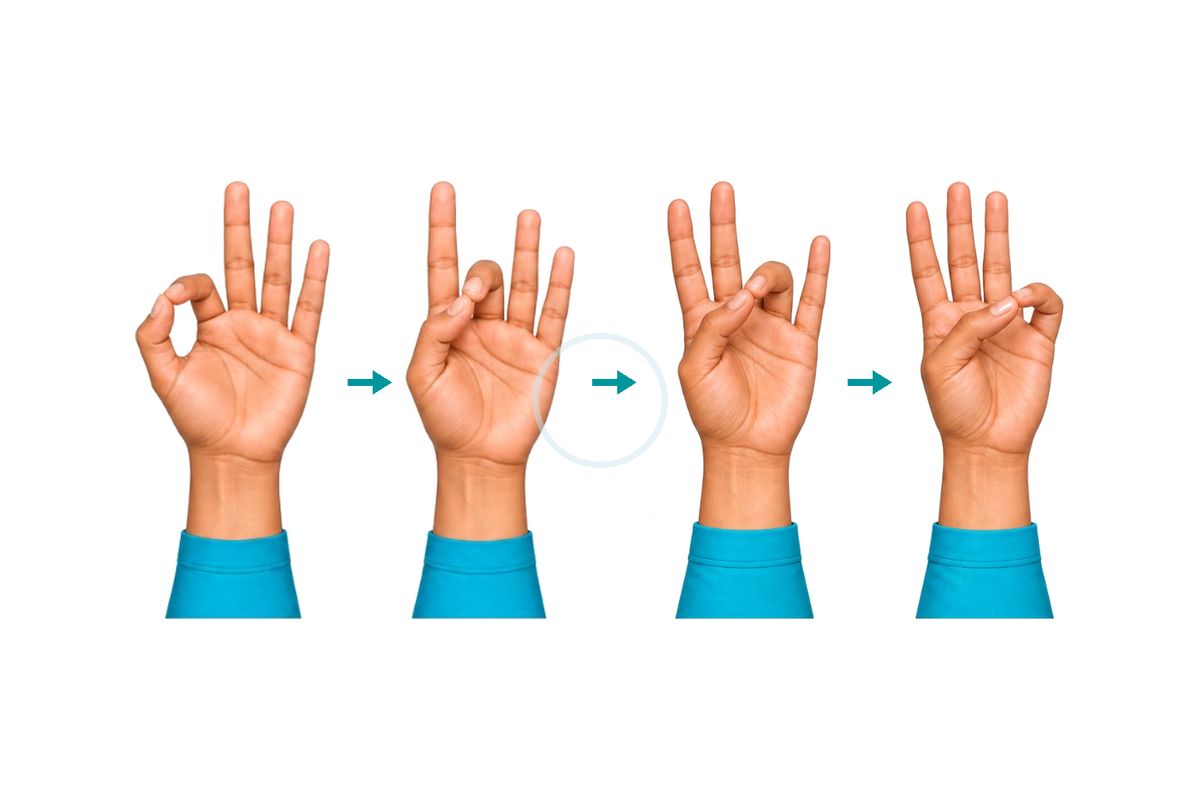
Finger to thumb touches
Touch each fingertip to the thumb.
10 rounds
2 times a day
Should feel: ControlShould not feel: Pinching pain
Stop and telephone us if
The weakness is getting worse, or another part of the hand or arm becomes weak or numb
A new painful swelling appears in the arm
The upper arm is painful, swollen or out of shape after a fall or an injury
A burn, cut or blister on the numb skin, or a sore under the splint
The fingers stay cold, pale or blue, or more numb, even after you have taken the splint off — go to the nearest hospital
Ready when you are.
Call either clinic during consulting hours, or send a WhatsApp message any time.