A4 PDF, 0.7 MB. Free to download — no sign-up, no email address needed.
Weeks 0–2
Rest for a short time, then start walking early: short walks, often, a little further each day. Take the pain medicines regularly so that you can move. Use the brace for comfort, if we gave you one. Get in and out of bed by rolling onto your side, as shown. Move through the stages as the pain allows: they are a guide, not a timetable. Do the lying exercises on your bed, not on the floor.
Weight bearingFull, as the pain allows. Use a walker or a stick at first if you feel unsteady.
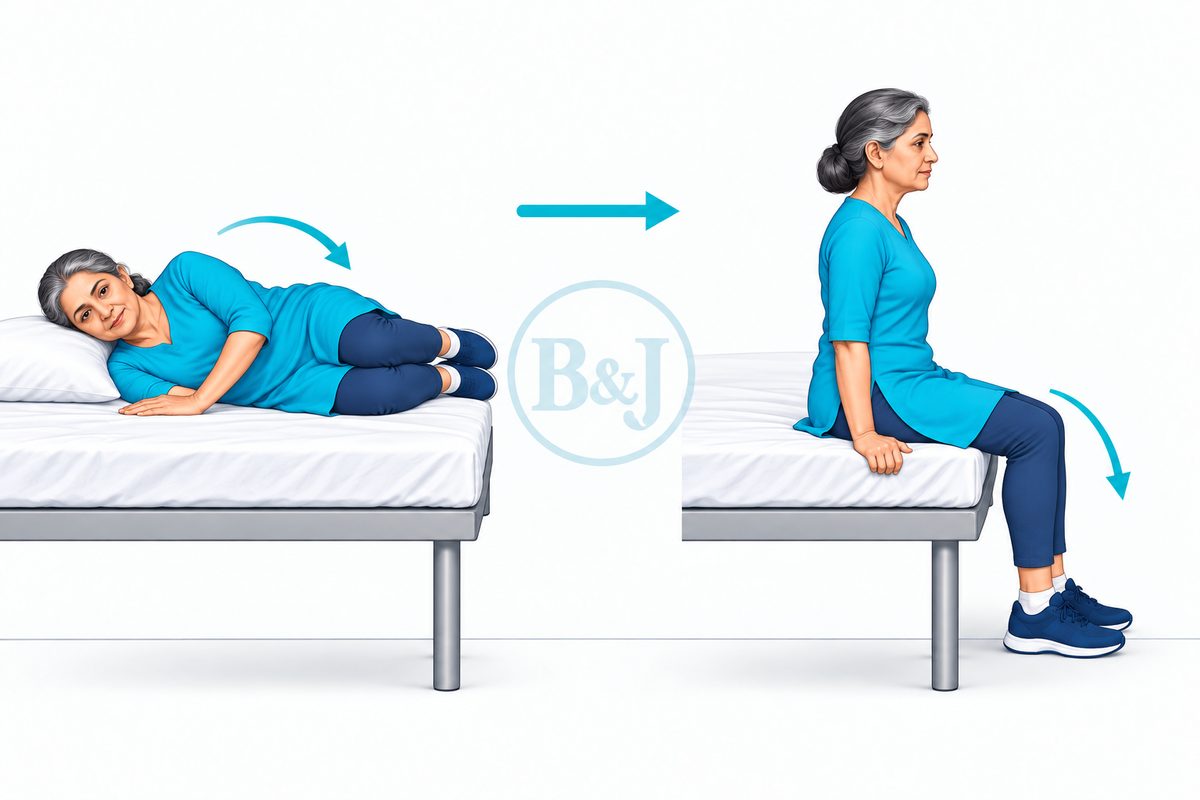
Getting out of bed: log roll
Bend the knees. Roll onto your side in one piece, shoulders and hips turning together. Let the legs slide off the bed as you push yourself up to sitting with your arms. Do the same in reverse to lie down.
Every time
Should feel: The back staying stillShould not feel: Twisting, or sitting straight up from lying on your back
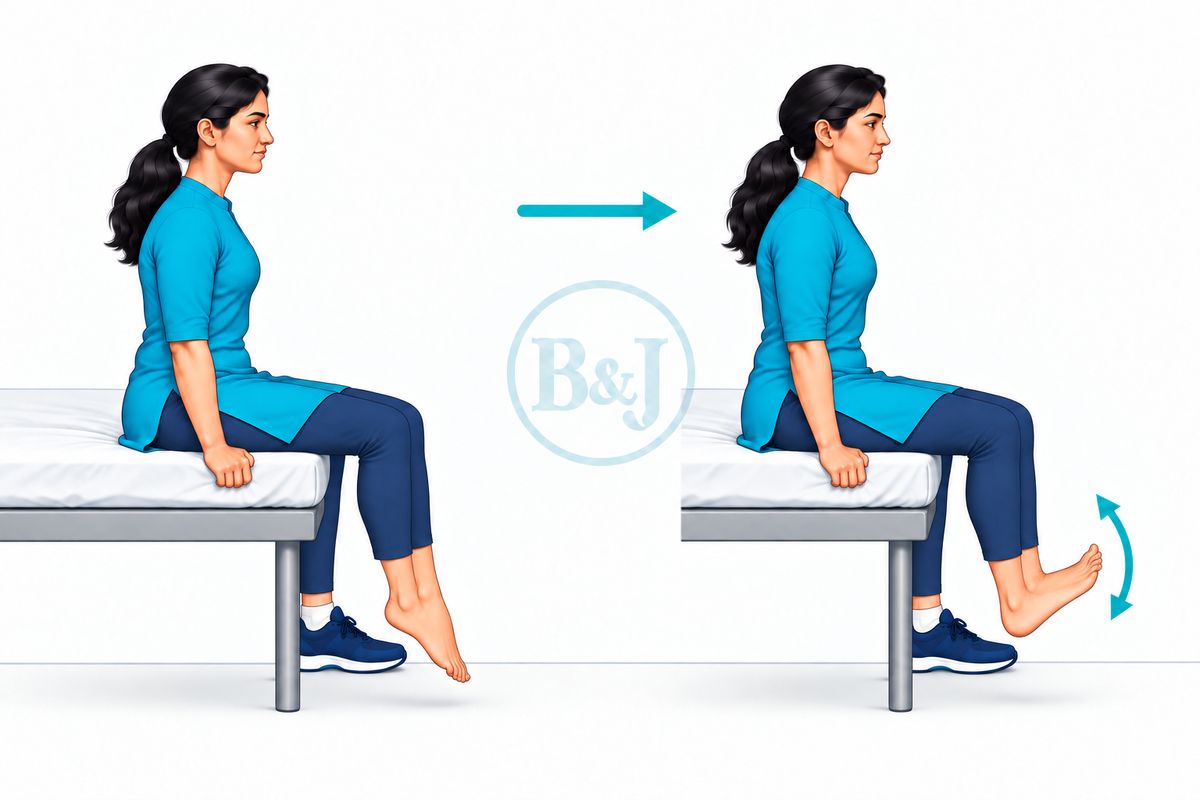
Ankle pumps
Pump the feet up and down to keep the blood moving.
20 times
Every hour while awake
Should feel: The calf workingShould not feel: Calf pain or swelling — tell us
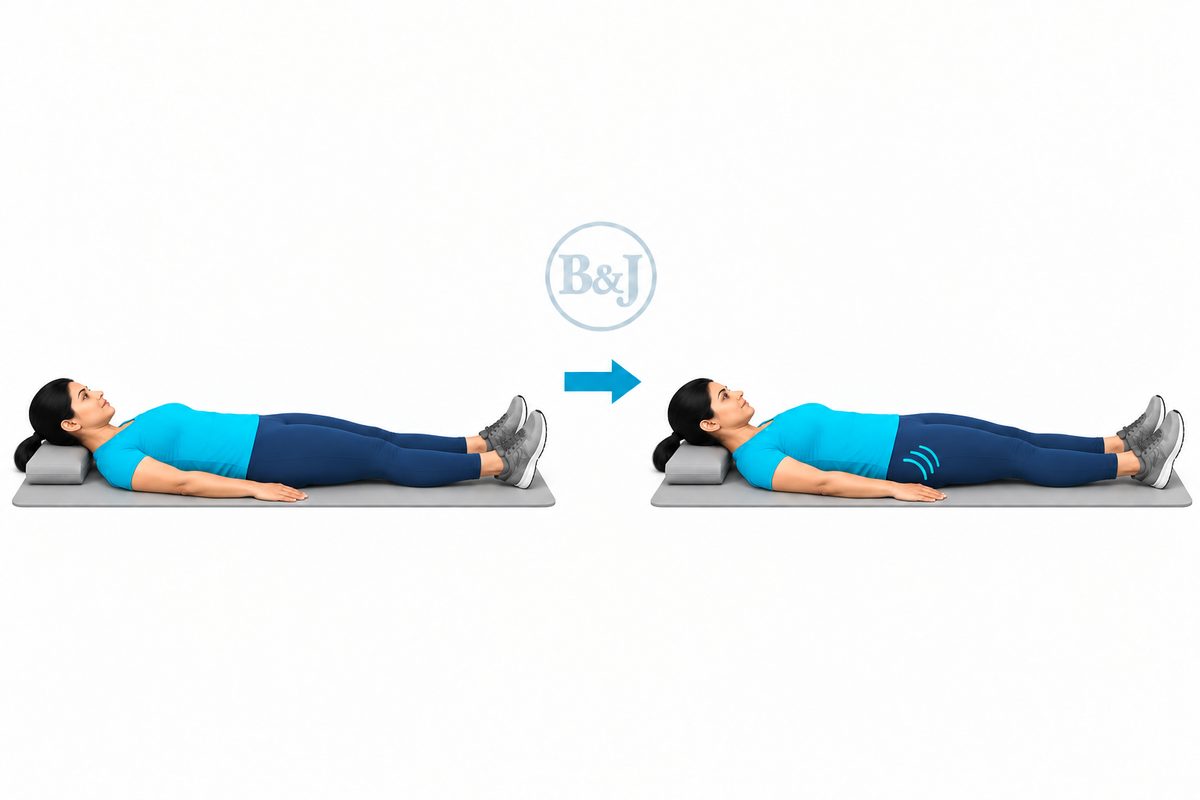
Buttock squeeze
Lie on your back with the legs straight. Squeeze the buttocks together, hold, then relax.
Hold 5 seconds
10 times
3 times a day
Should feel: The buttocks tighteningShould not feel: Back pain
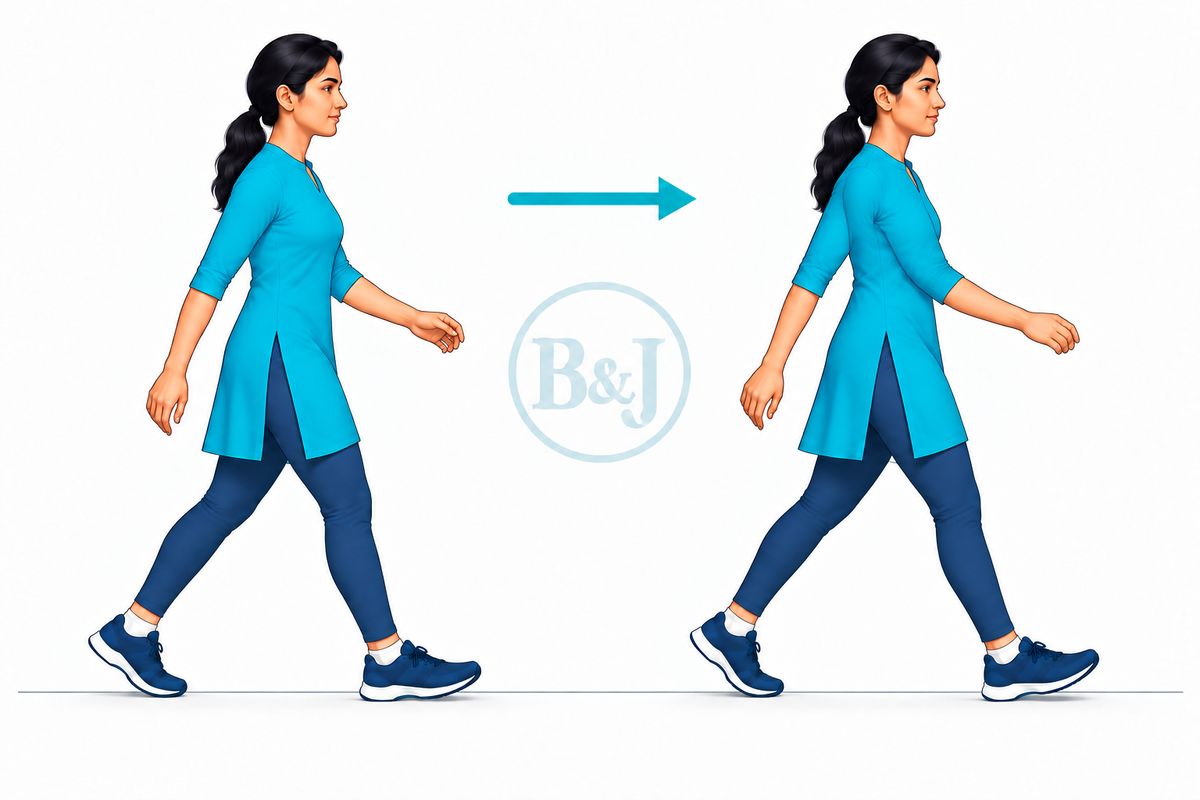
Walking
Weight-bearing walking loads the bone and helps it stay strong.
Little and often
Every day
Should feel: Comfortable exerciseShould not feel: Sudden back pain — stop and tell us
Not yetBending forward, twisting, or lifting anything heavier than a full glass of water. Hard massage or oil massage on the back, or treatment by a bone-setter. Riding a two-wheeler, even as a pillion. Sitting on the floor, squatting or using an Indian toilet — until we have told you it is safe.
Move to the next stage only after we have seen you, and the X-ray if one was planned.
Weeks 2–6
The pain usually eases over these weeks. Walk a little further each day. Sit and stand tall; a firm chair with arms is easier to get up from than a low sofa. Make the home safe against falls: good light at night, no loose mats or wires, a grab rail by the toilet, and footwear with a good grip, indoors as well. Bone-strength (osteoporosis) treatment is part of the plan. Carry on with the earlier exercises.
Weight bearingFull.
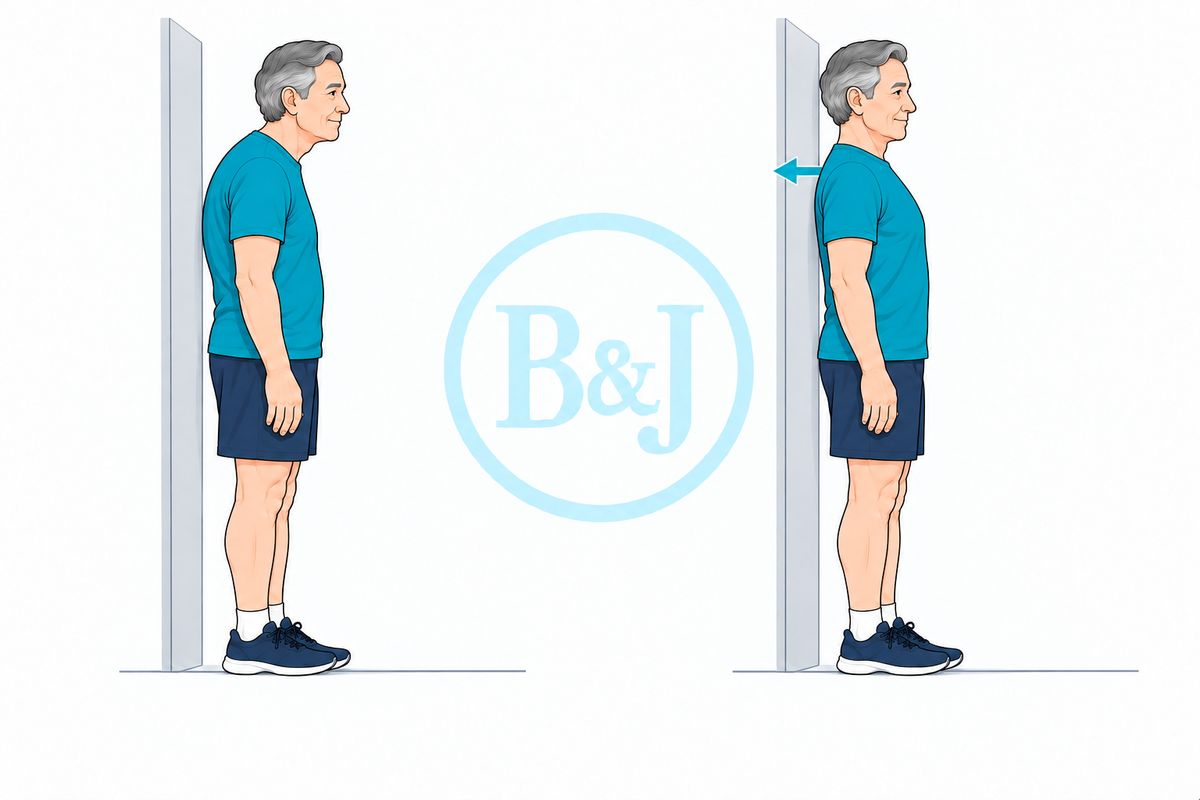
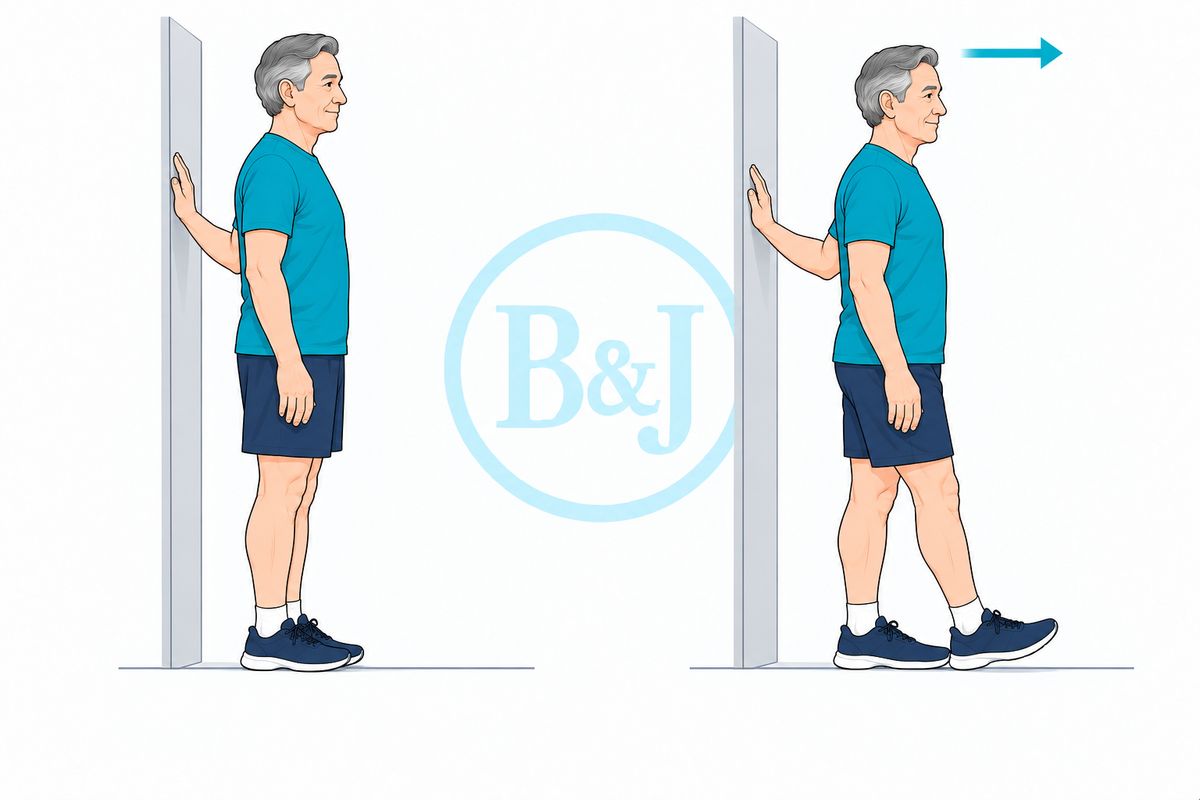
Wall posture hold
Back against a wall, heels a few inches away. Bring buttocks, upper back and the back of the head to the wall. Draw the chin gently back.
Hold 10 seconds
5 times, daily
Should feel: The upper back opening outShould not feel: Forcing the head back if it will not reach
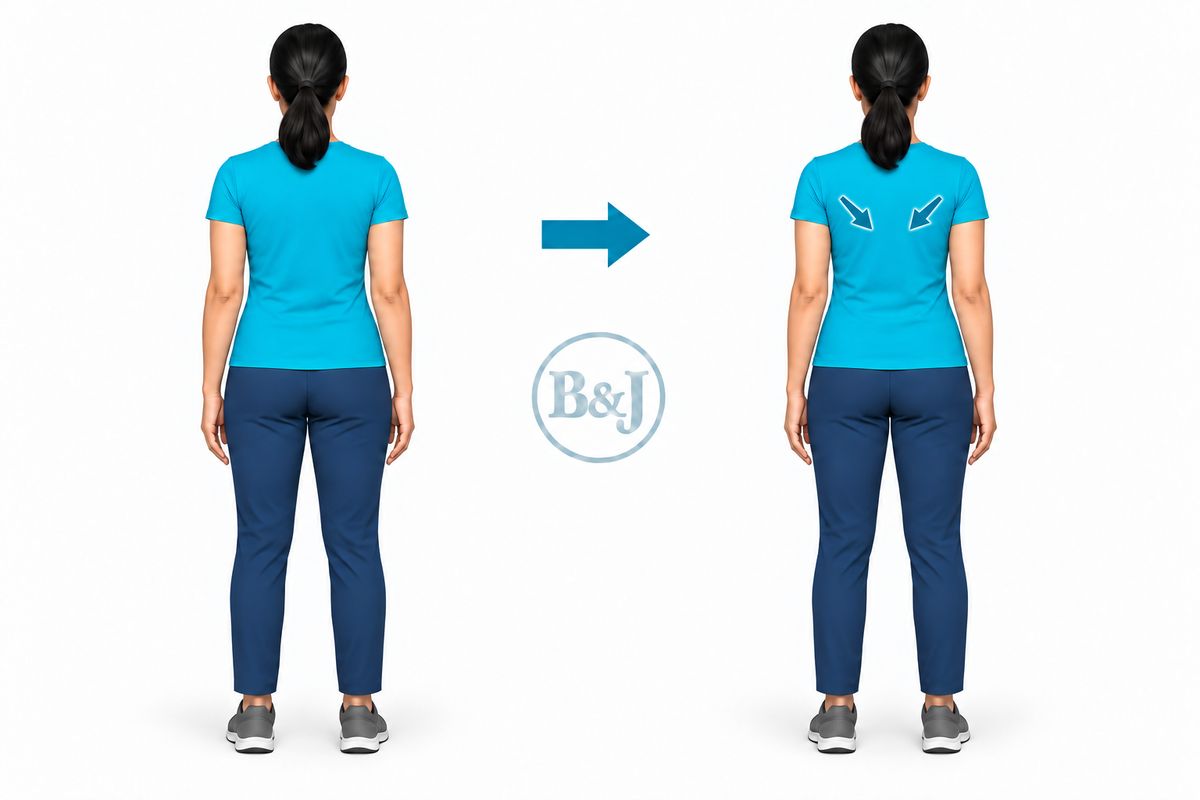
Shoulder blade squeeze
Squeeze the shoulder blades together and down.
10 times
Daily
Should feel: The upper back workingShould not feel: Shrugging
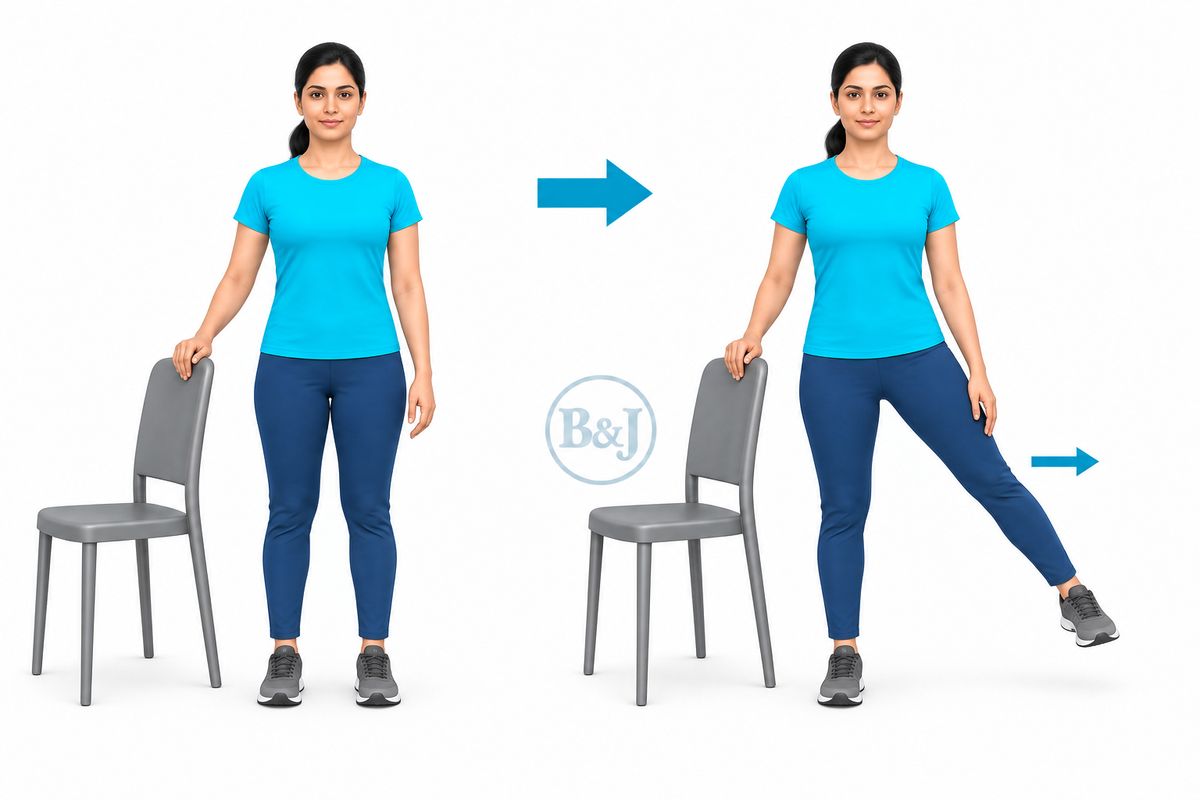
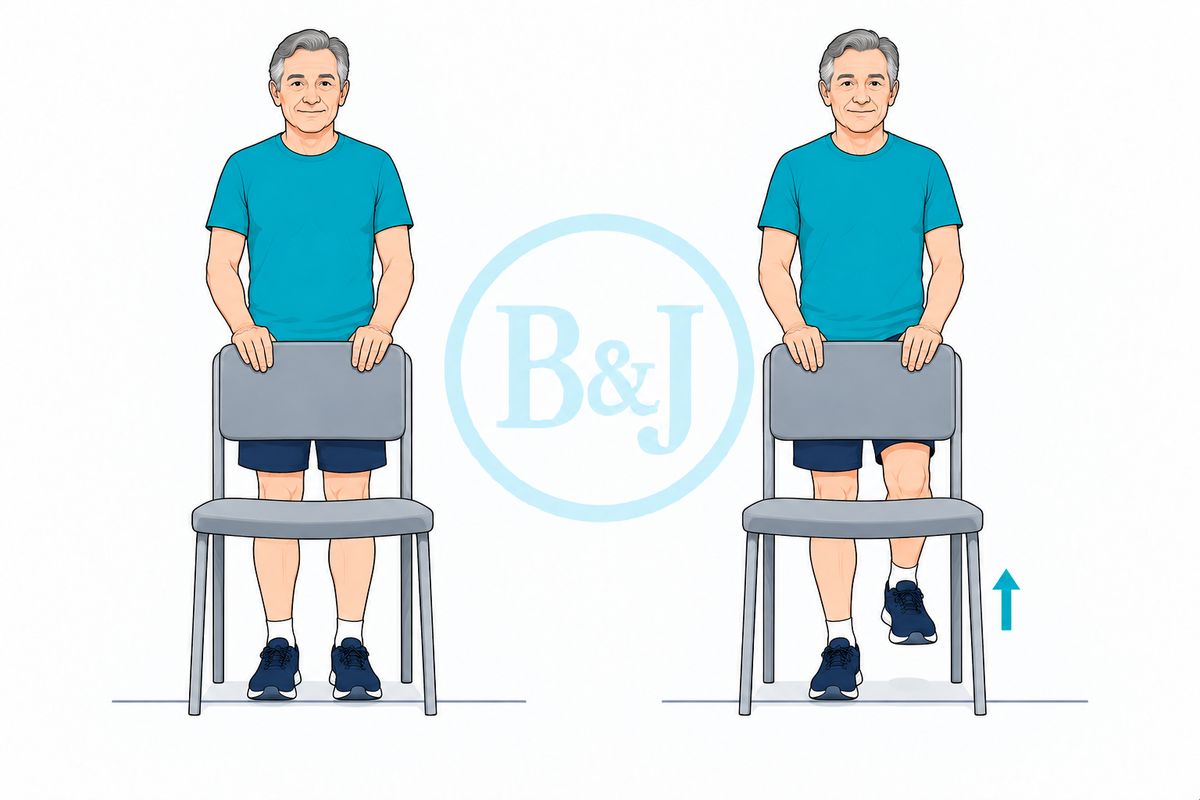
Standing hip abduction
Hold a chair. Lift the leg out to the side, keeping the body upright.
10 times
Daily each side
Should feel: The side of the hip workingShould not feel: Leaning over
Walking
Weight-bearing walking loads the bone and helps it stay strong.
20 minutes
Most days
Should feel: Comfortable exerciseShould not feel: Sudden back pain — stop and tell us
Not yetBending forward, twisting, or lifting anything heavy, such as a bucket of water. Sweeping or mopping the floor bent over. Hard massage or oil massage on the back, or treatment by a bone-setter. Riding a two-wheeler. Sitting on the floor, squatting or using an Indian toilet — until we have told you it is safe.
Move to the next stage only after we have seen you, and the X-ray if one was planned.
Weeks 6–12
The pain usually keeps settling over these weeks. Now build leg strength and balance: a fall is what most often causes the next fracture. Do the balance exercises beside a wall or worktop. Carry on with the earlier exercises.
Weight bearingFull.
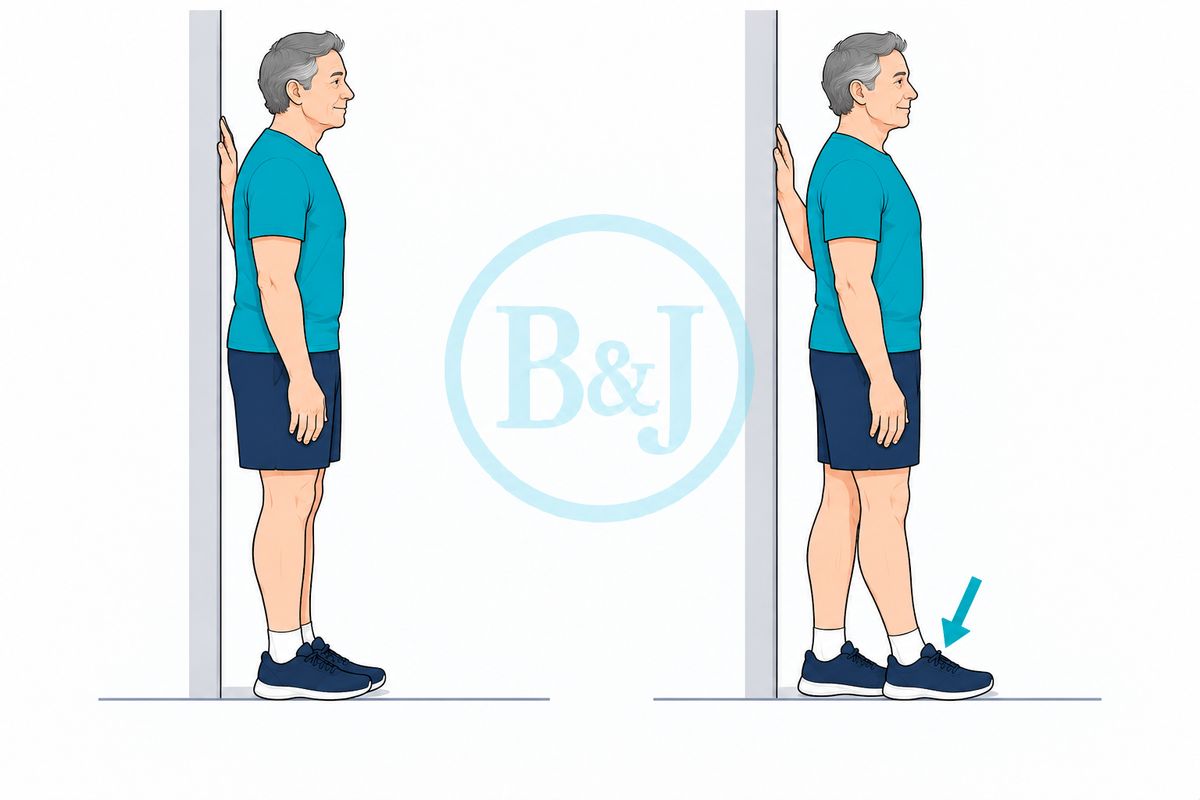
Heel-to-toe stand
Stand beside a wall or counter with one hand resting on it. Place one foot directly in front of the other, heel touching toe. Look ahead at a fixed point, not at your feet.
Hold 10–30 seconds
Twice each side, daily
Should feel: Steady, with support within reachShould not feel: Practising in the middle of a room
One-leg stand
Hold a counter or sturdy chair with one hand. Lift one foot just clear of the floor, keeping the standing knee soft. Look ahead at a fixed point.
Hold 10–30 seconds
Twice each leg, daily
Should feel: Steady balance improving week by weekShould not feel: Holding your breath — count out loud instead
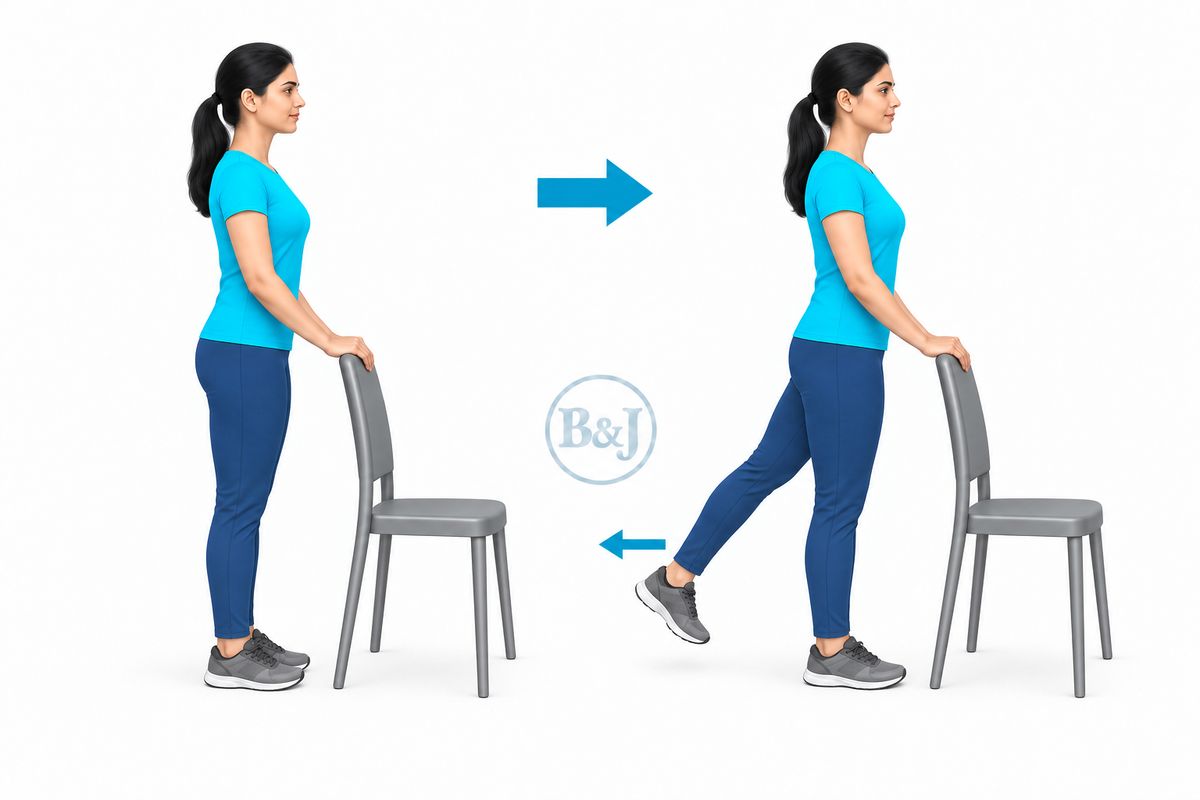
Standing hip extension
Hold a chair. Take the leg backwards, keeping it straight.
10 times
Daily each side
Should feel: The buttock workingShould not feel: Arching the back
Walking
Weight-bearing walking loads the bone and helps it stay strong.
30 minutes
Most days
Should feel: Comfortable exerciseShould not feel: Sudden back pain — stop and tell us
Not yetLifting anything heavy. Bending forward to pick things up from the floor: use a long-handled grabber, or ask for help. Forward-bending exercises or yoga poses, such as touching the toes or sit-ups. Sitting on the floor, squatting or using an Indian toilet — until we have told you it is safe.
Move to the next stage only after we have seen you, and the X-ray if one was planned.
Month 3 onwards
Keep walking, and keep the back, balance and leg exercises going for good: strong back muscles help hold the spine upright, and good balance helps prevent another fall. Go back to household work a little at a time. Do the exercise lying on your front on the bed, not on the floor, and only if that position is comfortable.
Weight bearingFull.
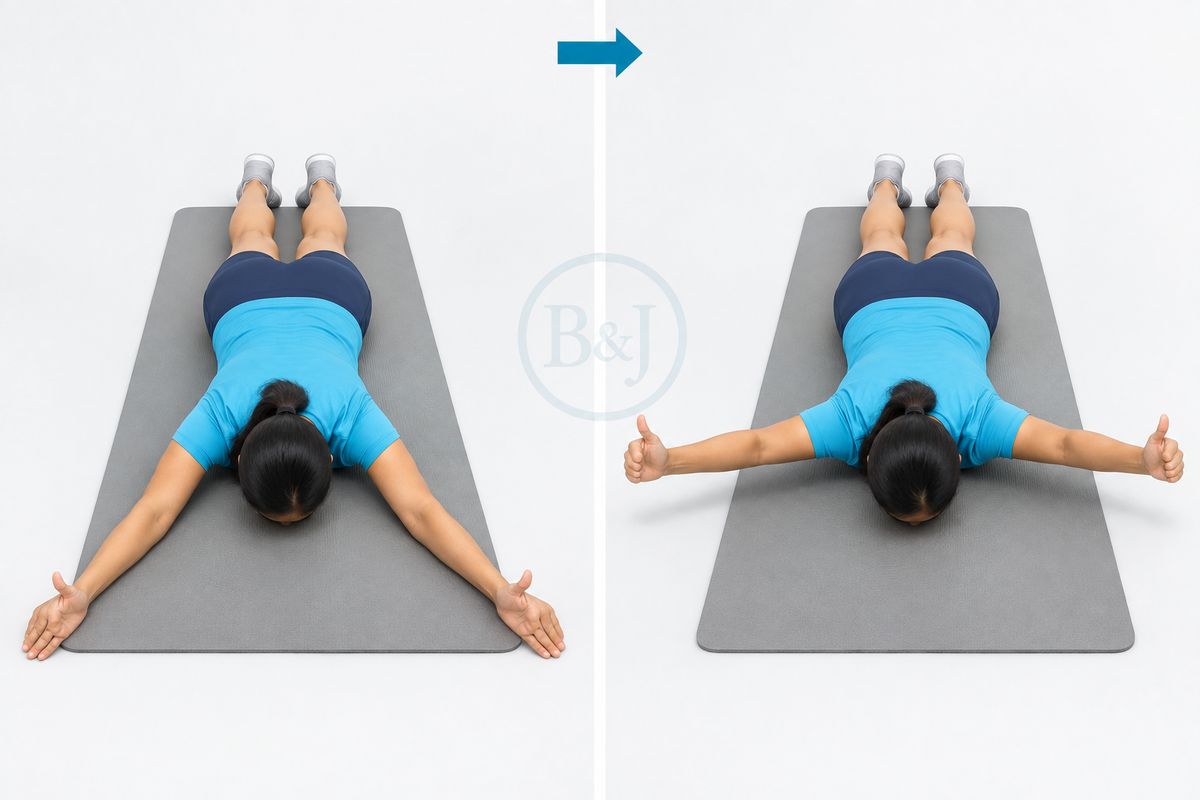
Lying Y and T raises
Lie face down, forehead resting down. Lift both arms overhead in a Y with the thumbs up, then out to the sides in a T.
10 of each
Daily
Should feel: Between and below the shoulder bladesShould not feel: Strain in the neck, or the lower back
Heel-to-toe walk
Walk along a wall you can touch. Place the heel of one foot directly in front of the toes of the other. Eyes ahead, not on your feet.
10 steps
2–3 times, daily
Should feel: Controlled stepsShould not feel: Turning quickly — turn slowly in small steps
Wall posture hold
Back against a wall, heels a few inches away. Bring buttocks, upper back and the back of the head to the wall. Draw the chin gently back.
Hold 20–30 seconds
5 times, daily
Should feel: The upper back opening outShould not feel: Forcing the head back if it will not reach
Walking
Weight-bearing walking loads the bone and helps it stay strong.
30 minutes
Most days
Should feel: Comfortable exerciseShould not feel: Sudden back pain — stop and tell us
Not yetHeavy lifting, forward-bending exercises such as touching the toes or sit-ups, and sudden twisting. Sitting on the floor, squatting or using an Indian toilet — until we have told you it is safe.
Stop and telephone us if
New weakness or numbness in the legs, or a change in control of urine or stools — go to the nearest hospital
Sudden new or much worse back pain, for example after a cough, a bend or a small strain
Back pain that keeps getting worse despite the pain medicines
A fall
The calf becomes swollen, tight or painful
You feel unwell or feverish
Ready when you are.
Call either clinic during consulting hours, or send a WhatsApp message any time.